CONTENT
Forage Preservation Methods for Livestock: Silage, Haylage, Hay, and Wastelage
In many regions, rainfall is seasonal. As a result, abundant grass is available during the growing season, much of which is not fully utilized. A substantial amount of fodder can also be produced during this period. To meet the nutritional needs of livestock during periods of forage scarcity, an adequate amount of the surplus grass available during the growing season should be conserved.
The ideal and simplest method of conservation is to remove moisture from fresh grass using artificial heat and store the product as dried fodder for later use. In practice, the moisture content of grass is reduced through exposure to sun and wind, resulting in the production of hay.
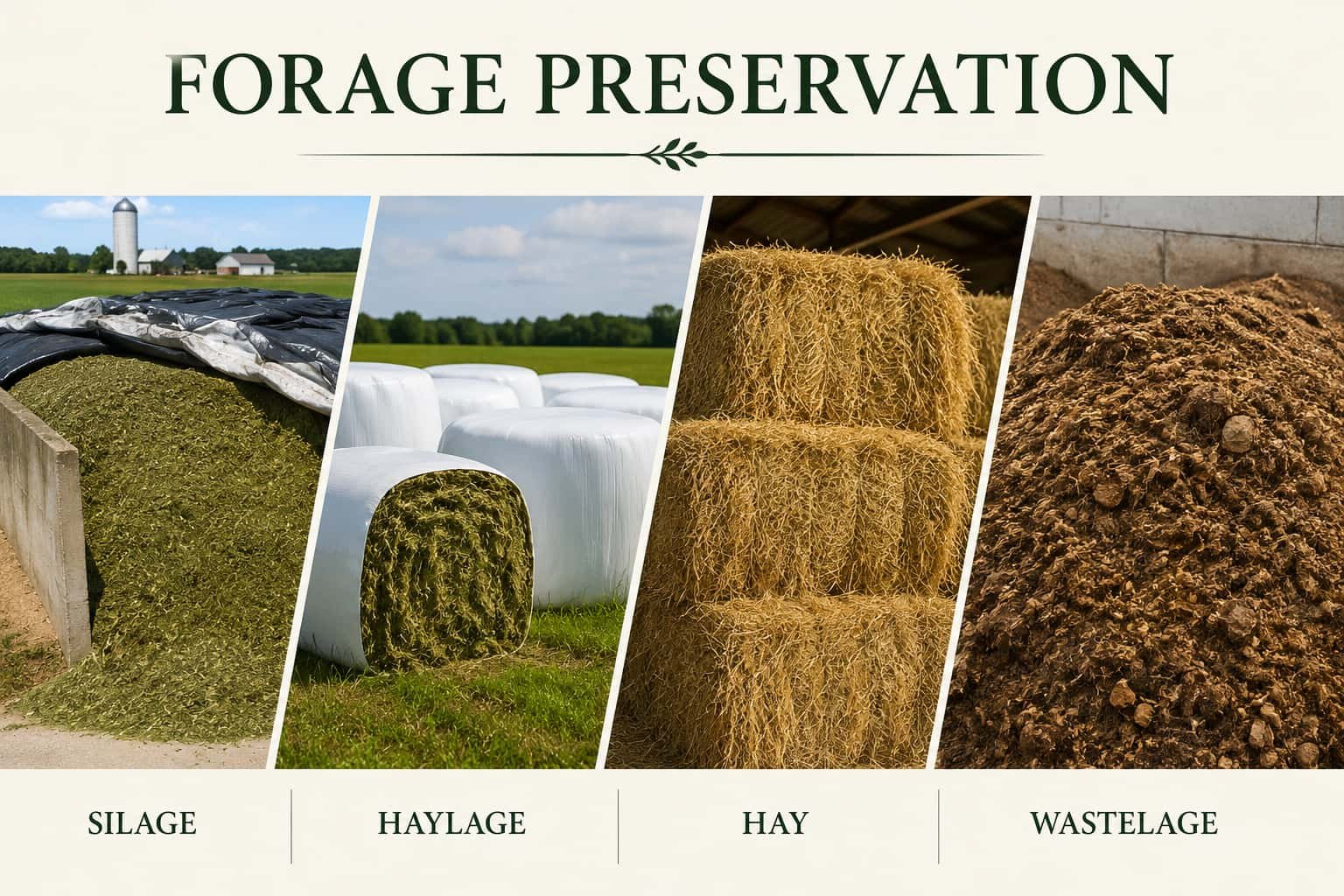
To combine economy and simplicity while ensuring a product of high feeding value that is largely independent of weather conditions, natural fermentation can be utilized through the process of ensiling. Thus, farmers often choose between hay and silage as methods of forage conservation.
Silage
Silage is a fermented feed produced by storing high-moisture crops, usually green forages, under anaerobic conditions with minimal nutrient loss in a structure known as a silo.
Haylage
Haylage is a low-moisture silage (40–45% moisture) made from grasses or legumes that are wilted to a moisture content of 40–45% before ensiling. It is similar to silage but contains less moisture.
Hay
Hay refers to grasses or legumes that are harvested, dried, and stored at 85–90% dry matter. High-quality hay is green in color, leafy, pliable, and free from mustiness.
When harvested at the proper physiological stage of growth and well cured to 15% or less moisture before storage, hay can serve as an excellent feed for dairy cattle, particularly when forage is scarce or pasture availability is limited.
Wastelage
Wastelage is a material produced by ensiling waste materials (such as animal organ waste) in a suitable combination with forages and additives under anaerobic conditions through fermentation by lactic acid-producing bacteria. Except for the inclusion of waste materials, the remaining steps in the preparation of wastelage are similar to those used in silage production.