CONTENT
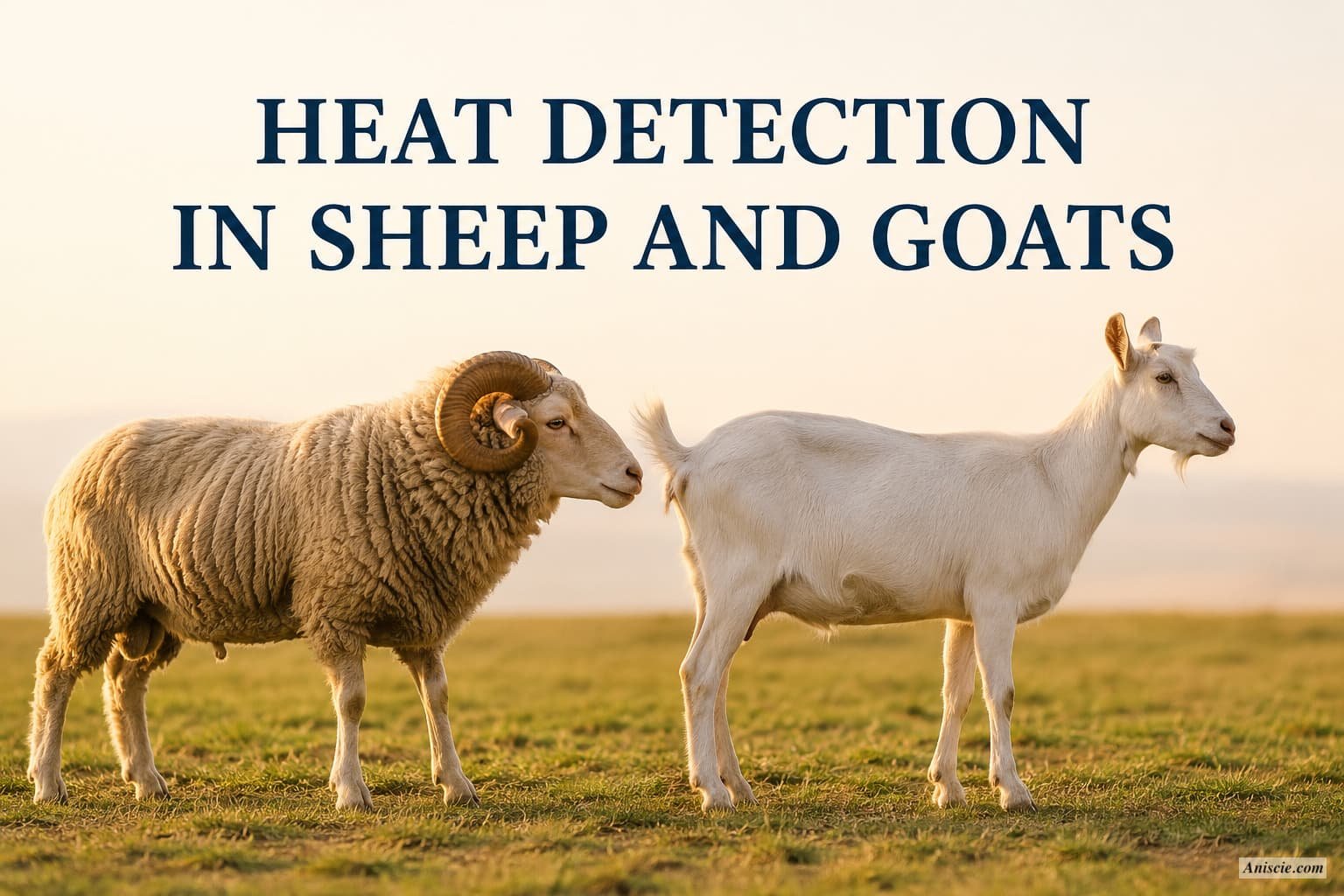
Heat Detection in Sheep and Goats: Methods for Identifying Ewes and Does in Estrus
Accurate heat detection is essential for successful breeding management in sheep and goat production systems. Timely identification of ewes and does in estrus helps improve conception rates, enables planned mating, and supports the effective use of artificial insemination and controlled breeding programs.
However, behavioral and physical signs of estrus in small ruminants can be subtle, making heat detection challenging. Various methods, including the use of teaser males and vasectomized rams, are therefore employed to identify females in heat efficiently.
One of the challenges in the scientific management of breeding programs is the detection of sheep and goats in heat. It is often difficult to identify ewes and does in heat based solely on physical signs.
Signs of Heat in Sheep and Goats
Females in estrus may exhibit behavioral and physical signs that aid in heat detection. Common signs include restlessness, increased tail wagging, frequent bleating, seeking the company of males, swollen and reddened vulva, clear mucous discharge from the vulva, and standing to be mounted by a ram or buck. However, these signs may be subtle in some animals, making the use of teaser males necessary for accurate heat detection.
The techniques generally followed are:
- Using an Intact Male
- Use of an Intact Male Fitted with an Apron
1. Using an Intact Male
In this method, an intact buck or ram is introduced into the flock. The buck or ram follows the doe or ewe in estrus. However, there is a chance that the buck or ram may mate with the doe or ewe if not properly controlled.
2. Use of an Intact Male Fitted with an Apron
In this method, an apron is tied around the abdomen of the male to cover the penis. The apron is made of a soft piece of cloth measuring 60 × 45 cm, with strings attached on all four sides to secure it properly. This prevents mating.
The apron should be washed daily and checked for holes or tears to avoid unwanted mating. There are two distinct disadvantages to this method. First, there is a risk of fertile mating if the apron is not securely fastened and checked frequently. Second, inflammation, irritation, and infection of the penis and preputial area may occur, resulting in reduced sexual desire and mounting behavior.
The ram or buck is apronized and allowed into the flock for the identification of animals in heat during the morning and evening for about 15 to 20 minutes. The teaser ram or buck detects females in heat, which are then marked and separated for breeding with the desired ram.
Vasectomized Ram
Vasectomized rams can be prepared through a surgical procedure in which the vas deferens is severed or occluded, preventing the transport of spermatozoa while maintaining normal libido and mating behavior.
These teaser rams are commonly used for heat detection because they can identify and mount ewes in estrus without causing pregnancy. Vasectomized rams provide an effective and reliable method for estrus detection in organized breeding programs.