CONTENT
Clean Milk Production (Hygienic Milk Production): Importance, Sources of Contamination, and Best Practices
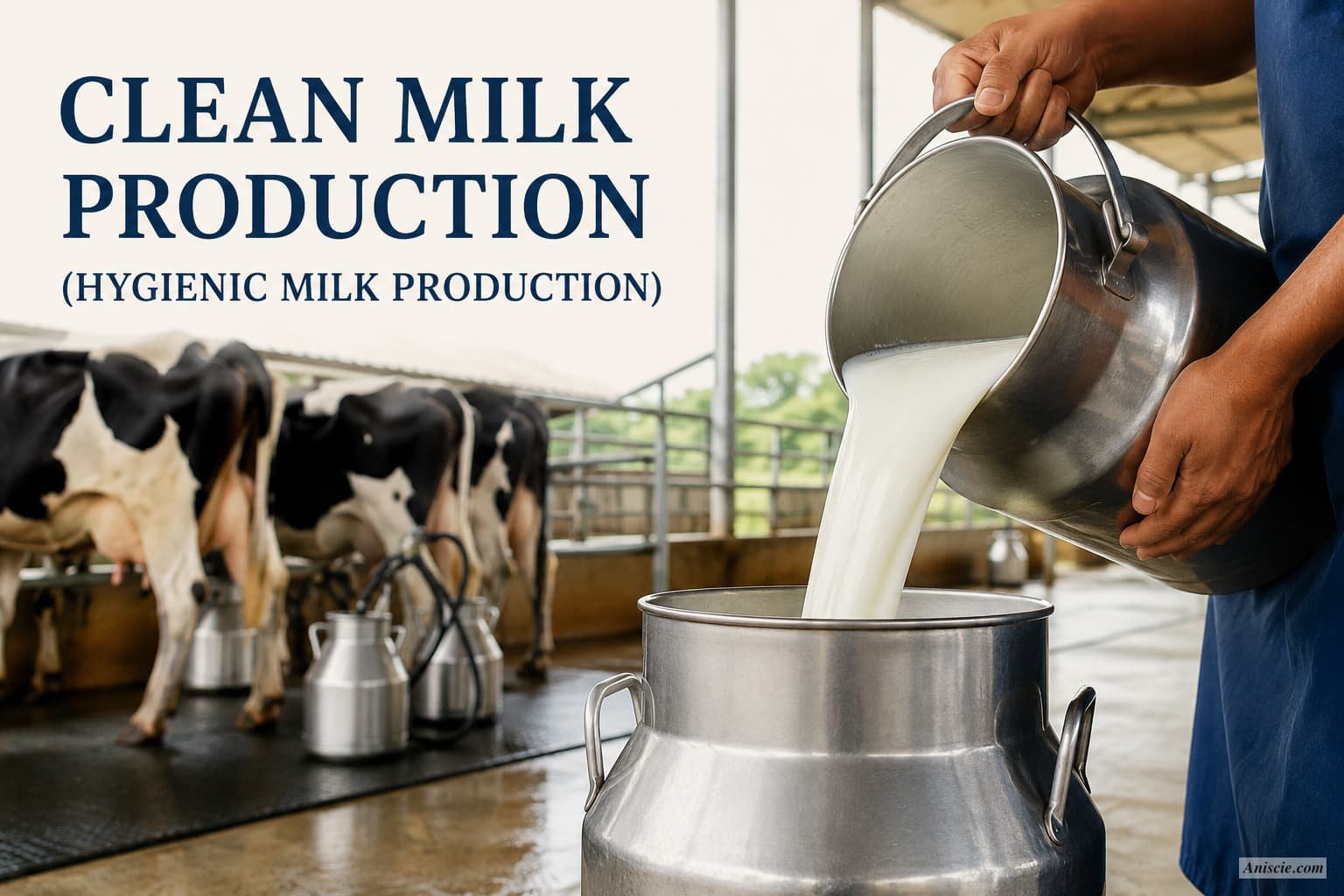
Clean milk production, also known as hygienic milk production, refers to the production of milk under conditions that minimize contamination from microorganisms, dirt, chemicals, and other foreign materials. Maintaining high standards of hygiene throughout the milking process is essential for preserving milk quality, extending shelf life, improving consumer safety, and enhancing the profitability of dairy operations. Proper animal health management, udder hygiene, milking practices, equipment sanitation, and milk handling procedures all play a critical role in ensuring the production of safe, wholesome, and high-quality milk.
Contaminated milk can serve as a medium for the growth of harmful microorganisms, leading to reduced milk quality, spoilage, economic losses, and potential public health concerns. Therefore, adopting clean milk production practices should be a fundamental objective of every dairy producer.
Importance of Clean Milk Production
Clean milk production is essential for maintaining milk quality and safety throughout the dairy supply chain. Hygienic milk contains a lower microbial load, has a longer shelf life, and is more suitable for processing into dairy products. Proper milk hygiene practices also help reduce the risk of milk-borne diseases, improve consumer confidence, and support compliance with quality standards established by regulatory authorities and dairy processors.
From an economic perspective, the production of clean milk can reduce spoilage losses, minimize the incidence of mastitis and other udder health problems, and improve marketability. Consistent adoption of hygienic milking and milk handling practices contributes to better herd health, improved productivity, and greater profitability for dairy producers.
Common Sources of Milk Contamination
Milk may become contaminated at various stages of production, collection, and handling. Common sources of contamination include dirty udders and teats, infected animals, contaminated water, improperly cleaned milking equipment, poor personal hygiene of milkers, dust, manure, insects, and unsanitary storage conditions. Identifying and controlling these sources is essential for maintaining milk quality and preventing the growth of undesirable microorganisms.
Recommended Practices for Clean Milk Production
The following management practices can help maintain milk hygiene, reduce contamination, and support the production of safe, high-quality milk.
- The milking schedule should be fixed and consistent, with no frequent changes in the routine. If changes are necessary, they should be introduced gradually.
- The milking parlor should be cleaned at least 30 minutes before milking. Milking vessels or cans should be thoroughly cleaned and dried. Ensure that these vessels are round in shape and free of joints or seams. Heating milking vessels before use (dry heat application) can improve the keeping quality of milk.
- The udder should be washed with lukewarm water, to which a few crystals of potassium permanganate may be added (an amount sufficient to change the color of the water).
- Gently massage the udder while washing.
- Ensure that the person responsible for milking understands the importance of personal hygiene. Clean hands and trimmed fingernails are essential.
- Dry the udder with a clean cloth, wiping from the tip of the teat upward.
- Always ensure that milking is performed using the full-hand method (not with a folded thumb), and that it is done quickly, completely, and comfortably for the animal. Milking should be performed by gently squeezing the teats, not by pulling or jerking them.
- Complete the process from udder washing to milking within 8 minutes.
- After milking, dip the teats in a disinfectant solution, such as a dilute iodine solution.
- Always milk animals in a calm and quiet environment. If possible, soft music may be played to help maintain a relaxed atmosphere.
- Animals that have recently calved and those producing higher volumes of milk should be milked first, followed by animals producing less milk or those in the final stage of lactation. Animals with diseases, particularly mastitis, should be milked separately and at the end.
- Animals producing up to 10 liters of milk per day should be milked twice daily. The frequency may be increased to three times daily when production ranges from 12–15 liters. For animals producing more than 16 liters per day, simultaneous milking by two persons may be considered.
- Milk from animals receiving intramammary medications should not be mixed with other milk.
- Milk should be strained through a four-layer muslin cloth or a fine nylon mesh. Cool the milk (for example, by placing ice around the milk can) and transport it to a milk collection center, processing facility, or retail outlet as soon as possible.
- Ensure that the water used for cleaning utensils is clean and free from contamination. Milk is an excellent medium for the growth of microorganisms. Even a single contamination event may render it unfit for human consumption. Poor milk quality can reduce shelf life and may adversely affect flavor, taste, and nutritional composition.
Conclusion
Clean milk production requires attention to animal health, personal hygiene, milking procedures, equipment sanitation, and proper milk handling practices. By following recommended hygiene measures throughout the production process, dairy producers can improve milk quality, enhance food safety, reduce economic losses, and contribute to a more sustainable dairy industry.