CONTENT
Factors Affecting Milk Quality and Composition in Dairy Cattle (Fat, Protein, Lactose, and SNF)
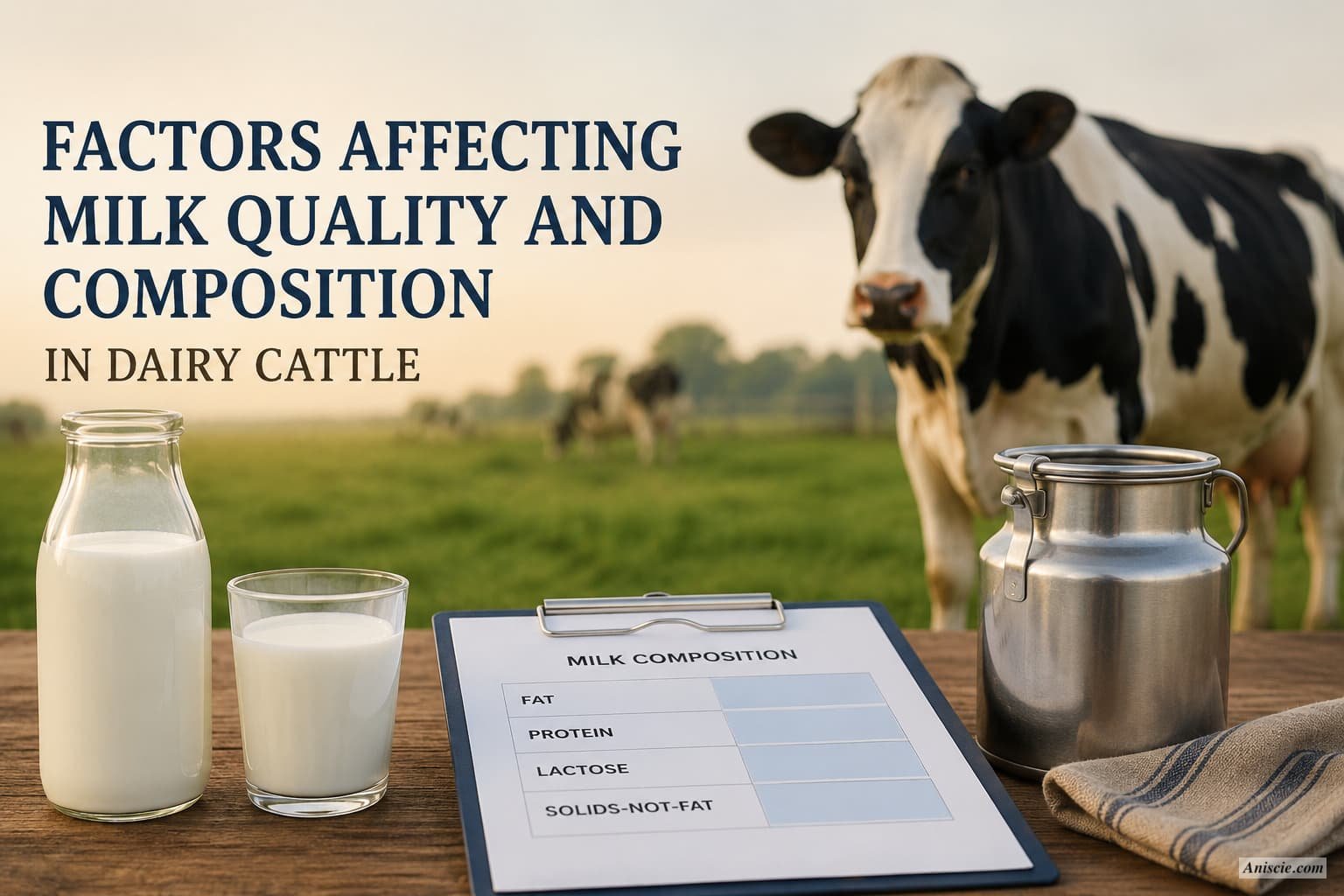
Milk quality and composition are important determinants of the nutritional, processing, and economic value of milk. The major components of milk include fat, protein, lactose, minerals, and solids-not-fat (SNF). These components are influenced by a variety of genetic, environmental, nutritional, and management factors. Understanding the factors that affect milk composition helps dairy producers optimize milk production and maintain high-quality milk suitable for consumer use and dairy processing.
| Factor | Effect on Milk Quality and Composition |
|---|---|
| Breed and Genetics | Influences milk fat, protein, lactose, and overall milk yield. |
| Stage of Lactation | Affects fat, protein, and SNF content throughout lactation. |
| Age | Older cows generally produce milk with lower fat and SNF content. |
| Feeding Management | Influences milk fat percentage and overall milk composition. |
| Disease | Mastitis and other diseases can reduce milk quality and alter composition. |
| Milking Interval | Can affect milk fat percentage between milkings. |
| Completeness of Milking | Influences the measured fat content of milk. |
| Milking Management | Proper milking practices improve udder health and milk quality. |
Genetic Factors
Breed and Individual Cow
Milk composition varies considerably among breeds of dairy cattle. Jersey and Guernsey breeds produce milk with higher fat and protein content than Shorthorn and Friesian breeds. Zebu cows can produce milk containing up to 7% fat.
Variability among Cows within a Breed
The potential fat content of milk from an individual cow is genetically determined, as are protein and lactose levels. Therefore, selective breeding can be used to improve milk quality. Heredity also determines the potential milk production of the animal. However, environmental and physiological factors greatly influence the amount and composition of milk that is actually produced. Herd records of total milk yield and fat and SNF percentages help identify the most productive cows, and replacement stock should be bred from these animals.
Environmental Factors
Interval between Milking
The fat content of milk varies considerably between morning and evening milkings because the interval between morning and evening milking is usually shorter than the interval between evening and morning milking. If cows were milked at 12-hour intervals, the variation in fat content between milkings would be negligible; however, this is not practical on most farms. Normally, the SNF content varies little, even when milking intervals differ.
Stage of Lactation
The fat, lactose, and protein contents of milk vary according to the stage of lactation. The solids-not-fat (SNF) content is usually highest during the first 2 to 3 weeks after calving, after which it decreases slightly. Fat content is high immediately after calving but soon begins to decline and continues to do so for 10 to 12 weeks, after which it tends to increase again until the end of lactation.
Age
As cows grow older, the fat content of their milk decreases by approximately 0.02 percentage units per lactation. The decline in SNF content is generally greater.
Feeding Regime
Underfeeding reduces both the fat and SNF content of milk, although SNF content is more sensitive to feeding level than fat content. Milk fat content and fatty acid composition are influenced more by roughage (fiber) intake. The SNF content may decrease if the cow is fed a low-energy diet but is not greatly affected by protein deficiency unless the deficiency is severe.
Disease
Diseases can adversely affect both milk yield and milk composition. Mastitis is the most important disease affecting milk quality. It increases somatic cell count (SCC), reduces lactose content, alters milk protein composition, and decreases the fat and SNF content of milk. Severe systemic illnesses may also reduce milk production by decreasing feed intake and impairing normal metabolic processes.
Completeness of Milking
The first milk drawn from the udder is low in fat, whereas the last milk (strippings) is considerably higher in fat. Therefore, all milk collected during milking should be thoroughly mixed before a sample is taken for analysis. Fat remaining in the udder at the end of milking is usually recovered during the subsequent milking, resulting in no overall loss of fat.