CONTENT
Shearing of Wool in Sheep: Methods, Time, and Shearing Management
Shearing is the process of removing wool from sheep and is an essential management practice in wool-producing flocks. Proper shearing not only facilitates wool harvesting but also contributes to animal comfort, health, and productivity. Various shearing methods, including hand, machine, and chemical shearing, are used depending on available resources and management systems. The timing of shearing and proper shearing management also play an important role in maintaining wool quality and animal welfare.
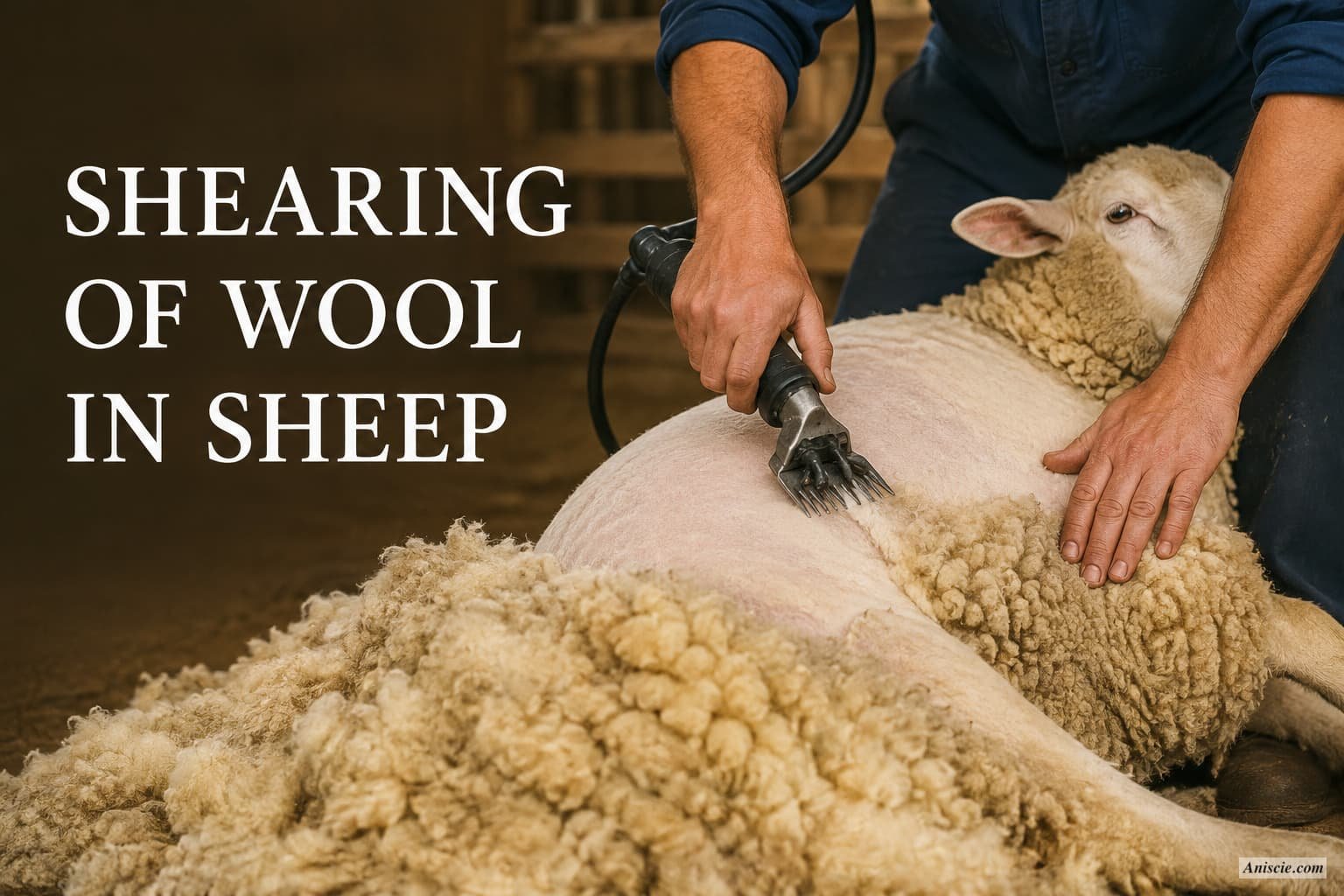
The removal of wool from a sheep is called shearing. Shearing is performed mechanically using clippers, a pair of scissors, or power-operated machines.
Hand Shearing
Hand shearing is the most primitive and time-consuming method. It causes stress to both the animal and the shearer, leaves up to 1.25 cm of wool on the body, and the fleece is not cut evenly, resulting in double cuts and reduced staple length.
Machine shearing is faster, leaves less wool on the sheep, and produces a more even cut. It is used extensively throughout the world.
Chemical Shearing
Chemical shearing was developed in the United States. Cyclophosphamide is administered at a rate of 24 mg per kg of live body weight. This chemical causes wool removal within three days, beginning from the 12th day after drug administration. The wool comes off in patches.
The major disadvantages of this method are:
- From the day wool shedding begins, the sheep must be confined.
- This drug may adversely affect the fetus.
- The drug may leave residual effects in meat.
- The drug removes the wool too close to the skin, which exposes the animal to greater environmental stress.
Time of Shearing
Most flocks are usually shorn twice a year, i.e., in March–April after winter and in September–October after the rainy season.
In Jammu and Kashmir and Rajasthan, sheep are often shorn three times a year. However, this practice is not considered ideal, as it produces wool with a very short staple length. The spring clip (March–April) is generally white, whereas the autumn clip (September), which accounts for about two-thirds of the total wool produced in the country, is yellow, particularly in large parts of the plains. This is known as canary-colored wool. The main problem with this wool is that the yellow coloration cannot be removed by conventional scouring methods. This issue can be reduced by shearing sheep before the onset of staining, protecting them from solar radiation until the fleece exceeds 2 cm in length, grazing them during the cooler hours of the day, and providing supplementary feed or fodder during the evening.
Shearing Management
A shearing shed and yard should include a forcing pen, a concrete- or brick-paved drafting yard, a sweating pen, a catching pen where the sheep are shorn, and finally a pen for holding shorn sheep.
A wool section for fleece sorting, rolling tables, and bins for fleece classing, along with sufficient space for storing wool packs, is also required.