CONTENT
Dry Period in Dairy Cows: Importance, Ideal Length, Udder Health, and Drying-Off Methods
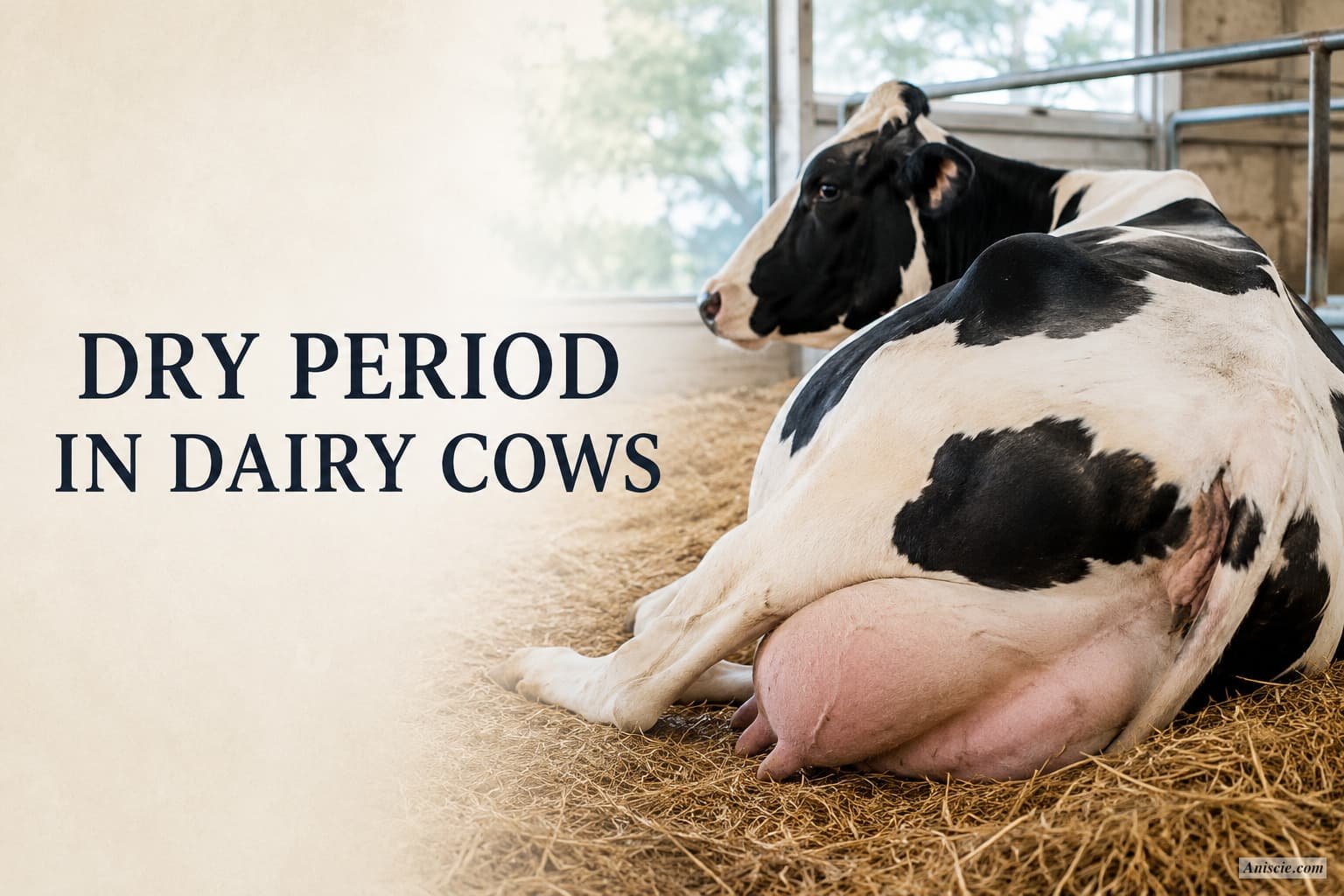
The dry period is one of the most critical phases in dairy cow management. It provides an opportunity for mammary tissue regeneration, restoration of body condition, and preparation for the next lactation. Proper dry period management can improve subsequent milk production, support udder health, and reduce the risk of mastitis and other health problems around calving.
The dry period is the interval between the end of lactation and the subsequent calving. During this period, the cow is not milked and is usually pregnant. In some cases, such as infertility, a dry cow may be non-pregnant.
Purpose of the Dry Period
The mammary gland functions continuously throughout the lactation period, resulting in considerable wear and tear of the secretory tissues of the udder. The dry period provides rest to the cow’s udder and supports the repair and regeneration of the secretory cells.
During lactation, high-producing cows often lose body condition (body weight) due to the substantial nutrient, calcium, and phosphorus demands required to sustain high milk production. The dry period provides an opportunity for the cow to regain the body condition lost during lactation.
On the other hand, uninterrupted lactation between calvings is known to impair subsequent lactation performance. Therefore, dairy cows should be dried off before the ensuing calving and should be “steamed up” in preparation for the next lactation.
Ideal Dry Period Length
The optimum dry period length appears to be approximately six weeks for second-lactation and older cows, and about 60 days for first-lactation cows.
Dry Period and Udder Health
The dry period is an extremely important time for udder health for three reasons.
- First, the dry period is an ideal time for the long-term treatment of cows with a high somatic cell count.
- Second, many cases of mastitis during the first month after calving result from infections acquired during the final weeks of the dry period.
- Third, the first few weeks after calving are a period of greatly reduced disease resistance in the cow. During this time, most clinical diseases (including clinical mastitis) occur. The degree to which disease resistance is reduced depends heavily on the cow’s nutrition, hygiene, and management during the dry period, transition period, and fresh-cow period.
Drying Off
There are three principal methods of drying off cows: abrupt cessation of milking, intermittent milking, and incomplete milking.
Abrupt/Sudden Cessation of Milking
Sudden cessation of milking causes a buildup of pressure in the udder, which has no immediate permanent effect on the rate of milk secretion and promotes drying off within a few days. After 4 to 5 days, involution or regression of the secretory cells begins rapidly and is completed within the following few days. The fluid trapped within the udder is eventually reabsorbed. This method is generally successful in low-producing cows (producing less than 9 liters of milk per day).
Intermittent Milking
Milking once every second or third day, or even less frequently, is generally not an effective method and may increase the risk of mastitis. However, this method may be preferred for cows already affected by mastitis, as the udder can be emptied and infused with antibiotic therapy at each milking.
Incomplete Milking
Gradually removing smaller and smaller quantities of milk from the udder over a period of about a week may be preferred for very high-producing cows, in which abrupt cessation of milking could cause udder swelling and discomfort.
A more rational approach to drying off high-producing cows is to reduce the ration, particularly protein intake, for a couple of weeks before the planned dry-off date. In all cases, it is a beneficial precautionary measure to disinfect the teats with alcohol immediately after the final milking and then apply an antiseptic teat sealant. This can significantly reduce the risk of mastitis, especially in cows with weak teat sphincters. This practice is commonly referred to as “dry cow therapy.”