CONTENT
Pasture-Based Farming and Ranching: Types, Benefits, and Pasture Management
Pastures
Pastures are grasslands where forage crops are grown for grazing livestock. Grazing animals directly on pasture reduces expenses related to harvesting, transporting, and feeding forage, thereby lowering overall production costs.
Pasture Farming or Ranching
Pasture farming, also known as ranching, is a livestock production system in which animals primarily depend on grazing. This system is widely practiced in countries such as Australia and New Zealand, especially for wool and meat production. Grasses such as Cenchrus ciliaris are commonly grown under rainfed conditions. Grazing is usually restricted during the first two years to allow proper pasture establishment.
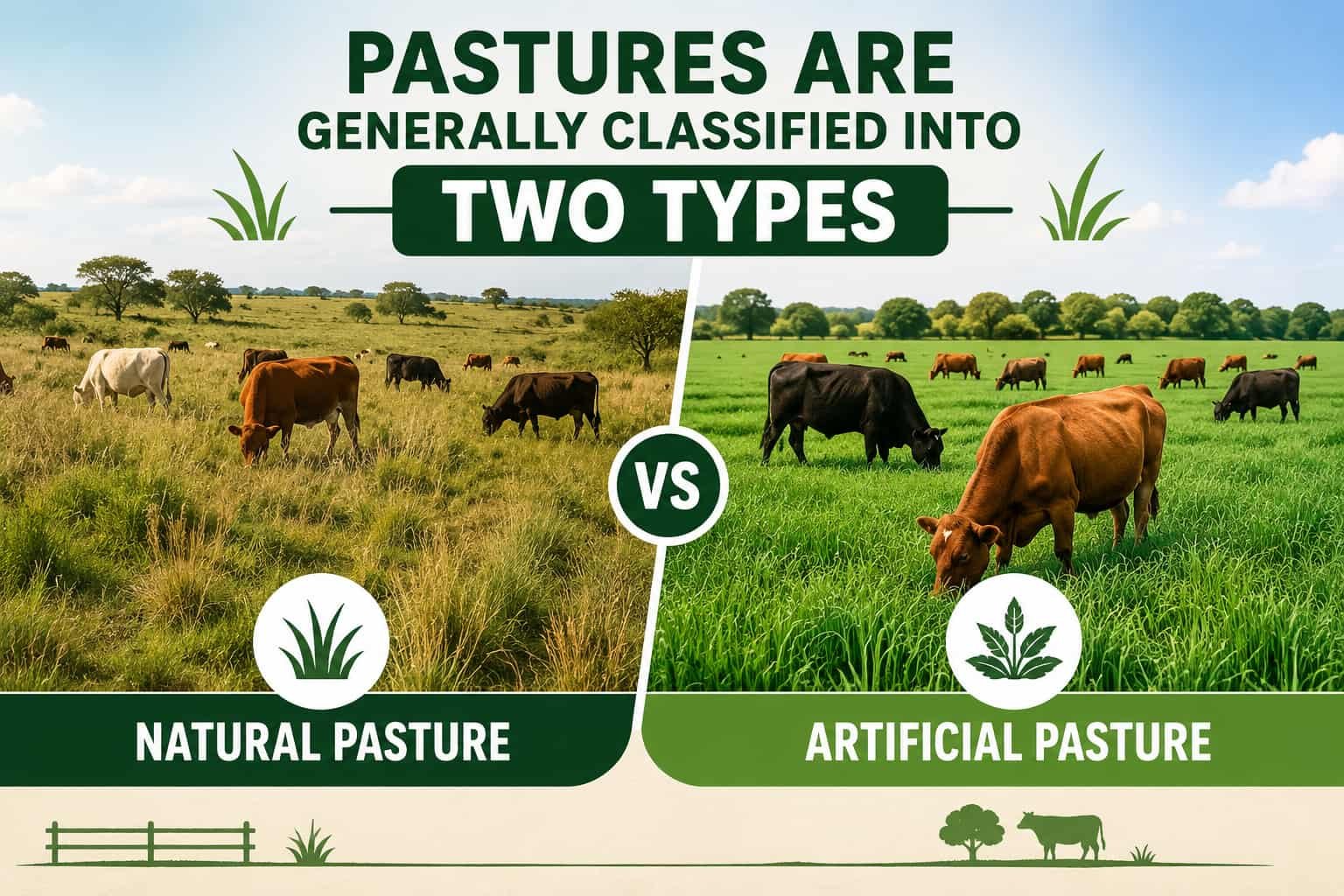
Pastures are generally classified into two types:
- Natural Pasture
- Artificial Pasture
1. Natural Pasture
Natural pastures develop naturally on grasslands or wastelands without deliberate planting. Native grasses establish themselves under favorable environmental conditions and can provide good forage when properly managed. Some natural pastures are used for grazing, while others are harvested for hay. When grasses are allowed to grow fully before cutting, the area is referred to as a meadow. Regrowth after harvesting is known as aftermath growth and can also be grazed by livestock.
2. Artificial Pasture
Artificial pastures are established by sowing grasses and legumes and are maintained for several years before the land is returned to crop production. These pastures are also called temporary pastures, ley farming systems, or leys. Grass and legume seeds are often planted together because legumes improve forage quality and enrich the soil through nitrogen fixation. The selected forage species should provide abundant leafy growth and high levels of protein and minerals.