CONTENT
Grazing Management Systems and Types for Sustainable Grassland Productivity
Grazing management is an essential part of sustainable grassland and pasture management. Proper grazing practices help maintain forage productivity, improve livestock nutrition, prevent overgrazing, and preserve soil fertility.
Proper grazing management requires balancing the number of grazing animals with the carrying capacity of the grassland. Carrying capacity refers to the number of animals that a specific area can support without causing overgrazing or underutilization during an average grazing season.
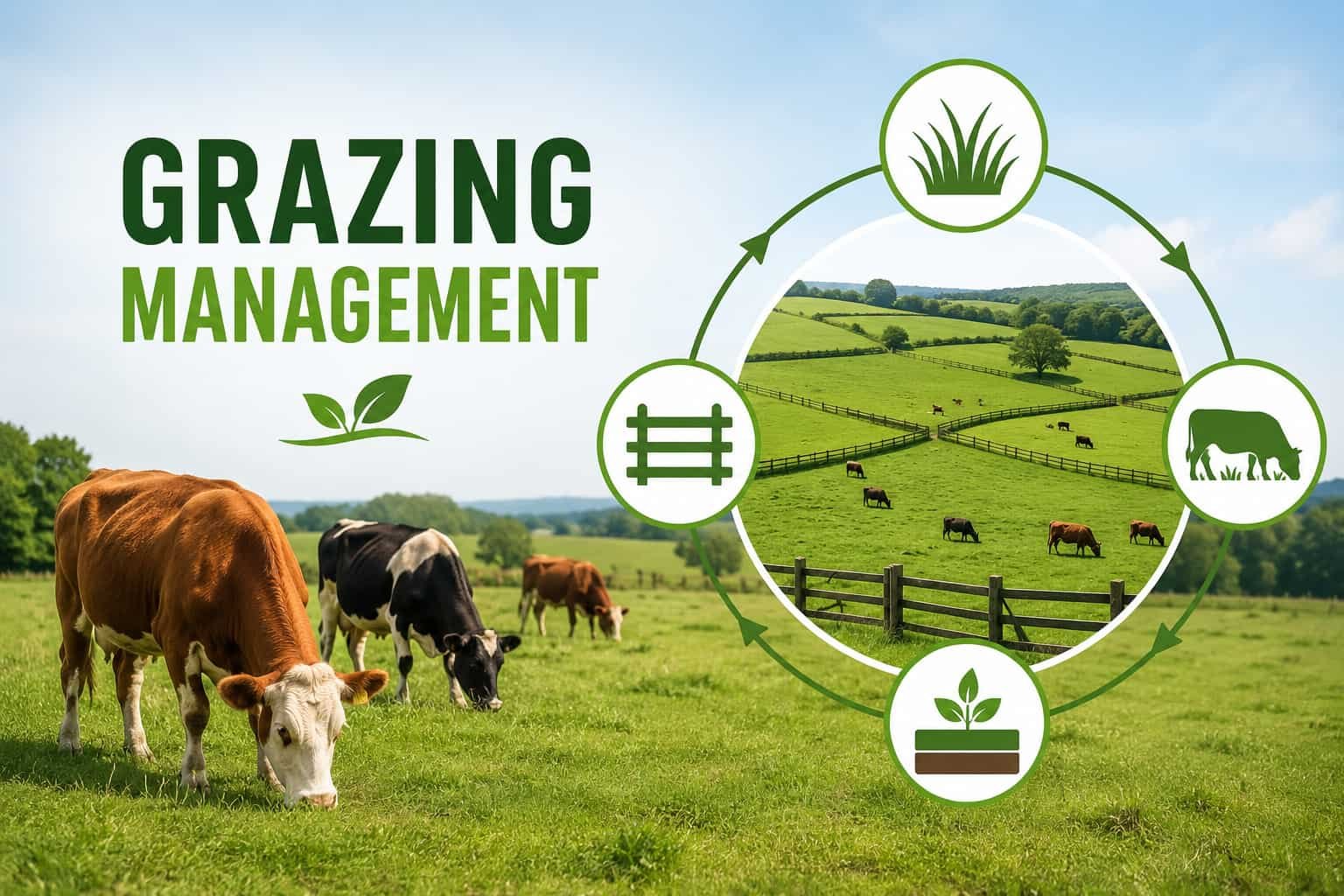
To prevent overgrazing, grazing must be restricted periodically. One practical method is rotational grazing, where one section of the grassland is grazed while another section is allowed to recover. Overgrazing causes rapid depletion of highly palatable species, while less desirable species become dominant. Perennial grasses also require adequate recovery time to rebuild food reserves before being grazed again.
The main objectives of scientific grassland management are:
- Maintain grasslands at high forage productivity.
- Meet the nutritional requirements of grazing animals.
- Preserve and improve soil fertility.
Young grasses are generally the most nutritious and palatable, but grazing too early can weaken the plants. As grasses mature, their nutritional value declines. Therefore, effective pasture management involves balancing the needs of the grassland with the nutritional needs of grazing livestock.
Controlled Continuous Grazing
Uncontrolled continuous grazing often eliminates desirable forage species and leaves behind weak, unproductive vegetation. Controlled continuous grazing reduces this problem by limiting grazing intensity and allowing enough desirable plants to remain for seed production and regrowth. Properly managed grazing can gradually improve grassland quality over time.
Deferred Grazing
Deferred grazing involves delaying grazing in certain sections of grassland until after seed production. This allows grasses to mature, produce seeds, and regenerate naturally. Typically, the grassland is divided into three sections. One section is rested during the growing season, while livestock graze the other two sections alternately. Grazing is later allowed in the rested section before the forage becomes overly mature and unpalatable. Each section receives a rest period every few years, helping maintain plant vigor and grassland productivity.
Rotational Grazing
In rotational grazing, livestock are moved between different paddocks or grazing areas at planned intervals. This system promotes uniform grazing and prevents plants from being grazed too closely. It provides animals with fresh, nutritious forage while allowing grazed areas time to recover. However, one limitation of rotational grazing is that grasses may not always have enough time to produce seeds.
Hohenheim System
The Hohenheim system is an advanced form of rotational grazing developed in Germany. In this system, the pasture is divided into equal-sized paddocks, and nitrogen fertilizers are applied to improve forage growth. Dairy cattle are grouped according to milk production levels, and the highest-producing animals are given access to the youngest and most nutritious forage first.
Deferred Rotational Grazing
This grazing system is especially useful in grasslands dominated by annual grasses and where reseeding of perennial grasses is desired. The grassland is divided into compartments, and grazing is rotated so that each section receives a rest period for seed production. By the time livestock enter the final compartment, seeds in previously grazed sections have matured and dispersed naturally.