CONTENT
Heat Detection in Cows (Estrus Detection): Stages of Heat, Signs, and Detection Methods
Heat detection (Estrus Detection) in cows is one of the most important aspects of reproductive management in dairy and beef herds. Accurate detection of estrus improves conception rates, reduces the calving interval, and increases overall herd productivity. Understanding the stages of heat and recognizing the associated signs are essential for successful breeding programs.
Heat detection has a major influence on the length of the calving interval. An optimal calving interval can be achieved only if the herdsman maintains a healthy, properly fed herd in which each mating is carefully planned. Planning starts months before the contemplated mating, and therefore it is very important to have a well-planned and properly executed heat detection program.
There are a number of factors that make heat detection more difficult, notably:
- The length of the oestrous cycle varies from 18 to 24 days.
- Heat signs often occur over only a short period.
- The sexual behavior of cows in heat varies.
- The duration of heat varies from cow to cow, especially in maiden heifers.
- Sexual activity tends to be greatest between 6 p.m. and 6 a.m. and mainly depends on the ambient temperature.
The intensity of sexual behavior depends on the number of cows in heat in a group. The signs of heat are generally more evident when several cows are in heat at the same time. Loose housing without slippery floors and with adequate space is an advantage in detecting heat signs.
Stages of Heat (Estrus) Detection in Cows
Heat can be divided into three different stages. The signs of heat that may be shown will be described for each stage:
- Early Heat Period
- Standing Heat Period
- Late Heat Period
1. Early Heat Period
A sexually mature, non-pregnant cow comes into heat every 18 to 24 days. It starts with the development of an ovum in the ovary. At this stage, the cow shows early signs of heat. The length of this period varies from 6 to 24 hours.
Signs of early heat are:
- Not standing when mounted
- Attempts to mount other cows
- Sniffing at other cows
- Looking for the company of other cows
- Chin resting
- Being restless and extra attentive
- A wet and slightly swollen vulva
- Bellowing
2. Standing Heat Period
Early heat changes into standing heat. The length of this phase of heat ranges from 6 to 18 hours. It is shorter under tropical conditions than under more temperate conditions.
The signs of heat are:
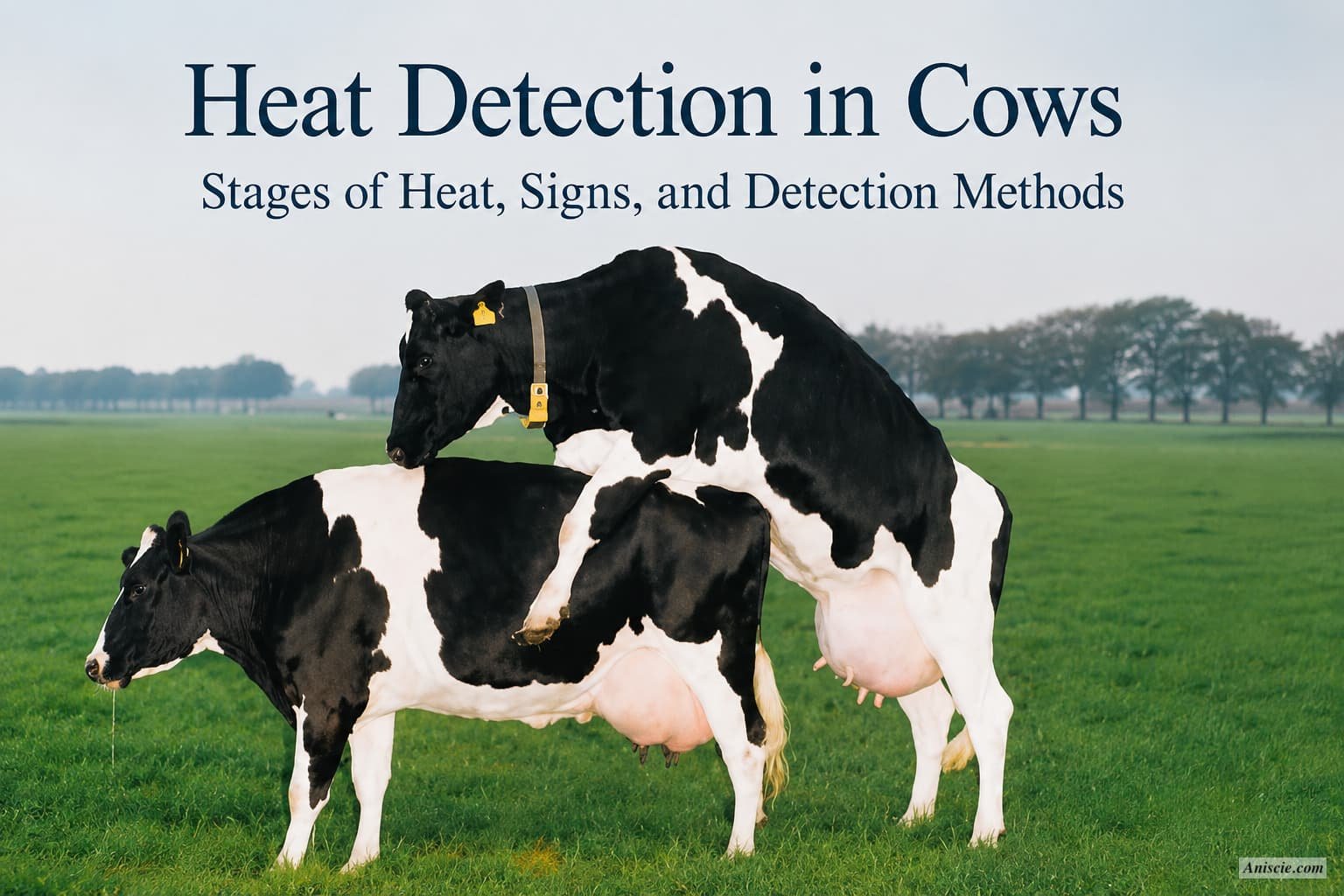
- Standing while being mounted; this is the clearest sign of heat
- Mounting other cows
- Chin resting
- Frequent bellowing and restlessness
- Attentiveness, ‘ear play’; bending the backbone, with the loin region downward and the sacrum upward
- Regular sniffing at the reproductive organs of other cows
- Red and swollen vulva with clear mucous discharge
- Ruffled tail head due to mounting
- Reduced appetite and generally lower milk production
- Slightly higher body temperature
- Glistening mucus on the tail and hindquarters
3. Late Heat Period
After the standing heat period, some cows continue to show behavioral signs of heat. This period is called the late heat period and can last for 12 to 24 hours.
Signs of the late heat period are:
- Not standing when mounted
- The cow is sniffed by other cows and sometimes sniffs other cows
- Clear mucous discharge from the vulva
- Dry mucus on the tail
About two days after the end of heat, cows may show a bloody mucous discharge from the vulva. This is called metoestral bleeding. This can be helpful in cases of unclear or doubtful signs of heat. The next heat period should then occur about 19 days (21 − 2) after the bloody discharge.
Regular Observation for Heat
Most cows show the signs of heat more clearly during the cooler periods of the day. Good detection results can be achieved when cows are observed three times a day, preferably:
- In the morning, before and after milking
- In the afternoon, before and after milking
- In the evening around 10:00 p.m.
Additionally, all other opportunities for detecting cows in heat should be utilized. The time required for effective heat detection depends on the:
- Experience of the person in charge
- Number and breed of cows
- Environment of the cows
Generally, at least 20 minutes are needed each time to perform a thorough heat check. In larger herds located in very hot climates, it may be advisable to keep cows under surveillance at night as well.
Good Record Keeping
One of the most useful aids in heat detection is good record keeping. Effective fertility-recording systems include, for example, a cow calendar, herd fertility and health monitoring charts, and individual cow records. Even an ordinary calendar can be very useful. All data relating to a cow’s reproductive status should be recorded, including the calving date, ease of calving, date of heat, insemination date, sire name, fertility disorders, and treatments.
These records also indicate when cows can be expected to come into heat, which cows need special attention, and which cows should be inseminated when in heat. For instance, when a cow is observed in heat, this should be noted on the calendar or chart to ensure close observation of the cow three weeks later.
There are also computerized herd management and record-keeping systems available. These software programs assist with daily herd management, daily action lists, herd performance monitoring, and problem analysis, and are often flexible enough to be useful for many types of dairy operations. However, the success of computerized information systems depends mainly on the daily entry of accurate information by the dairy producer.
Complete records are essential for achieving optimal performance. The best recording system depends on several factors, including herd size, management system, and the preferences of the dairy producer.
Important questions to ask when choosing a recording system are:
- Is the system user-friendly?
- How much time does the system require?
- Does the system monitor all cows throughout lactation?
- Is it easy to retrieve information on individual cows?
- Does the system provide action lists for day-to-day use?
- Can the system provide a continuous and up-to-date overview of herd performance?
It is important to consider these questions before selecting a system because a recording system can be successful only if the dairy producer is comfortable using it.
Additional Heat Detection Methods
Several devices are available to assist dairy producers with heat detection, including paint-filled or pressure-sensitive devices attached to the tail head of cows, chin-ball marking devices used on teaser bulls, and pedometers.
A pedometer is attached to a cow’s leg and measures activity levels. When a cow is in heat, she is generally more active than usual. These aids cannot replace the dairy producer’s role but can be used to supplement visual observation. Other indicators may include a sudden decrease in milk production or feed intake. However, careful visual observation remains the most reliable method of heat detection.