CONTENT
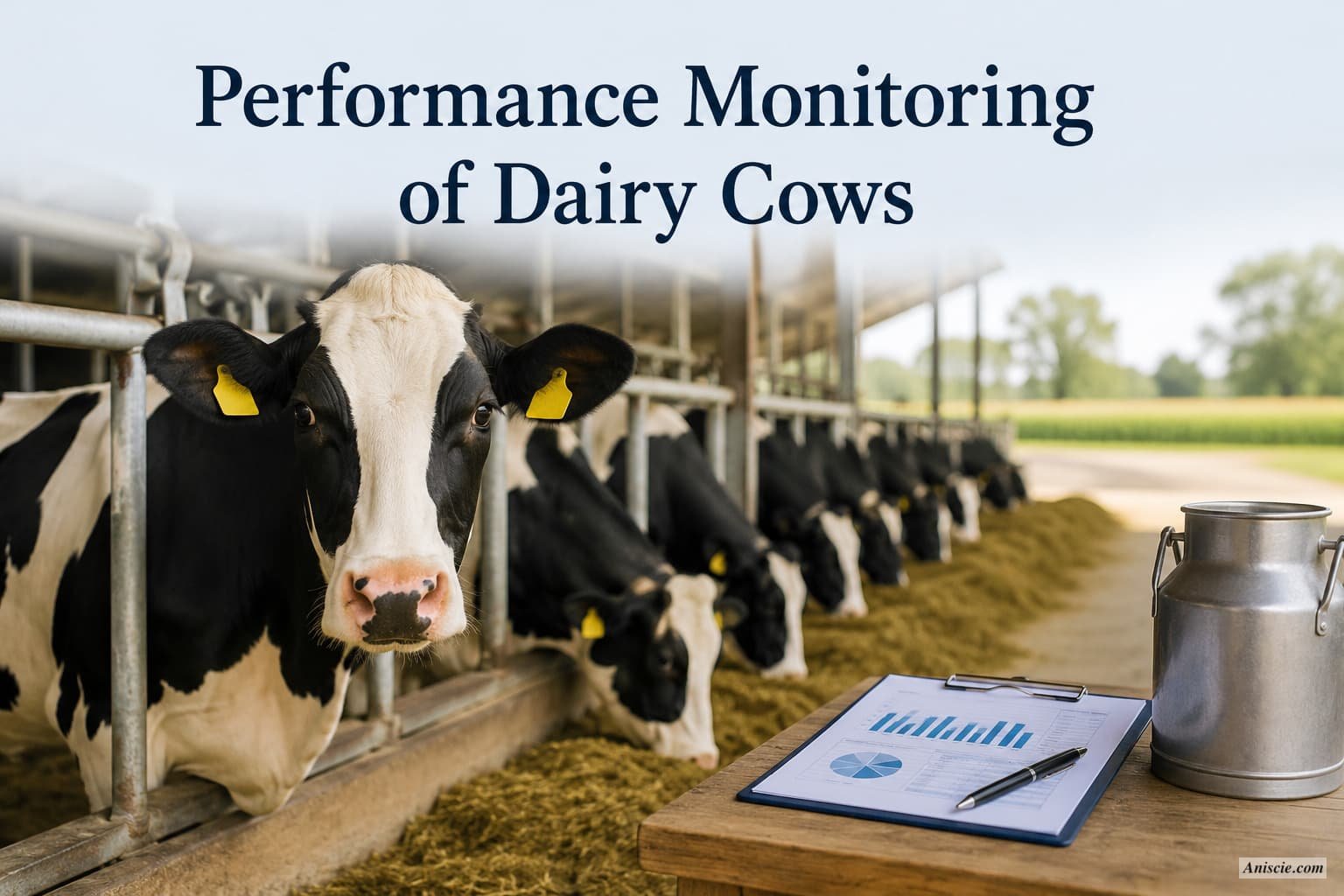
Performance Monitoring of Dairy Cows: Key Herd Productivity and Reproductive Benchmarks
Performance monitoring is an essential component of successful dairy herd management. Regular evaluation of production, reproduction, health, and economic indicators helps farmers assess herd efficiency, identify management problems early, and make informed decisions to improve profitability. Monitoring key performance benchmarks also enables comparison of herd performance against established standards and production goals.
Important performance indicators in dairy cows include milk production, lactation length, reproductive efficiency, calf survival, feed costs, and herd replacement rates. Maintaining these parameters within recommended limits contributes to improved productivity, better herd health, and long-term sustainability of the dairy enterprise.
- At least 30% of animals in production should be in their first lactation.
- First-lactation animals should produce at least 70% of the milk produced on the farm at any given time.
- Individual cows should have a lactation period of at least 280 days.
- At least 60% of the cows in the herd should breed within 60–90 days after the previous calving.
- Cows breeding after 140 days or more should not, under any circumstances, exceed 5%.
- There should not be a single death due to contagious diseases.
- Calf mortality up to 6 months of age should not exceed 5% per year.
- Non-functional teats should not account for more than 1% of the total (total teats = number of cows × 4).
- Total feed costs should not exceed 70% of the net income from milk sales.
- At any given time, 70% of animals should be in milk, whereas 20% should be dry and pregnant, and 10% should be dry and open.
- On any given day, the average days in milk (of all animals in milk) should be 150–160 days. (Count the number of days each animal has been in milk since calving and calculate the average for all animals currently in milk.)
- Sixty percent (60%) of the animals should conceive following the first artificial insemination (AI).
Importance of Key Dairy Herd Performance Indicators
Dairy herd performance indicators are measurable parameters used to evaluate the productivity, reproductive efficiency, health status, and profitability of a herd. Monitoring these indicators regularly helps identify management deficiencies and supports data-driven decision-making.
Lactation Length
Lactation length is the period during which a cow produces milk following calving. A lactation period of approximately 280–305 days is generally considered desirable because it allows optimal milk production while maintaining an efficient calving cycle.
Days in Milk (DIM)
Days in milk refers to the number of days a cow has been producing milk since calving. Monitoring the average days in milk for the herd helps assess the distribution of animals across different stages of lactation and provides insight into overall herd productivity.
Reproductive Efficiency
Reproductive efficiency is evaluated using parameters such as days to first breeding, conception rate, and first-service conception rate. Efficient reproduction reduces the calving interval, increases lifetime milk production, and improves overall herd profitability.
Calf Mortality Rate
Calf mortality rate is an important indicator of calf health and management practices. Low mortality rates reflect adequate colostrum management, nutrition, housing, disease prevention, and overall herd health programs.
Feed Cost Efficiency
Feed represents the largest operating expense on most dairy farms. Monitoring feed costs relative to milk income helps determine economic efficiency and ensures that nutritional investments are generating acceptable returns.
Replacement and Culling Rate
The replacement and culling rate reflects the proportion of animals removed from the herd and replaced with young stock. Strategic culling of low-producing or reproductively inefficient animals contributes to genetic improvement and enhanced herd performance over time.
Points to Consider for Improving Herd Production
- Each year, aim to improve the average daily milk yield by 15–20% (achievable only through good management).
- Use semen from bulls whose progeny are expected to have a milk production potential at least 1.5 times the herd average. However, in any case, the progeny should not have more than twice the herd’s average milk production potential. (For example, if your herd average is 3,000 liters per lactation, use bulls whose progeny are expected to produce 4,500–5,500 liters per lactation, rather than bulls whose progeny are expected to produce 6,500 liters or more.)
- Provide incentives to employees for accurate heat (estrus) detection, achieving good calf growth rates, and conserving feed and forage.
- Cull unprofitable animals, such as those with reproductive problems or those producing below the herd average. Each year, cull 20–30% of the herd and replace them with home-raised young stock.
- Do not cull animals if better replacements are unavailable. A regular breeder may be retained even if it produces 20% less milk than the herd average.
- If replacement animals need to be purchased, obtain them from within a 20–25 km (12–16 mile) radius whenever possible. Know their sire and ensure they are healthy.