CONTENT
Factors to Consider When Designing a Livestock Farm: Building Design, Layout, and Housing Requirements
Proper livestock farm design is essential for efficient animal management, optimum production, and effective utilization of resources. While designing a livestock farm, several factors related to building structure, housing requirements, and management practices should be considered to ensure the comfort of animals and the efficient operation of the enterprise.
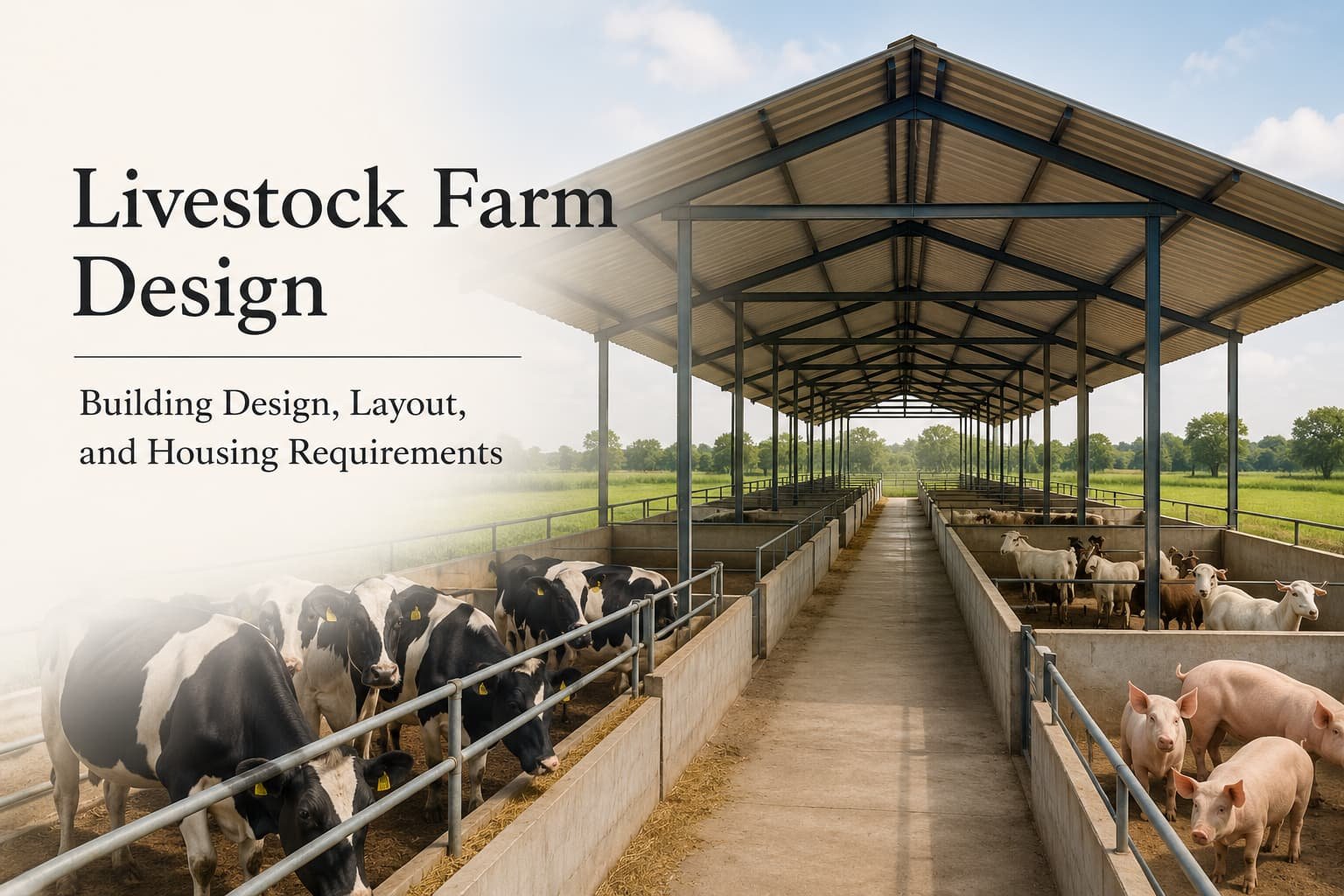
Different types of enterprises such as dairy, pig, sheep, and goat units require different building designs. Therefore, the design should be prepared to meet the needs of a particular enterprise.
Each enterprise may adopt different systems of production and management. The design may also be influenced by the enterprise.
Designing for Unit
It is desirable to design the accommodation for a workable unit. This provides an opportunity to assess the needs of a smaller group with regard to floor space and feeding space required for different kinds of animals.
The grouping of animals according to age, sex, and production status should also be considered while planning the unit.
Structural Form
The shape and design of the building should meet the needs of all classes of livestock. Uniformity in appearance should be maintained. The number of animals to be housed in the building and the number of buildings to be constructed should be determined in advance.
The arrangement of pens, alleys, feeding areas, and service passages should facilitate efficient animal management and labor utilization.
Designing for Flexibility
Animal buildings should be designed to accommodate changing enterprise requirements. This increases the utility of the buildings. Spacious buildings without pillars can be easily adapted for different enterprises with minor modifications. For example, large intensive dairy buildings can be used for rearing pigs, sheep, or goats with minor modifications.
Flexibility in design also allows the building to accommodate changes in herd size and management practices over time.
Shape of the Roof
The shape of the roof should be designed to suit local climatic conditions. Gable roofs with roof ventilators are necessary in hot climates. A monitor roof is suitable for buildings with a smaller width.
Standard Width of Buildings:
- Single-Row Cow Shed: 3.80 to 4.25 meters
- Double-Row Cow Shed: 7.90 to 8.70 meters
- Poultry and Other Buildings: 20 to 30 feet
Standard Height of the Building
The standard height of a building may vary according to the roofing material and agroclimatic conditions.
Adequate height is necessary to ensure proper air circulation, temperature regulation, and animal comfort within the building.
Length of the Building
The length of a building may vary depending on the number of animals housed. It can be determined based on the total livestock population to be accommodated within the building. For example, in dairy farming, a single-row system is suitable for 15–20 animals, while a double-row system is suitable for 20–50 animals. For herds exceeding 50 animals, a separate shed should be provided.
Excessively long buildings should be avoided, as they may reduce management efficiency and complicate feeding, cleaning, and animal supervision.