
CONTENT
Colostrum Feeding in Calves: Importance, Benefits, Gut Closure, Feeding Quantity, and Colostrum Substitutes
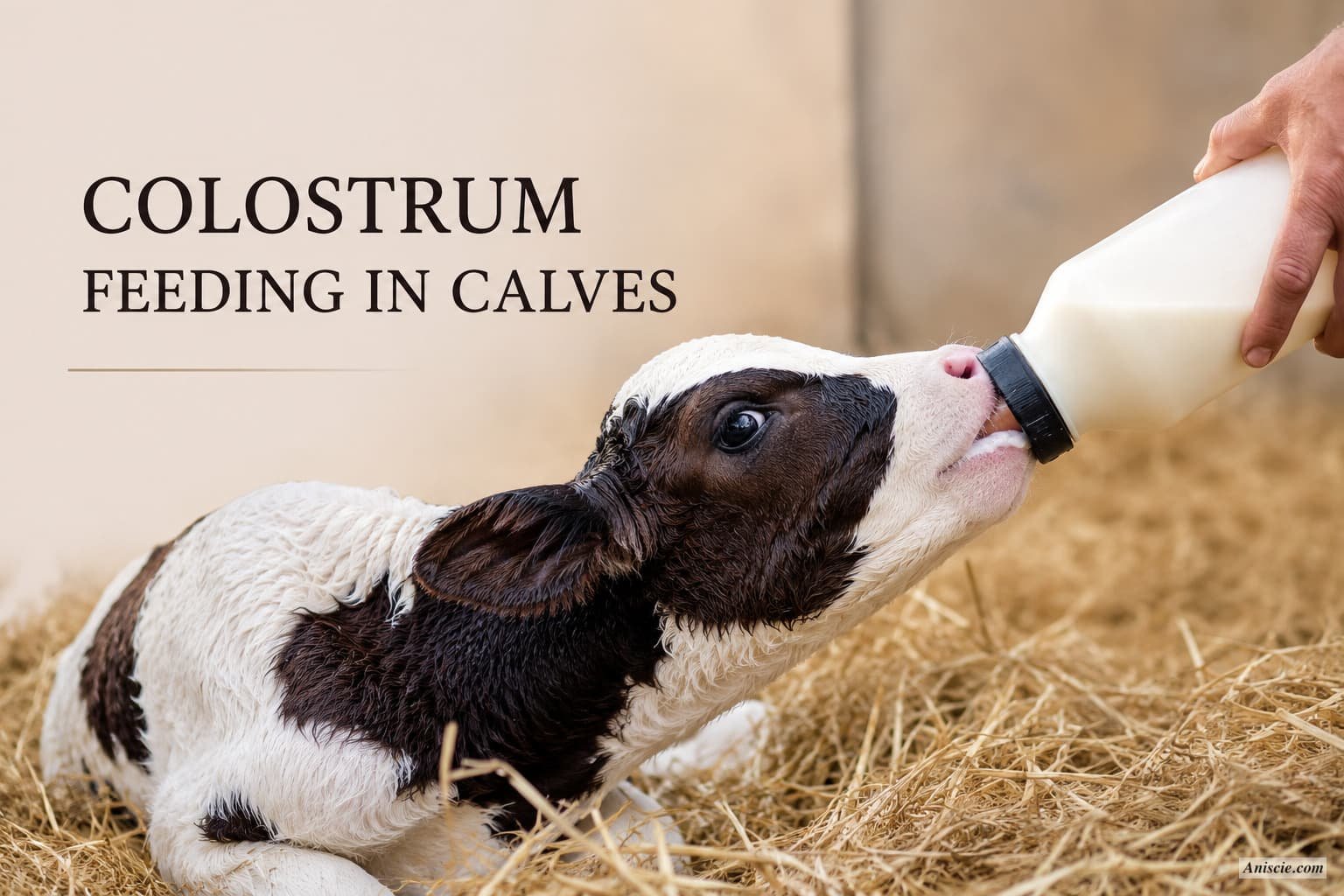
Colostrum feeding in calves is one of the most important management practices for ensuring the health and survival of newborn calves. Colostrum is the first milk produced by the dam after parturition and is rich in immunoglobulins, nutrients, vitamins, and minerals. Because calves are born with little to no protective antibodies, they depend on colostrum to acquire passive immunity against infectious diseases.
The timing, quantity, and quality of colostrum feeding play a critical role in calf growth, disease resistance, and overall performance. This article discusses the importance and benefits of colostrum feeding, gut closure, recommended feeding quantities, and colostrum substitutes used when maternal colostrum is unavailable.
Colostrum is the first milk secreted after parturition. It contains a large amount of gamma globulins, which are antibodies produced by the cow against antigens encountered during her life, including those against many disease-causing organisms. Absorption of these antibodies provides the calf with an umbrella of passive immunity.
Importance of Colostrum Feeding in Calves
Colostrum feeding is essential for the health, survival, and early development of newborn calves. Unlike many other species, calves are born with little to no circulating antibodies because the bovine placenta does not allow the transfer of maternal immunoglobulins to the fetus during pregnancy. As a result, calves depend entirely on colostrum to acquire passive immunity during the first few hours of life.
In addition to providing immunoglobulins, colostrum supplies concentrated nutrients, energy, vitamins, and minerals that help the calf adapt to life outside the uterus. Adequate colostrum intake improves disease resistance, reduces the risk of neonatal infections, supports growth and development, and increases the likelihood of survival during the critical early days of life.
Failure to provide sufficient high-quality colostrum soon after birth can result in inadequate transfer of immunity, making calves more susceptible to diarrhea, respiratory diseases, septicemia, and other health problems. Therefore, proper colostrum management is considered one of the most important practices in successful calf rearing.
Composition of Colostrum and Milk
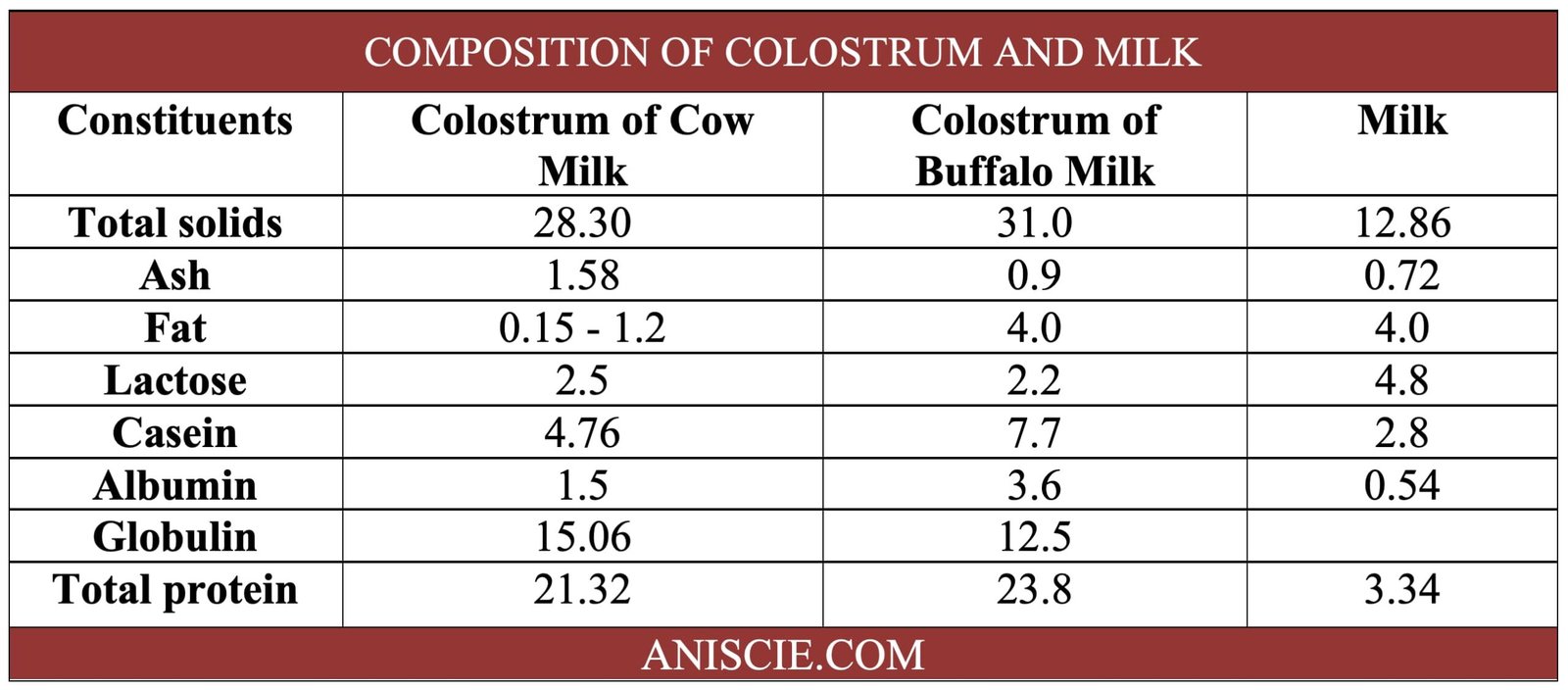
Colostrum differs markedly from normal milk in its composition. It contains significantly higher concentrations of immunoglobulins, proteins, fats, vitamins, minerals, and total solids, making it uniquely suited to meet the nutritional and immune requirements of newborn calves.
Benefits and Features of Colostrum
Colostrum is a highly fortified source of nutrients, having 7 times the protein and twice the total solids of normal milk; thus, it gives an early boost in protein and solid intake. It contains higher amounts of minerals and vitamin A, which are essential to combat disease. Ingestion of these through colostrum substantially increases the calf’s survivability.
Colostrum has a laxative effect, which is helpful in the expulsion of meconium (first feces).
Cows should be vaccinated against contagious and infectious diseases, which helps increase the quantity and quality of gamma globulins in colostrum. Similarly, colostrum from mature cows possesses large quantities of gamma globulins because they have a greater chance of exposure to many infections.
The gamma globulins must be absorbed intact across the intestinal wall into the bloodstream without being broken down into constituent peptides or amino acids. If they are broken down before entering the bloodstream, they will act as ordinary proteins.
The intestinal wall of the calf allows the globulins to pass from the intestine into the bloodstream for only a short period after birth. This permeability is rapidly lost after the first few hours of life.
Many studies have shown that these globulins pass across the gut wall at the most rapid rate during the first 1–2 hours of life. Taking this into consideration, it is highly beneficial to feed colostrum within the first 15–30 minutes after birth, followed by a second feeding approximately 10–12 hours later.
Gut Closure in Calves
The absorptive cell lining of the small intestine is immature at birth. At this stage, these cells indiscriminately take up large molecules such as immunoglobulins. As the calf grows older, hour by hour, there is a transition of the epithelial cells of the small intestine from an immature type to a mature type that cannot allow large protein molecules to pass. As more and more cells mature, the capacity of the calf to absorb immunoglobulins diminishes proportionately until ‘closure’, when no further absorption can take place.
This phenomenon is called ‘gut closure’. The concentration of antibodies at closure is directly related to the disease resistance of the calf. If, at closure, the calf has absorbed only a small amount of immunoglobulins from colostrum, the declining concentration soon places the calf in a critical immune state. This increases morbidity and often leads to mortality in calves.
Colostrum Quantity to be Fed
The quantity of colostrum to be fed is one-tenth of the calf’s body weight.
- 15–30 minutes after birth: 5–8% of body weight
- 10–12 hours after birth: 5–8% of body weight
- 2nd day: 10% of body weight
- 3rd day: 10% of body weight
Excess colostrum can be milked out daily; otherwise, calves may consume excessive amounts, resulting in calf scours. Excess colostrum can be stored under refrigeration and used for other calves or orphan calves. Colostrum can also be frozen and stored indefinitely. It may also be naturally fermented and stored for 5–7 days for later use.
Colostrum Substitute
In cases where colostrum is unavailable due to the accidental death of the dam or agalactia, a colostrum substitute can be used. It can be prepared by mixing 2 whole eggs in 1 liter of milk and adding 30 mL of castor oil. It should be fed three times a day.