CONTENT
Care of the Pregnant Cow and Calving Management in Dairy Cattle: Preparation, Calving Pens, and Signs of Parturition
Proper care of the pregnant cow and appropriate calving management are essential for the delivery of a healthy calf and the well-being of the dam. Adequate nutrition, proper housing, and close observation during the prepartum period help reduce calving-related complications and improve calf survival.
Calves form the future dairy herd. Regular replacement of 20 to 30 percent of cows with freshly calved heifers is highly essential to maintain production efficiency. Heifers raised on one’s own farm form the most reliable replacements. Besides, the sale of heifers forms a major component of income in the dairy business. Raising calves is the most difficult operation on a dairy farm, requiring a great deal of management skill, application, and constant attention.
Care of the calf starts in the womb of the cow when it is a fetus. During the first 6 months of pregnancy, the additional nutritional needs of the cow due to fetal growth are negligible. Moreover, during this period, the cow is lactating and must be fed good-quality concentrate and green fodder. During the dry period, the cow is often neglected and fed inferior-quality fodder, which results in poor growth of the calf.
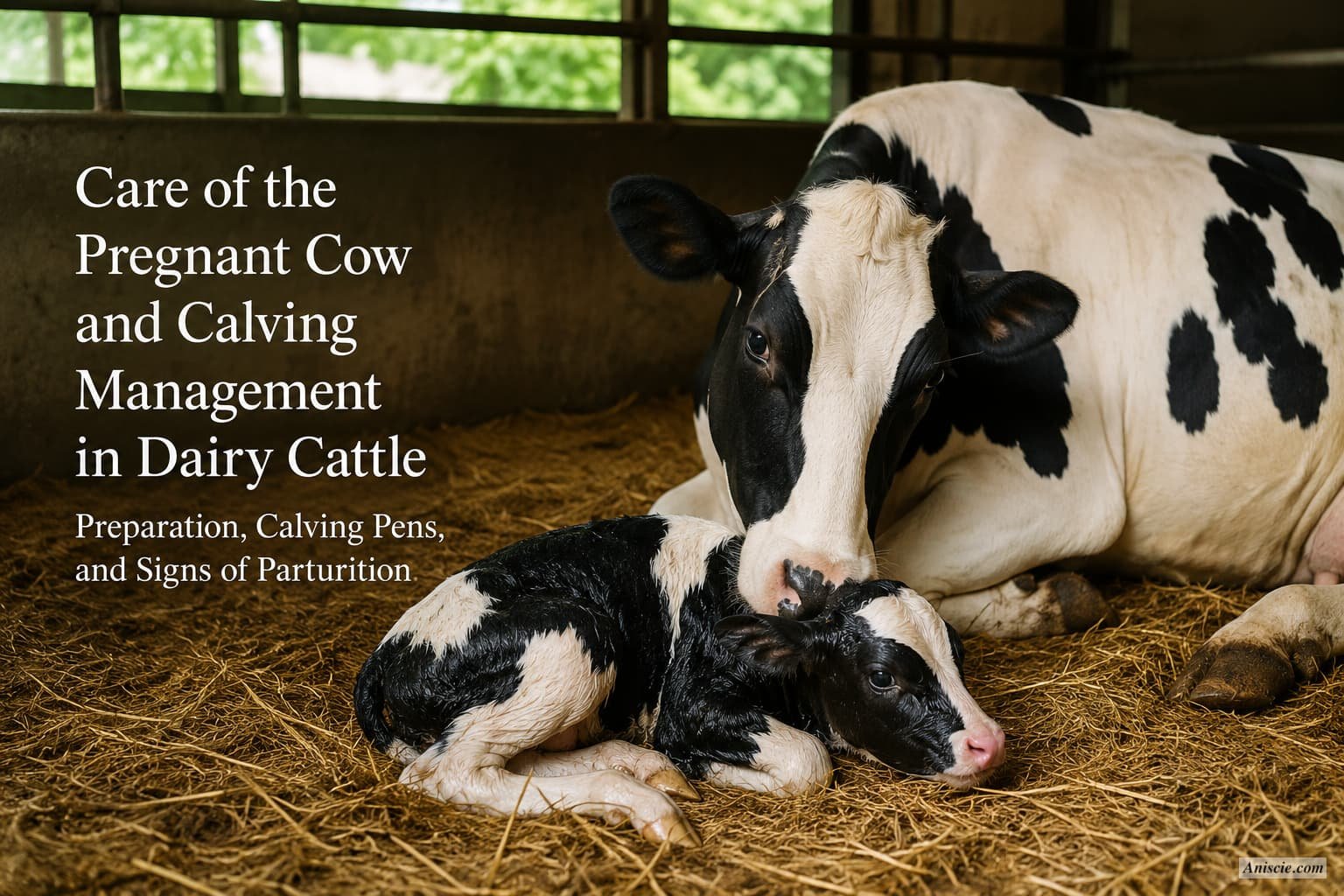
Care of Calf and Cow at Birth
A few days before the probable date of calving, the cow should be transferred to an individual calving pen. A pregnant cow may be transferred to the calving pen 1 to 2 weeks before the expected calving date. The number of calving pens required on a farm depends on the number of breedable cows and heifers, generally 5 percent of this number.
An ample amount of drinking water, laxative feed, and a generous supply of bedding should be provided.
The calving pen should be scrupulously cleaned and disinfected before bringing in the cow.
Calving Pen
A calving pen is an individual loose box or stall used for calving, which should be 3 m × 4 m in size (12 m2) and well ventilated. Sufficient lighting is essential.
- A calving pen provides better protection to the cow and calf and avoids disturbances from other cows.
- Special attention can be provided, for which attendant quarters may be located near the calving pen.
- Attendant quarters may be established near the calving pen to monitor the calving process during nighttime.
- The following items should be available in the calving pen at all times.
Antiseptic solutions such as tincture iodine or povidone-iodine, thread, scissors, lubricants such as liquid paraffin and vegetable oils, obstetrical equipment such as hooks, snares, calf pullers, and wire saws; emergency drugs such as local anesthetics, antibiotics, analgesics, and calcium borogluconate; and other items such as emergency lights, towels, soap, buckets, and aprons.
On farms maintaining only one or two animals, the animal in an advanced stage of pregnancy should be housed separately under close observation. It should be protected from predators. The floor should be dry and clean, and a clean grass cover is desirable. The cow should not be tethered too closely; it should be tied with sufficient rope to allow free movement and to enable it to care for the newborn calf easily during nighttime when calving may go unnoticed.
In cases of abortion, the fetus should be examined thoroughly to ascertain the possible cause of abortion (age of the fetus, condition, necrotic foci, if any, etc.). In such cases, the calving pen should be thoroughly disinfected with 4 percent caustic soda.
Signs of Approaching Parturition
Signs of approaching parturition include:
- The cow leaves the herd and seeks isolation.
- Loss of appetite and signs of distress.
- Distention of the teats and udder; considerable milk appears in the udder, and there may be dripping of milk.
- Relaxation of the pelvic ligaments one day before calving. The ligaments on either side of the tail head loosen, causing hollows to appear on either side of the backbone, while the tail head is raised and the quarters drop.
- The vulva becomes enlarged and flabby.
- The animal becomes restless and paces about, often trying to kick or scratch the flank region.
The parturition process has three stages:
- Preparatory stage (uterine contractions and dilation of the cervix)
- Active expulsive stage of the fetus (calf)
- Expulsion of the fetal membranes
The cow will deliver the calf within 12 hours after the commencement of the first stage. Care must be taken to observe the expulsion of the placenta (afterbirth). It should be removed immediately to prevent the cow from eating it.