Vitamins in Poultry: Functions and Deficiency Symptoms
Vitamins are essential micronutrients that support normal growth, development, metabolism, reproduction, and overall health in poultry. Deficiencies of specific vitamins can result in characteristic clinical signs and impaired production performance.
*ADVERTISEMENT*
Contact hello@mkvisuals.org to advertise here
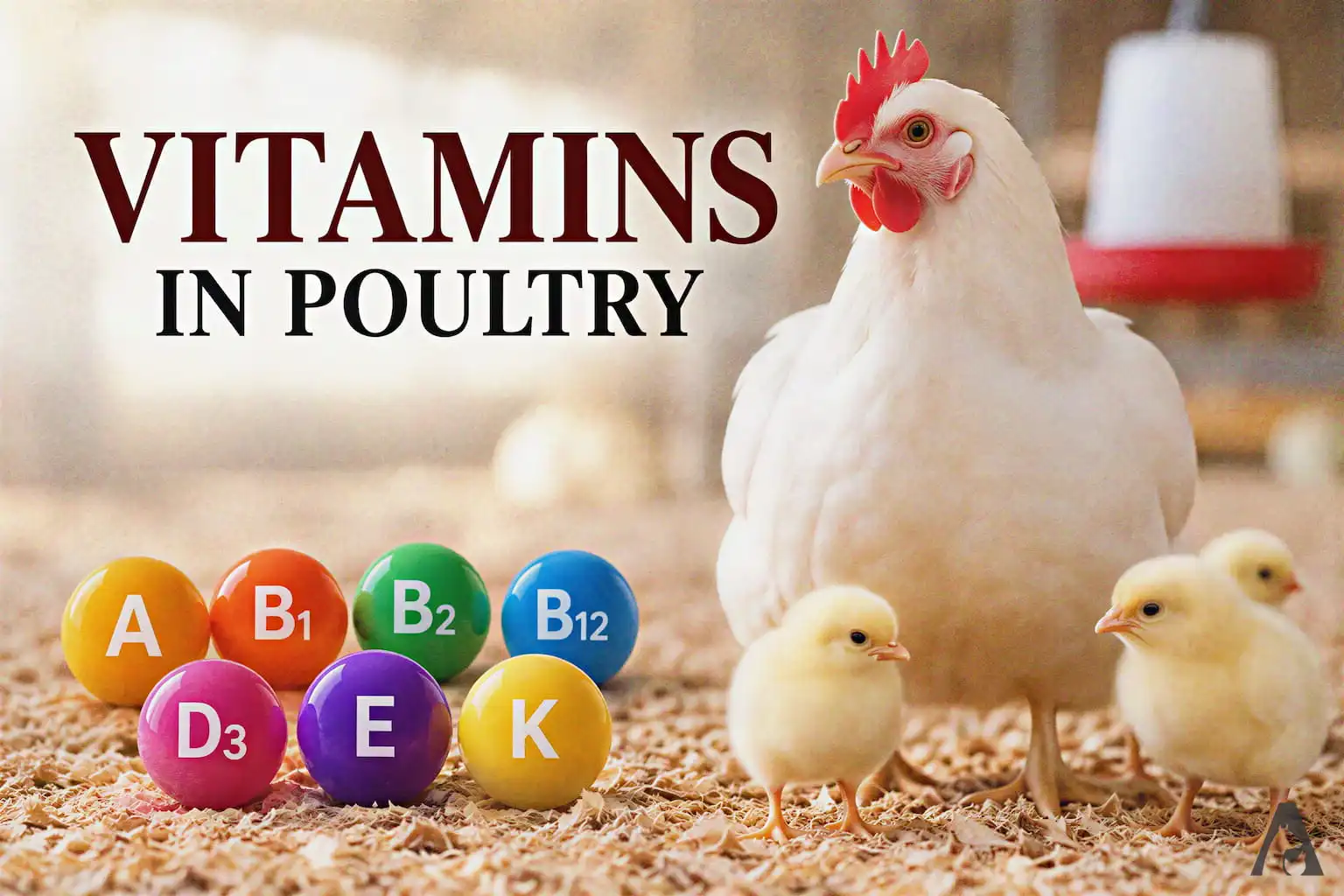
The following table summarizes the major functions of important vitamins in poultry and the principal signs associated with their deficiency.
| Vitamin | Important Functions | Deficiency Symptoms |
|---|---|---|
| A | Growth, health of the eyes and moist surfaces of the body | Poor growth, respiratory symptoms, nutritional roup |
| B1 (Thiamin) | Maintains appetite, aids digestion, and preserves the health of the nerves | Poor growth, nervous symptoms, star gazing |
| B2 (Riboflavin) | Promotes growth | Poor growth, curled-toe paralysis |
| Pyridoxine | Promotes growth | Poor growth, convulsions |
| Pantothenic acid | Maintains healthy skin and promotes growth | Crustations at the corners of the mouth and on the feet, fatty liver and kidneys |
| Biotin | Promotes growth | Crustations on the bottoms of the feet, scaly skin |
| Folic acid | Promotes growth and feather development | Poor growth and feather development, paralysis, sitting on the hocks |
| B12 | Normal growth and feathering | Very poor growth, anemia |
| D3 | Utilizes calcium and phosphorus for bone development and eggshell formation | Poor growth, curved legs, leg weakness, thin-shelled eggs, reduced egg production |
| E | Maintains brain structure; acts as an antioxidant | Crazy chick disease, exudative diathesis, muscular dystrophy |
| K | Blood-clotting mechanism | Hemorrhages |
*ADVERTISEMENT*
Contact hello@mkvisuals.org to advertise here