CONTENT
Parasitic Diseases of Rabbits: Coccidiosis, Ear Mange & Treatment
Parasitic diseases are important health concerns in rabbits and can adversely affect growth, production, and overall health. Among these, coccidiosis and mange are commonly encountered conditions that may cause significant clinical disease if not properly controlled.
This article covers coccidiosis and ear and skin mange in rabbits, including their causes, clinical signs, transmission, characteristic lesions, and treatment.
Coccidiosis
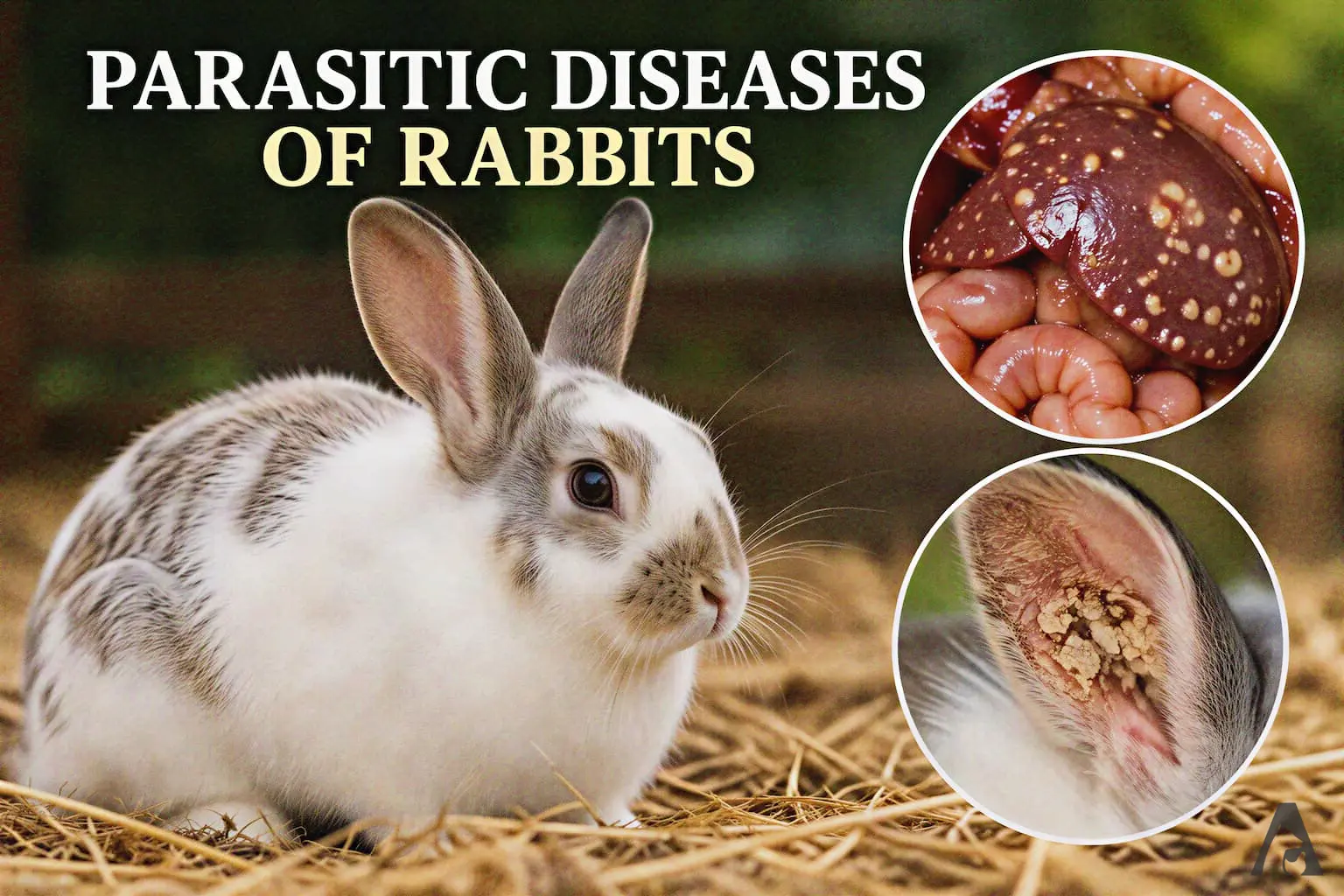
Coccidiosis is probably responsible for more losses through deaths and reduced production than any other disease. It is caused by several species of protozoa of the genus Eimeria, with one species affecting the liver and others affecting the intestines. Very often, a mixed infection occurs.
The symptoms vary according to the form of the disease, the age of the animal, the severity of the infection, and the condition of the animal. In the hepatic (liver) form, diarrhea is occasionally present, and there may be some loss of condition.
In advanced cases, the liver shows a number of white or yellow spots or streaks and, later, nodules, the contents of which vary from a thin fluid to a thick, cheesy material. The bile ducts become thickened, and in advanced chronic cases of the hepatic form, the liver is greatly enlarged, giving rise to a “potbelly” appearance.
In the intestinal form, the signs are more varied. There is usually loss of body condition, and the coat becomes harsh and staring.
Infection arises from contaminated food and water. Green forage contaminated by wild rabbits is a common source of infection. Adult animals may act as carriers of the disease.
Treatment: Sulfaquinoxaline (1 g per liter of water), sulfadimidine, nitrofurazone
Ear and Skin Mange (Ear Canker)
It is a common disease of rabbits. It is caused by one of two types of mites, usually Psoroptes cuniculi but sometimes Chorioptes cuniculi. The adult mites are about 0.5 mm long and can be seen in scrapings from an affected ear. The mites infest the inside of the ear and cause inflammation and severe irritation, with yellow or brown scabs being produced.
The rabbit scratches its ears and shakes its head constantly. Infestation occurs through the transmission of mites from one animal to another, and the condition is highly contagious. The mites can live for up to three or four weeks away from a rabbit. In advanced stages, the condition may affect the middle ear, causing wry neck (the rabbit’s head is held constantly to one side).
Treatment can be effective if initiated at an early stage. In rabbitries, the ears of all rabbits should be cleaned periodically with an organophosphorus compound or pyrethroids (deltamethrin). Culling rabbits with excessive mange is advisable.
The bedding of affected animals should be burned, and the hutch should be carefully disinfected. The traditional form of treatment, which is still effective, consists of removing all crusts or scabs with cotton wool wrapped around a thin stick and dipped in hydrogen peroxide or spirit. After removal of the scabs, a proprietary ear canker preparation should be applied, or liquid paraffin containing 1% phenol or any benzyl benzoate preparation can be used.
Modern treatment consists of the subcutaneous injection of ivermectin at a dose of 400 micrograms per kg of body weight. One of the benefits of this treatment is that other parasites present are treated at the same time. The treatment does not kill mite eggs and should therefore be repeated three weeks later.