
CONTENT
Rabbit Breeding, Pregnancy, Kindling, Fostering and Weaning Management
Rabbit breeding management involves proper care of the doe and young rabbits throughout pregnancy, kindling, nursing, fostering, and weaning. Appropriate housing, nutrition, nest preparation, and regular observation during these stages are essential for successful reproduction and the survival and healthy development of the young.
Proper management during pregnancy and kindling includes providing a suitable nest box, maintaining hygienic surroundings, and monitoring the doe and litter after parturition. Fostering may be practiced when necessary to balance litter size or manage orphaned young, while appropriate weaning practices help minimize stress and mortality in growing rabbits.
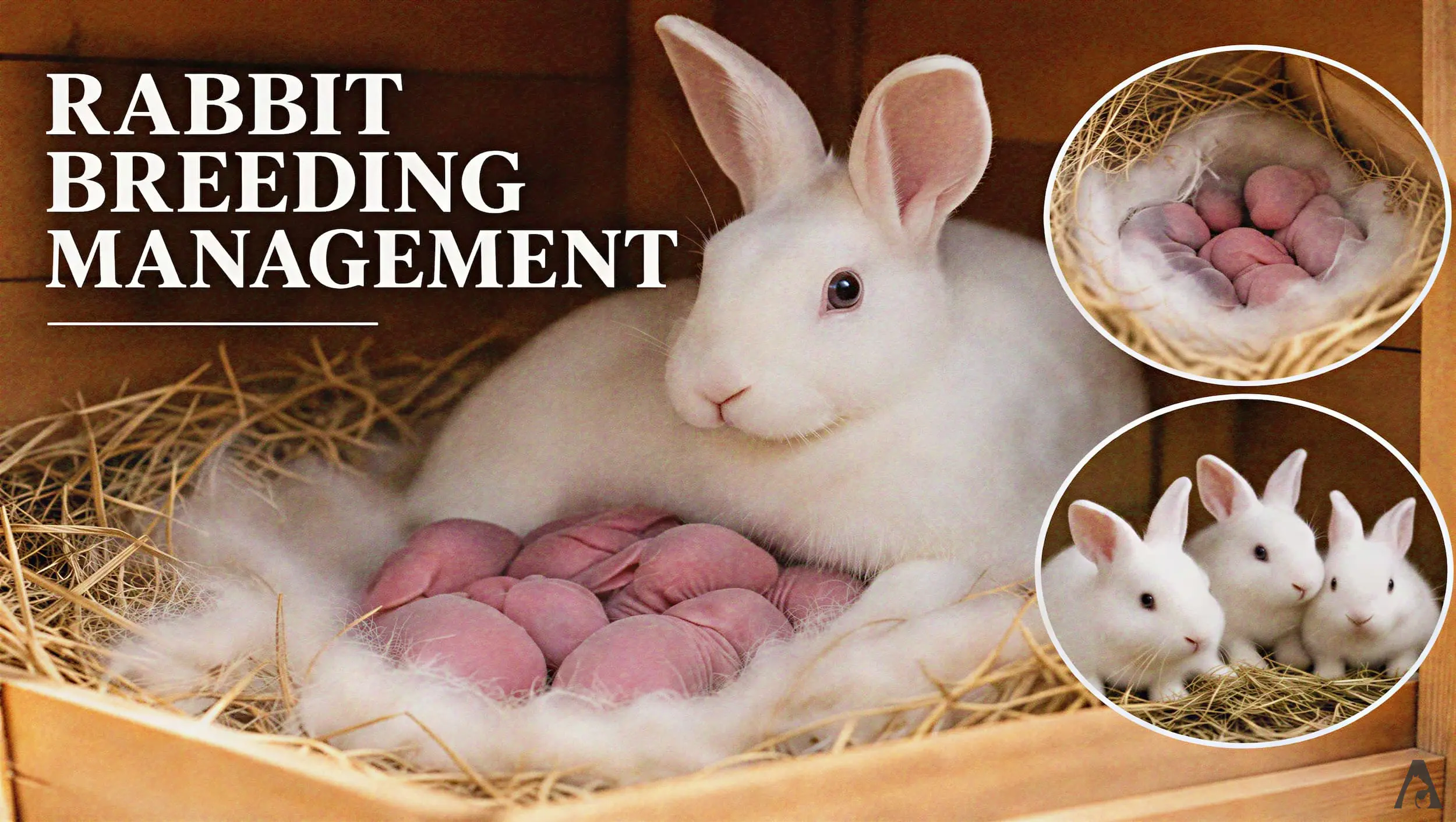
- The doe should be transferred to the kindling box by the 27th to 28th day after mating.
- Kindling should take place in quiet, hygienic surroundings. Providing a dark environment is essential.
- Provision of adequate nesting or bedding material in the nest box is essential.
- A good mother will provide a layer of fur bedding by plucking her abdominal fur, and this nest-building behavior is an important indication of approaching kindling.
- Kindling lasts for 15 to 30 minutes, depending on the size of the litter.
- After kindling, the nest should be examined for bunnies, and any dead animals should be removed. This can be performed easily by removing the mother. Daily inspection of the nest is important.
- Normally, the rabbit nurses her bunnies once a day, preferably in the early morning.
- Rabbits are born without any fur and with their eyes closed. Their eyes open at around 10-11 days, and the fur begins to develop at about the same time.
Fostering
There are 8-12 teats in a female rabbit. Loss of newborns usually increases when the litter size is larger than the number of teats and vice versa. In rabbits, the mother-young relationship is largely lacking, which allows fostering to be practiced. While fostering, the following points should be considered:
- Fostering can be done if the litter size is large or the doe has died.
- No more than 3 young rabbits should be given to a foster mother.
- The maximum age difference between the foster doe’s litter and the fostered litter should be 48 hours.
- Fostering should take place within 5 days of kindling.
Weaning
Young rabbits should not leave the nest box until they are about 3 weeks of age. Weaning of bunnies can be done by the 4th to 6th week of age. The doe should be removed from the cage, and the young can be retained for the next 4-5 weeks. During weaning, abrupt changes in feed should be avoided to reduce mortality in weaners.