CONTENT
Prophylactic Measures and Disease Susceptibility in Laboratory Animals
Prophylactic measures play an important role in maintaining the health and well-being of laboratory animals and ensuring the reliability of experimental results. Disease susceptibility in laboratory animals is influenced by several factors, including environmental conditions, genetic characteristics, metabolic status, experimental procedures, and nutrition.
Prophylactic measures are important to prevent diseases from occurring in laboratory animals, not only for the benefit of the animals but also because the effects of disease can confound experimental results.
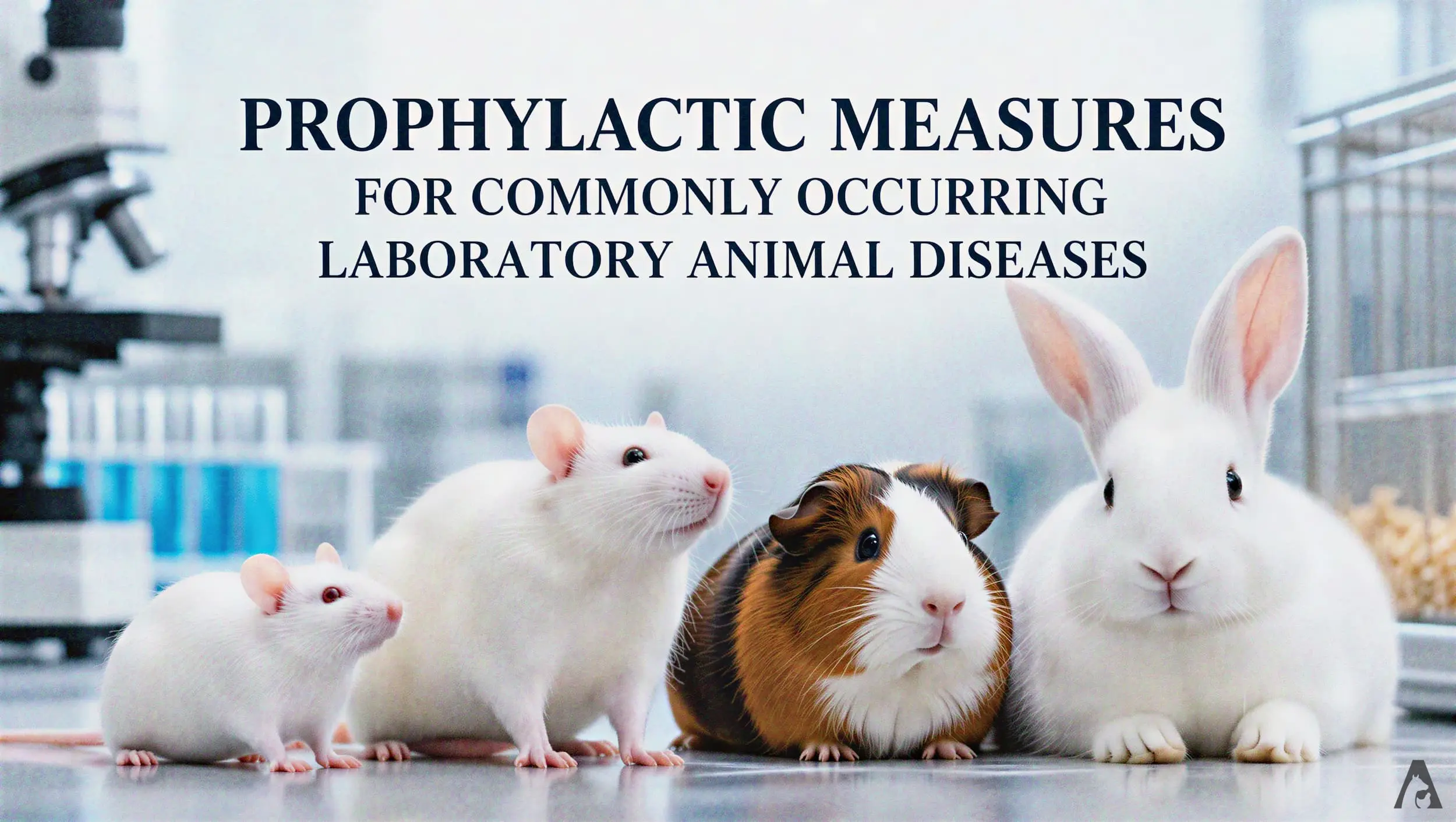
Factors Influencing Disease Susceptibility
Various factors are involved in the disease susceptibility of laboratory animals, including environmental, genetic, metabolic, experimental, and dietary factors.
Environmental Factors
- Climatic extremes, climatic changes
- Inadequate ventilation, high ammonia levels
- Excessive drafts, dampness
- Overcrowding, improper bedding, excessive noise
- Improper lighting, waste accumulation, high or low humidity
Genetic Factors
- Sex differences, strain differences
- Mutations, congenital abnormalities
- Immune deficiency, inbreeding
Metabolic Factors
- Age, obesity, concurrent disease
- Lack of exercise, lactation, pregnancy
- Nonspecific stressors
Experimental Procedures
Restraint, surgery, drug effects, radiation effects, pathogen inoculation, and bleeding.
Dietary Factors
- Insufficient quantity of feed or water; feeders or waterers that are inaccessible, not recognized, or not working; feed supplied in a form that cannot be consumed by the age group or species involved.
- Increased demand for nutrients because of pregnancy, lactation, heat, cold, diet composition, or disease.
- Inadequate feed or water quality, improper formulation, and dietary alterations.
Measures to Prevent Disease in Laboratory Animal Houses
Sanitation is a key operation in laboratory animal care. Various systems of husbandry have been devised to regulate the exposure of animals to infection. Entry should be restricted, and the use of protective clothing and overshoes will minimize the bacterial and fungal load. Provision of a barrier unit with a liquid dip, showering, and complete clothing changes will minimize contamination.
Clean cages are important during pregnancy, lactation, and weaning, after the removal of sick animals, and before the introduction of new animals. Newly purchased animals should be obtained from approved breeders who maintain health profiles.
Waste accumulated in the cages should be washed with hot water (82°C) for at least 3 minutes, or a disinfectant solution such as phenol, quaternary ammonium compounds, or halogens should be applied.
Wherever possible, heat should be the first choice for all situations not involving animal tissues. Hot water used at 80°C for 1 minute or 65°C for 10 minutes will kill most spore-forming microbes. Its application to room surfaces, especially floors, pens, cages, and other equipment, is the simplest and most reliable disinfection method.
Rooms or complete buildings can be decontaminated by cleaning with a high-pressure hose and using disinfecting gases or aerosols. Formaldehyde fumigation is a satisfactory method. The minimum recommended concentration of formaldehyde is 900 mg/m³ for 3 hours.
The single most common source of infection in the animal house is the introduction of disease-carrying stock. Animals may appear clinically healthy but carry a wide range of infectious agents. Newly purchased animals should be quarantined for a specific period.
Guinea pigs scatter their bedding into feeders and crocks, are susceptible to Bordetella pneumonia, and require dietary supplementation with ascorbic acid. They should not be housed with rabbits, dogs, or cats because these animals may carry Bordetella subclinically. Hamsters are more susceptible to climatic changes and food and water deprivation and should be cared for properly.