CONTENT
Bacterial Diseases of Rabbits: Pasteurellosis, Abscesses & Mastitis
Bacterial diseases are an important cause of illness and economic loss in rabbits. Several bacterial infections can affect the respiratory, reproductive, ocular, mammary, and other body systems.
Among these, pasteurellosis caused by Pasteurella multocida is particularly important and may produce conditions such as snuffles, pneumonia, conjunctivitis, septicemia, and reproductive tract infections. Other important bacterial conditions in rabbits include abscesses and mastitis.
Pasteurella multocida Diseases
Pasteurella multocida is almost invariably present in most rabbits, and pasteurellosis is probably the cause of the greatest losses to rabbit farmers. The organisms are usually located in the nasal cavities of rabbits, and therefore, the most commonly observed symptoms are in that region. Common disease conditions produced by P. multocida are:
- Hemorrhagic septicemia: sudden death may occur in acute cases, and hemorrhages may be found in the lungs and lymph nodes or glands.
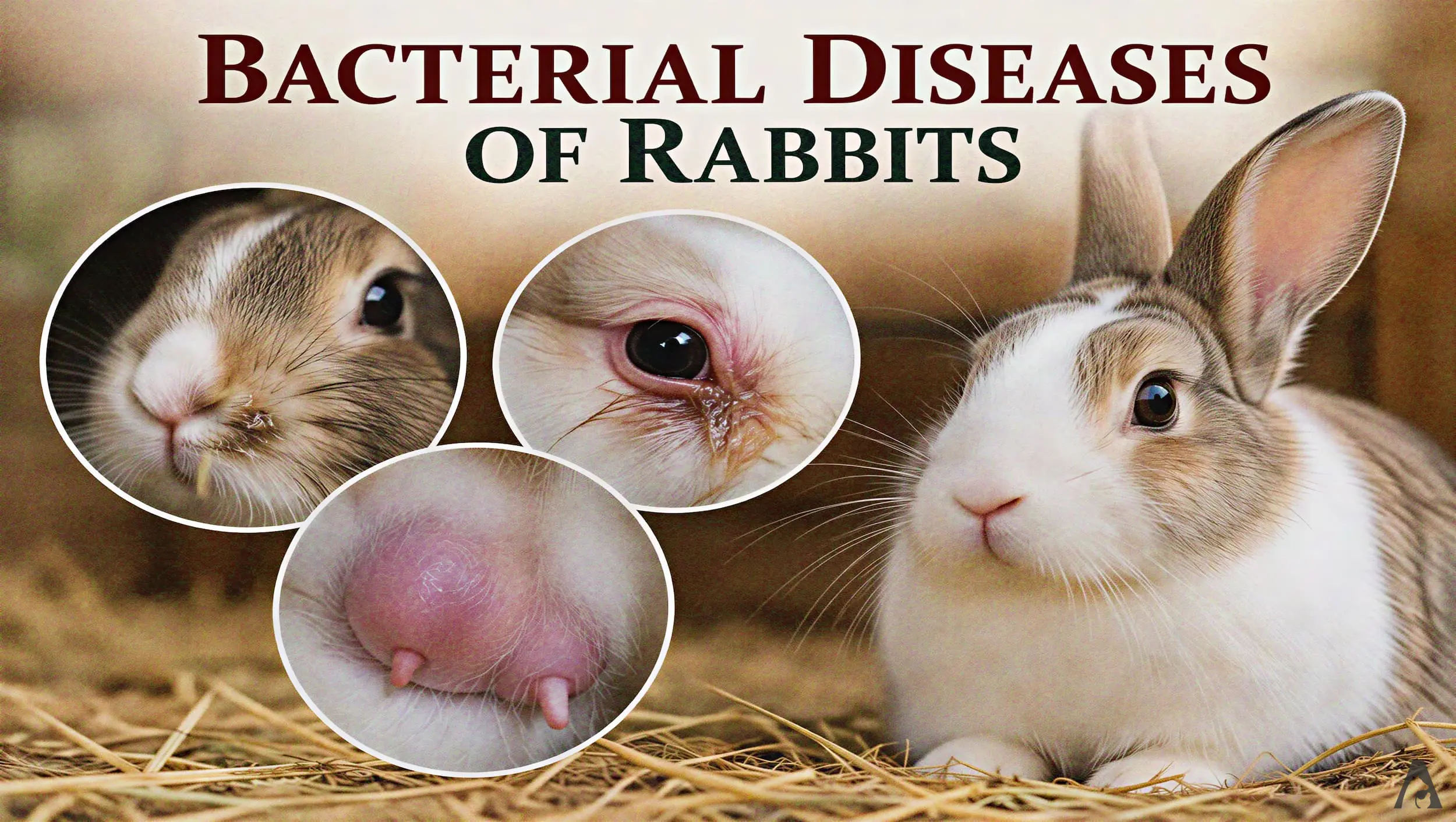
- Chronic conjunctivitis, also known as weeping eye, is a condition in which there is a discharge from the eye.
- Reproductive tract infection: in bucks, swollen testicles; in does, metritis.
- Snuffles: a thick, sticky, white discharge from the nose, which the animal wipes away with its forelegs, along with sneezing and coughing.
- Torticollis or wry neck (the animal holds its head to one side) due to inner ear infection.
- Pneumonia
Prevention is through strict hygiene, and treatment is with sulfaquinoxaline and sulfadimidine (1 mg per liter of water).
Abscesses
Abscesses can be produced by several types of bacteria, but the most commonly involved is Staphylococcus aureus. The most common site of formation is subcutaneous, but abscesses may also occur at internal sites.
Mastitis
This is an infection of the mammary gland occurring only in lactating does. Fortunately, it is not common. The acute form is sometimes incorrectly known as milk fever or blue breast.
The disease is caused by various bacteria, including staphylococci and streptococci. The main symptoms include swollen teats; the doe has little appetite but is unusually thirsty and has a high temperature.