CONTENT
Selection of Breeding Stock of Laboratory Animals
Selection of breeding stock is an important aspect of laboratory animal management for the consistent production of healthy, fertile, and high-quality animals. Appropriate selection is based on health, reproductive performance, litter characteristics, temperament, and genetic background. Different breeding systems, including monogamy, polygamy, harem mating, and hand mating, may be adopted depending on the laboratory animal species.
Foundation stock should be true to the breed. The animals should be healthy, free from disease, active, vigorous, and of good quality. They should have good production records with respect to litter size at birth and weaning and litter weight at birth and weaning.
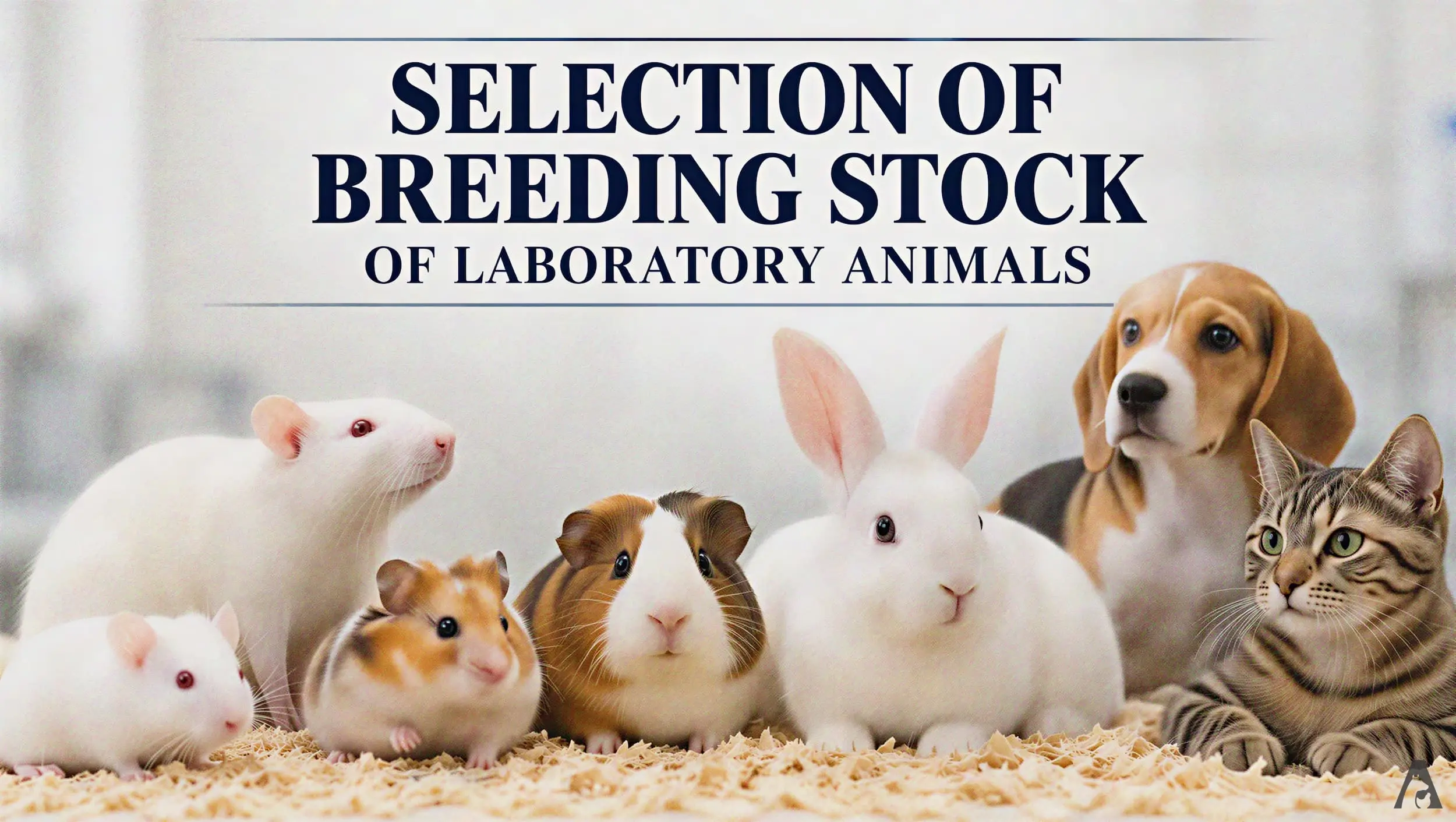
Breeding stock should be purchased from the government or recognized breeders. Selection of trios (one male and two females) from the same genetic line is desirable for achieving good results.
The primary objective of a good breeding program is to produce the maximum number of quality animals at a lower cost. Selecting breeding stock is important for the consistent production of healthy and fertile animals.
Selections Criteria for Breeding Stock
The criteria for the selection of breeding stock may include the following:
- The female parent should have a breeding record and not be prone to infanticide.
- The animal should be in good health and show no deformities.
- If possible, animals should not be selected from the first or second litters, as they are usually small and do not reflect the size and standard weight of future litters.
- Animals should be selected from litters showing an average litter size and weight for the strain/breed and an equal sex ratio within the litter.
- The parent stock should not be aggressive when handled.
In general, breeding systems for laboratory animals may be divided into two main groups, each of which can be subdivided into two classes:
- Permanently mated groups, in which the female is allowed to give birth in the presence of the male and other members of the group. There are two main subdivisions of this system:
- Monogamy, i.e., a single male and female housed together.
- Polygamy, i.e., one or more males housed with several females.
- Temporarily mated groups, in which the females are separated from the groups before parturition.
- Harem system, in which the males and females are housed together but separated prior to parturition.
- Hand-mating systems, in which the male and female are left together only for sufficient time for mating to occur.
Common Breeding Systems for Laboratory Animals
| Species | Permanently Mated | Temporarily Mated | ||
|---|---|---|---|---|
| Monogamy | Polygamy | Harem | Hand Mated | |
| Mouse | + | + | − | − |
| Chinese hamster | + | + | − | + |
| Syrian hamster | + | − | + | + |
| Guinea pig | − | + | + | − |
| Rabbit | − | − | − | + |
| Ferret | − | − | + | − |
| Cat | − | − | + | + |
| Dog | − | − | − | + |
| Rhesus macaque | − | − | − | + |
| Baboon | − | − | − | + |
| Chicken | − | − | + | − |