
CONTENT
Rabbit Anatomy and Identification: Breeds and Marking Methods
Rabbits have several distinctive anatomical features that differentiate them from rodents and other small laboratory animals. Knowledge of these characteristics, along with breed differences and reliable identification techniques, is important for their appropriate handling, management, and use in laboratory settings.
Rabbits are not closely related to rodents, and their resemblance is only superficial. In both groups, the incisor teeth grow continuously; rabbits, however, have a smaller second pair. They have three premolars in the upper jaw and two in the lower.
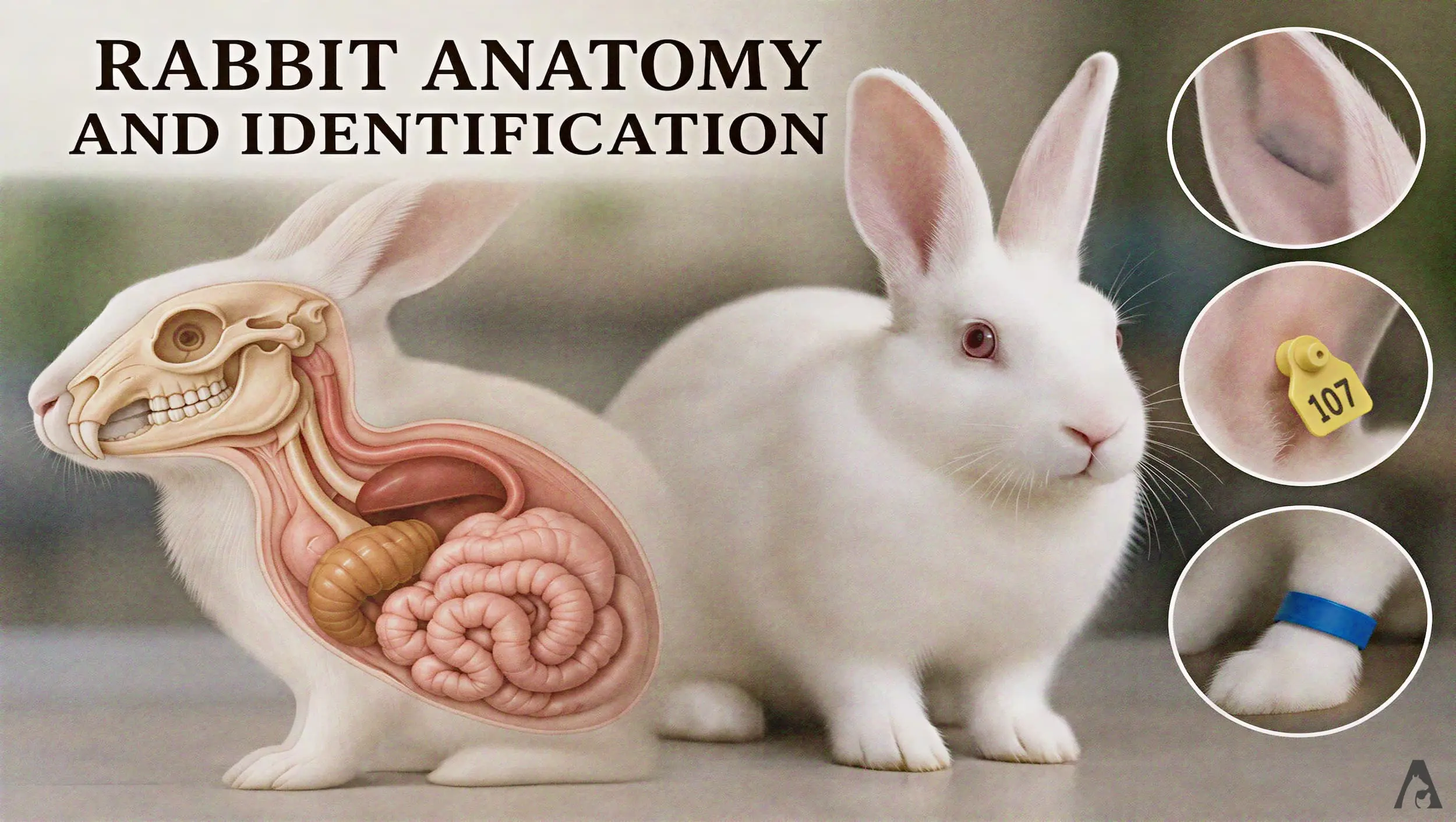
The molar teeth have cutting edges, whereas in rodents they are modified for grinding. Both males and females have nipples, normally four pairs. The alimentary tract has a large cecum and a well-developed appendix, as might be expected in an animal eating a high proportion of cellulose. The pancreatic duct enters the duodenum well below the bile duct.
A large number of breeds now exist, and several are used for experimental work. The breeds can be grouped according to body size: small, medium, and large. Breeds from each group can be found in the laboratory.
- Small: Polish 1–1½ kg, Netherland Dwarf 1½ kg;
- Medium: Dutch 1½–2½ kg;
- Large: Flemish Giant 6 kg, New Zealand White 5 kg, Californian 4½ kg.
Identification of Rabbits
Rabbits can be marked by ear tattoos, ear tags, or leg bands. As young rabbits grow relatively quickly, it is important to select the correct size of leg bands to avoid discomfort when mature.
The most satisfactory method is tattooing, although with a few dark breeds, this may present problems. The majority of breeds, including some with dark fur, have light skin, and black tattooing pastes show up clearly.