CONTENT
Rabbit Farming: Advantages, Meat Production and Constraints
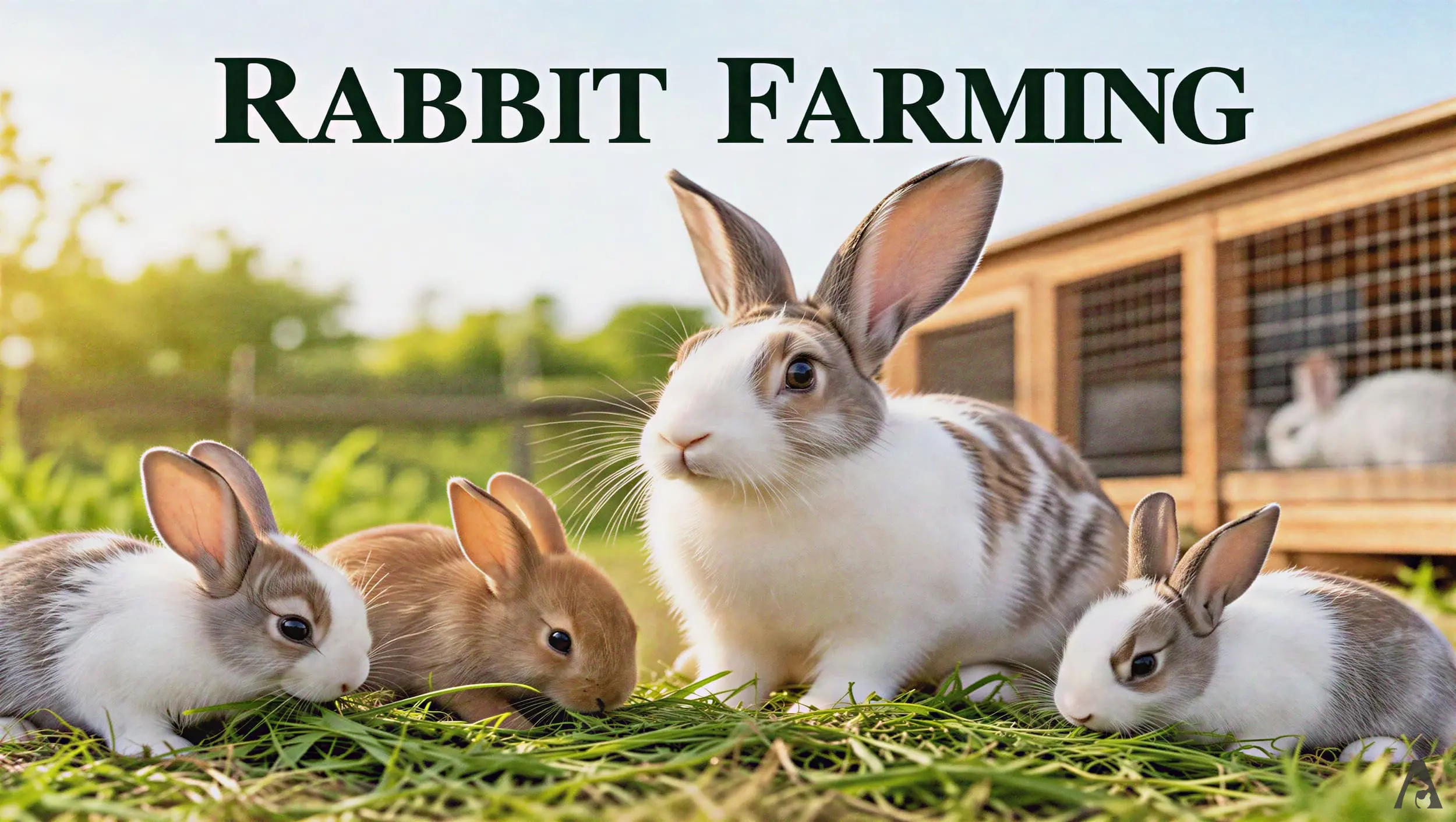
Rabbit farming involves the raising and management of rabbits for meat, fur, wool, research, and other purposes. Rabbits are prolific animals with a high growth rate, efficient feed conversion, and relatively low space requirements, making them suitable for both small-scale and commercial production systems.
Rabbit meat is valued for its high protein content and relatively low fat content compared with several other types of meat. This article discusses the differences between rabbits and hares, the advantages of rabbit farming, the efficiency and nutritive value of rabbit meat production, and the major constraints associated with rabbit farming.
Rabbit vs. Hare
| Rabbit | Hare |
|---|---|
| Oryctolagus cuniculus | Lepus nigricollis The Indian hare (Lepus nigricollis), also known as the black-naped hare, is a common species of hare found in South Asia. |
| Chromosome number – 44 | Chromosome number – 48 |
| Rabbits make burrows. | Hares do not rear their young below ground in burrows as other leporids do; rather, they rear them in shallow depressions or flattened nests of grass called forms. |
| They live in colonies. | They live solitarily or in pairs. |
| Newborn rabbits are blind and hairless (naked). | Newborn hares are fully furred and have their eyes open. They are therefore able to fend for themselves soon after birth; they are precocial (the term precocial refers to species in which the young are relatively mature and mobile from the moment of birth or hatching). |
| They are available in various colors and are usually smaller than hares. | Hares are generally larger than rabbits, with longer ears and black markings on their fur. |
| Rabbits are domesticated and are often kept as pets. | Hares have not been domesticated. |
Rabbits are primarily raised for meat, fur, and wool production. They have great potential to convert feed into quality products for human use. All domestic breeds of rabbits are descendants of the European wild rabbit, Oryctolagus cuniculus. The first recorded rabbit husbandry dates back to early Roman times, when rabbits were kept within walled rabbit gardens. Domestication of the rabbit is relatively recent, and humans have developed most of today’s rabbit breeds over the last 200 to 300 years. Until 1950, rabbits were mainly used for research purposes.
Advantages of Rabbit Farming
- Rabbits can be fed high-forage, low-grain diets that are largely noncompetitive with human food requirements.
- Rabbits have high feed conversion efficiency, with feed/grain ratios of 2.5–3.0 on high-grain diets and 3.5–4.0 on high-forage, grain-free diets.
- They have a high growth rate, reaching a market weight of about 2 kg at 12 weeks of age.
- Rabbits have the potential to remain in a constant state of reproduction; they can be bred within 24 hours of kindling, utilizing postpartum heat.
- Rabbits convert forage into meat more efficiently than ruminant animals such as cattle and sheep. From a given amount of alfalfa, rabbits can produce about five times as much meat as beef cattle.
Comparative Efficiency of Rabbits as Meat Producers
| Type of Animal | Young/Year | Total Carcass Weight (kg) of Offspring/Year | In Relation to Dam Weight |
|---|---|---|---|
| Cattle | 0.9 | 173 | 0.35 |
| Sheep | 1.0 | 25 | 0.42 |
| Goat | 1.5 | 24 | 1.0–1.5 |
| Pig | 20 | 3200 | 16 |
| Rabbit (intensive) | 30–48 | 72–117 | 18–29 |
- Rabbits are prolific animals. Rabbits can produce ten to fifteen times or more of their own body weight in a year.
- A large number of rabbits are used in laboratories because of their small size, limited space requirements, and relatively low feeding and care costs.
- Compared with the meat of other species, rabbit meat is richer in protein (21%) and vitamins but contains less fat (8%).
Comparative Nutritive Value of Rabbit Meat
| Type of Animal | Protein (%) | Fat (%) | Moisture (%) | Calories/400 g | Cholesterol (mg/kg) |
|---|---|---|---|---|---|
| Rabbit | 20.8 | 10.2 | 27.9 | 795 | 50 |
| Chicken | 20.0 | 11.2 | 67.0 | 810 | 60 |
| Veal | 18.8 | 14.0 | 66.0 | 910 | 100 |
| Lamb | 15.7 | 27.7 | 55.0 | 1420 | – |
| Pork | 11.9 | 45.0 | 42.0 | 2050 | 105 |
- Rabbits are suited to both small-scale (backyard) and large-scale commercial production.
- Rabbit keeping is generally not restricted by social or cultural taboos.
- A rabbit provides a convenient meal-sized carcass, thus reducing the need for storage.
Constraints in Rabbit Farming
- A major constraint is the shortage of germplasm. The available germplasm of broiler-type rabbits at CSWRI, Avikanagar, and its stations at Garsa and Mannavanur falls far short of demand.
- Lack of technical know-how prevents farmers from taking up rabbit farming.
- Another major constraint is the lack of a well-organized market for rabbit meat.
- There is no organized, regular slaughter of rabbits.
- The constant availability of wild rabbits plays a vital role in limiting commercial rabbit slaughter.
- Many meat consumers regard rabbits as pets or companion animals, which can discourage their slaughter and consumption.
- Overall, low consumer demand, insufficient promotion, inconsistent supply, unreasonable pricing, competition with other meats, lack of product diversification, and poorly developed marketing channels are the major constraints.