CONTENT
Dog Breed Classification: 7 AKC Dog Groups Explained
Dog breeds vary widely in their physical characteristics, temperament, instincts, and traditional roles. To organize these diverse breeds, the American Kennel Club (AKC) classifies recognized dog breeds into seven major groups based largely on their historical functions and characteristics. Understanding these dog groups provides useful insight into the general traits, behavior, and working background of different breeds.
Dog groups were developed by humans to help us categorize dogs by their functionality. Dog groups are part of the American Kennel Club (AKC) classification system.
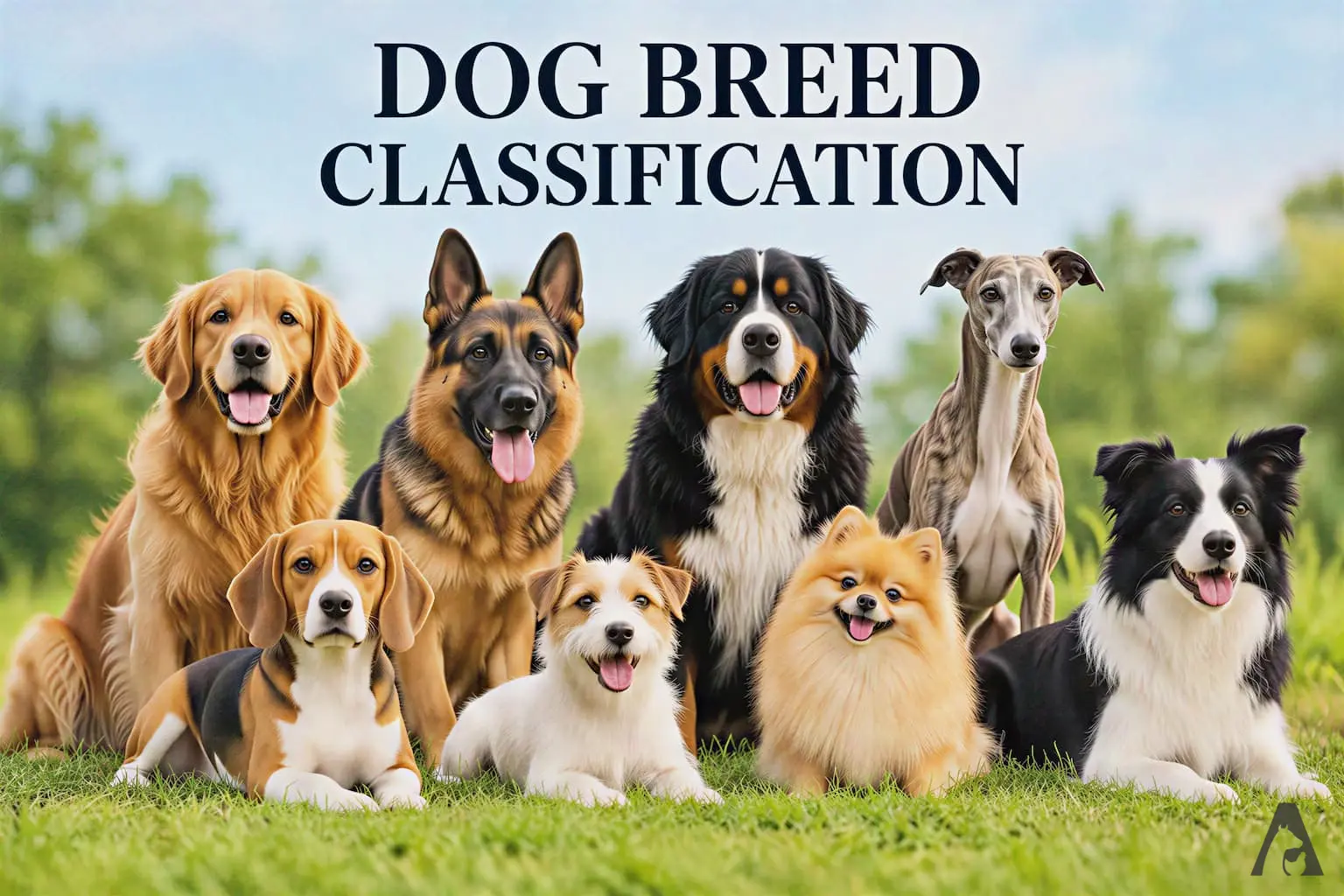
There are seven main dog groups as classified by the AKC. These are:
- Sporting Dogs
- Hound Dogs
- Working Dogs
- Terriers
- Toys
- Herding Dogs
- Non-Sporting Dogs
Sporting Dogs
Sporting dogs tend to be natural athletes—active, very alert dogs that usually make well-rounded companions. Sporting dogs are well known for their instincts around water and woods and require regular, stimulating exercise.
Sporting breeds have increasingly made their way into families as companion dogs, but many still participate in hunting and field activities. The Sporting Group includes Retrievers, Setters, Spaniels, and Pointers.
Hound Dogs
Most hounds share a common trait: they were bred for hunting. Typically, hounds either use their acute sense of smell to track prey or their stamina to chase it down.
Otherwise, the Hound Group is greatly diverse and difficult to generalize. The Hound Group includes the Afghan Hound, Foxhound, Beagle, Greyhound, Rhodesian Ridgeback, Dachshund, and Harrier.
Working Dogs
Dogs that fall into the Working Group have historically performed various jobs for humans, including guarding, rescuing, and sled pulling. Most working dogs are intelligent and quick to learn and make great companions.
However, due to the size of many working breeds, some may not be suitable for certain living situations and require proper training early on. Working dogs include the Akita, Boxer, Bernese Mountain Dog, Great Dane, Mastiff, and Siberian Husky.
Terriers
Terriers are known for being lively and feisty dogs whose ancestors were bred to kill pests such as rodents. They range in size from the smaller Cairn Terrier to the largest of the Terriers, the sturdy Airedale.
Most Terriers require regular, specialized grooming to maintain their appearance. Terriers make a great addition to families that are ready for a dog with a lot of personality.
Toys
The Toy Group tends to consist of small breeds that were bred to be companions and bring delight to their owners. These breeds are popular among people who live in small spaces and cities.
Many individuals and families seek smaller dogs for their ease of handling, less shedding, and lower cost of care. While these are smaller dogs, don’t let their size fool you, as many of these breeds are tough and can stand their ground. Breeds that fall into the Toy Group include the Chihuahua, Maltese, Pomeranian, Papillon, Pug, Toy Poodle, and Shih Tzu.
Non-Sporting Dogs
One of the smaller yet most diverse groups in terms of breeds and sizes is the Non-Sporting Group. These breeds vary greatly in terms of size, appearance, and personality. The Non-Sporting Group includes the Bichon Frise, Boston Terrier, Bulldog, Poodle, and Keeshond.
Herding Dogs
The Herding Group is the AKC’s newest classification, added in 1983. These breeds were previously classified in the Working Group. As the name indicates, breeds in the Herding Group share the ability to control the movement of animals.
Generally, herding dogs make excellent companions and respond well to training. The Herding Group includes the Australian Cattle Dog, Collie, German Shepherd, Old English Sheepdog, Border Collie, and Shetland Sheepdog.
When deciding on a dog breed, it’s important to consider the breed and not just the group into which a dog falls. A specific dog breed may fall into a particular group, but the breed’s traits can’t be evaluated solely by that category. In addition, some breeds may fall into more than one group depending on their size.
For example, a Toy Poodle falls into the Toy Group, while Standard Poodles fall into the Non-Sporting Group. While you wouldn’t want to evaluate a breed exclusively by its group classification, it is important to understand a dog’s group in order to fully understand its basic features.