CONTENT
Viral Diseases of Rabbits: Myxomatosis and Viral Hemorrhagic Disease
Viral diseases are important health concerns in domestic and wild rabbits and may cause significant morbidity and mortality. Among these, myxomatosis and viral hemorrhagic disease (VHD) are particularly important because of their highly infectious nature and potentially fatal outcomes.
Understanding their causes, transmission, clinical signs, and control measures is essential for effective rabbit health management.
Myxomatosis
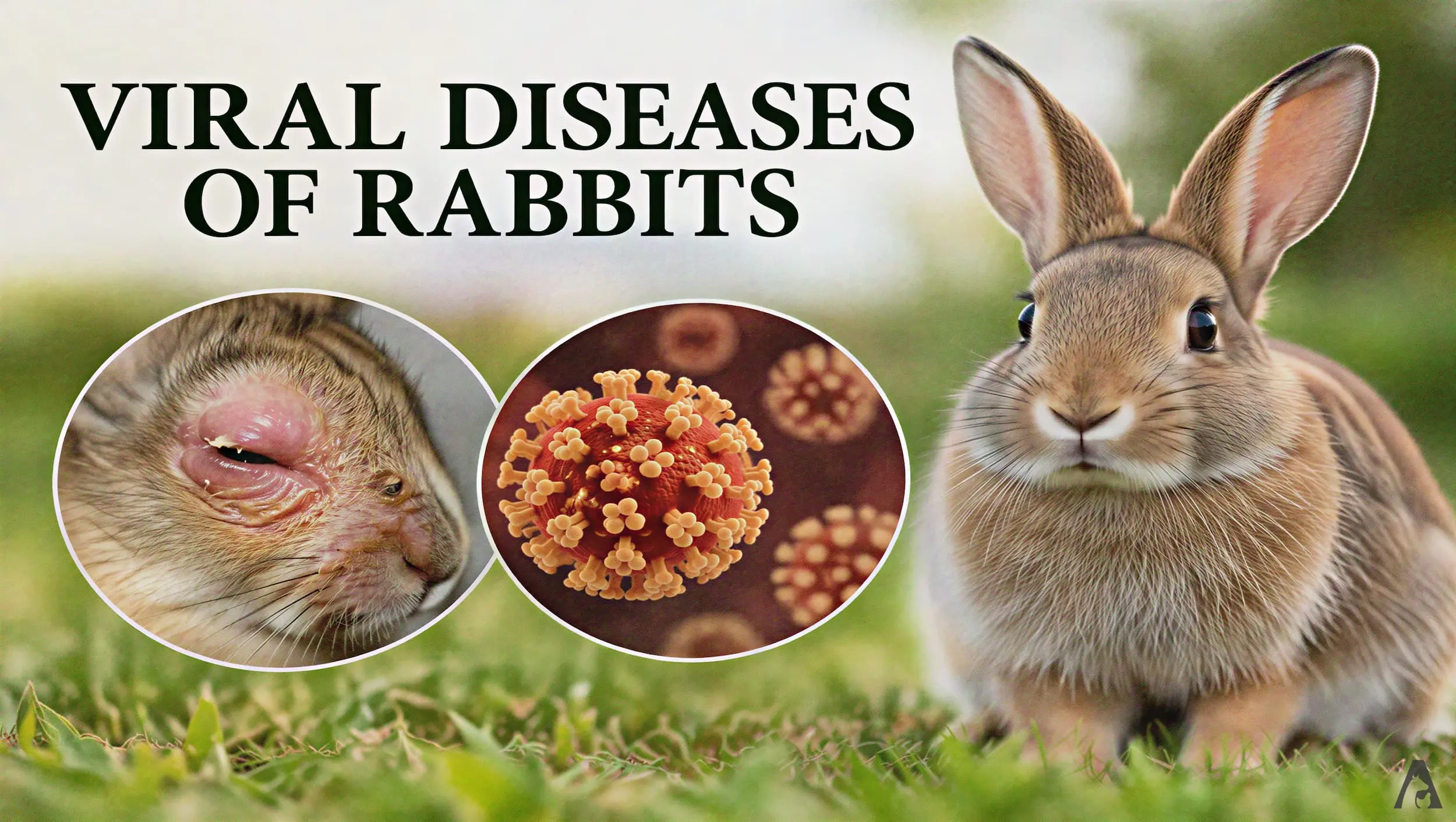
Myxomatosis is caused by a poxvirus of the myxoma group. The disease is spread by biting insects. The most common vector infecting wild rabbits is the rabbit flea, while the carrier of the disease to domestic rabbits is the mosquito. The symptoms include swollen eyelids, eventually completely closing over the eyes.
Swelling may occur on other parts of the body, particularly at the base of the ears. Death follows in almost all cases within approximately 12 days of infection, although there are a few cases of recovery.
Viral Hemorrhagic Disease (VHD)
The disease is caused by an RNA virus of the Calicivirus genus. The disease affects only rabbits and no other birds or mammals. It mainly affects older bucks and does. In the peracute form, sudden death occurs; the acute form affects all age groups; and in the subacute form, many animals may survive.
Symptoms include loss of appetite, fever, apathy, dullness, prostration, paralysis, lying on the side, spasms with the head and lower limbs bent backward, thus arching the body with the belly up, and groans and cries before death.
The only effective disinfectants are a 10% solution of formalin or a 2% solution of sodium hydroxide. The virus can withstand 60°C for at least six minutes.