Mineral Functions and Deficiency Symptoms in Poultry
Minerals are essential nutrients in poultry diets and are required for normal growth, skeletal development, metabolism, reproduction, and overall physiological function. Both major and trace minerals play specific roles, and deficiencies can result in characteristic clinical signs and impaired production performance.
*ADVERTISEMENT*
Contact hello@mkvisuals.org to advertise here
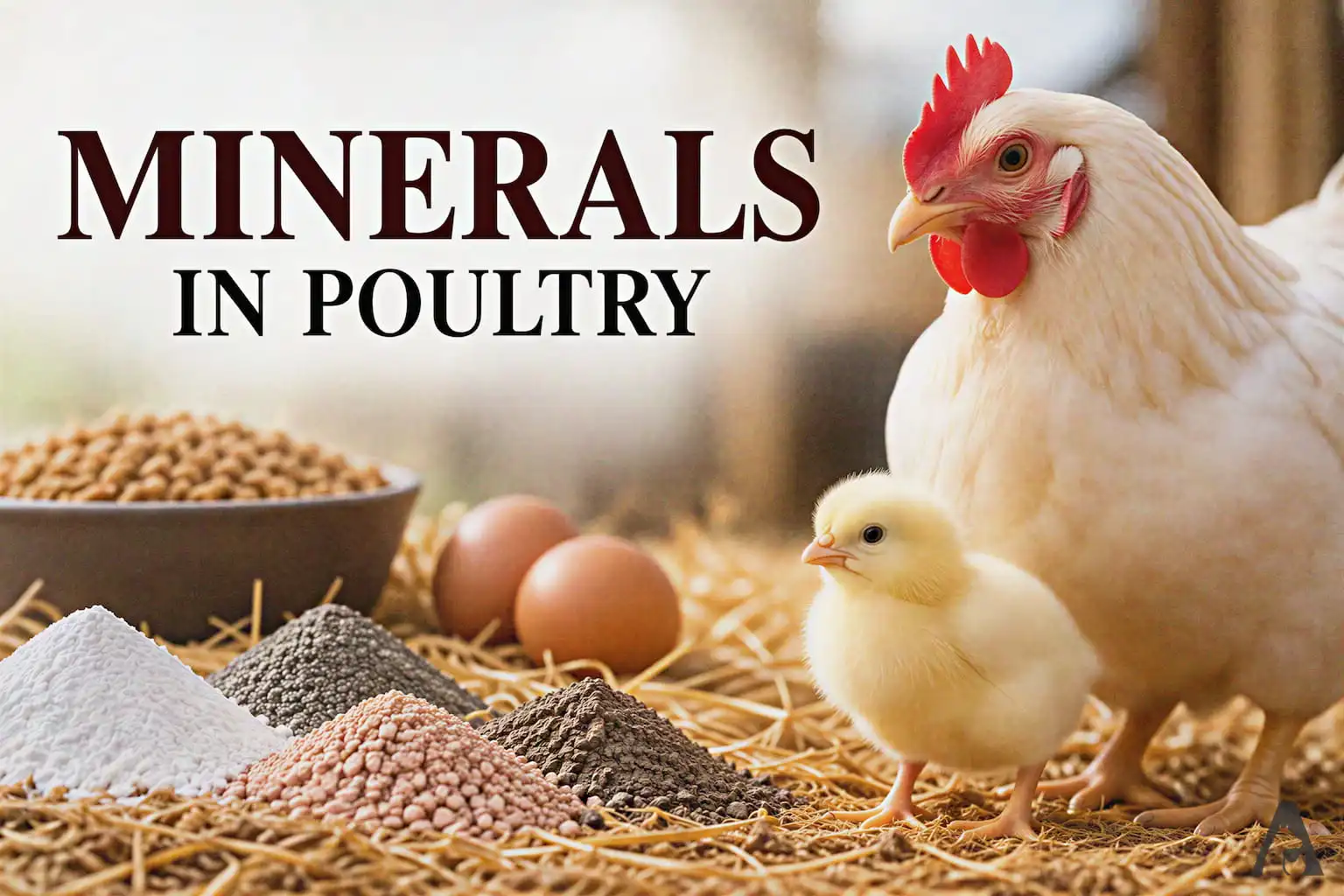
The following table summarizes the major functions of important minerals and the principal deficiency symptoms observed in poultry.
| Minerals | Important Functions | Deficiency Symptoms |
|---|---|---|
| Macrominerals | ||
| Calcium | Formation of bones, blood clotting, heart function, and egg production | Poor growth, soft bones, thin-shelled or shell-less eggs, and poor egg production |
| Phosphorus | Bone development, egg production, and carbohydrate utilization | Poor growth and soft bones |
| Magnesium | Several vital metabolic functions | Slow growth, lethargy, loss of appetite, and spasms |
| Sodium and Potassium | Constituents of blood, bile, and body fluids; involved in growth, digestion, and acid-base balance | Poor muscle growth (excess: loose droppings and reduced production) |
| Microminerals | ||
| Manganese | Bone formation and phosphorus utilization | Staggering gait, enlargement of joints, and perosis |
| Zinc | Activation of several body enzymes | Poor growth and feathering, and shortening of leg bones |
| Iron and Copper | Blood pigment formation | Anemia |
| Iodine | Regulates body activity and is a constituent of thyroid hormones | Impaired body response and reduced activity |
| Trace Minerals | ||
| Selenium | Muscle function and immune development | Muscular dystrophy and poor immune response |
| Cobalt | Constituent of vitamin B12 | Poor growth |
*ADVERTISEMENT*
Contact hello@mkvisuals.org to advertise here