
Coccidiosis in Poultry: Types, Symptoms, Prevention, and Treatment
Coccidiosis is a common parasitic disease of poultry caused by species of the genus Eimeria. It primarily affects the intestinal tract and can lead to impaired growth, reduced production performance, and, in severe cases, mortality. The severity of disease depends on the Eimeria species involved, the age and immune status of the birds, and management conditions.
Three common types of coccidiosis can occur. Cecal and duodenal types affect younger birds. Birds over 10 weeks of age are affected by intestinal coccidiosis. Mortality is higher in younger birds. Reddish diarrhea, stunted growth, and crouching are noticeable symptoms.
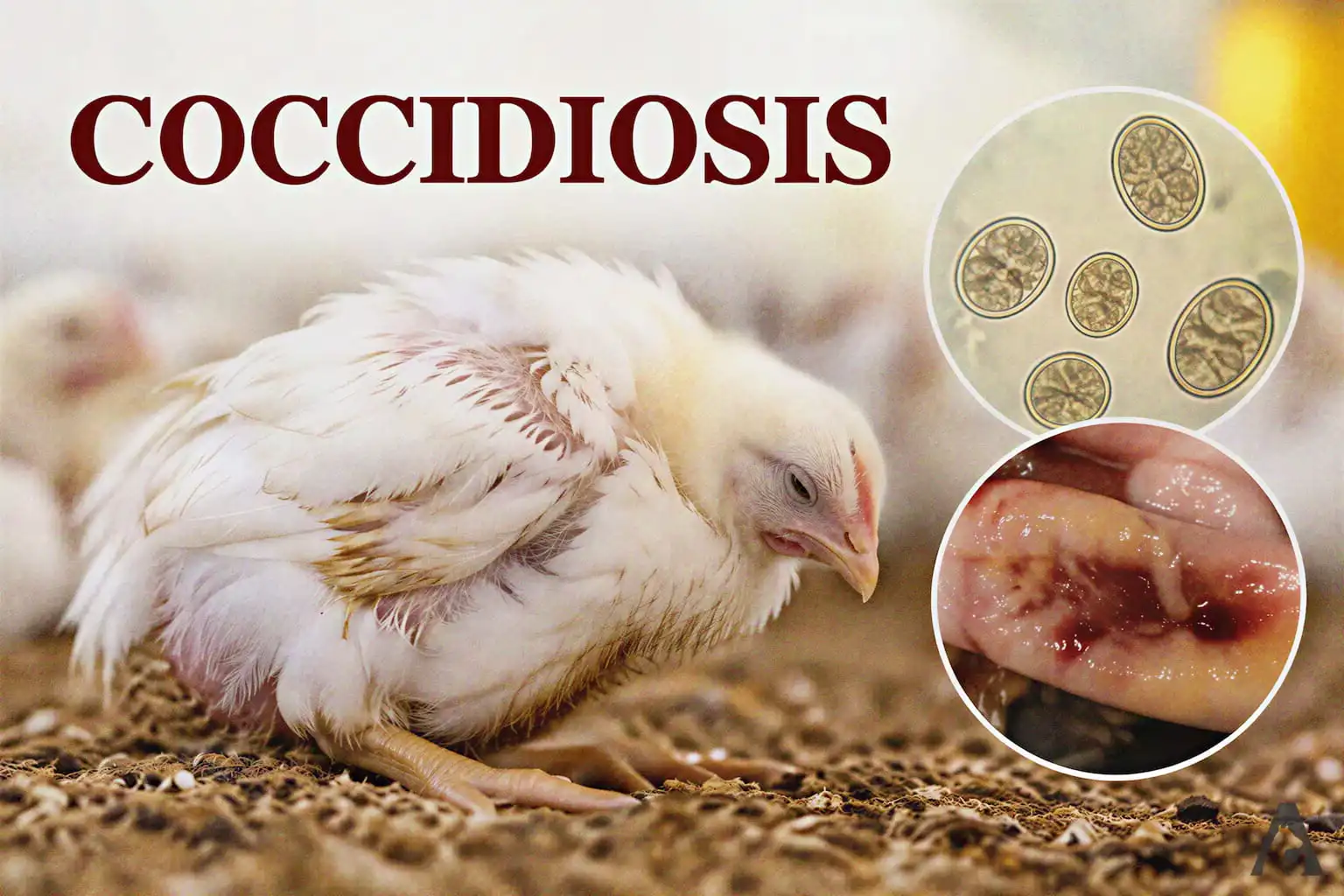
There is a loss of whole or digested blood through the droppings. Performance is severely affected because of poor absorption of nutrients through the intestine. Avoid wet litter. Ensure proper management. Avoid water spillage. Coccidiostats such as Superdot, Clopidol, and Cycostat, etc., should be used in broiler, brooder, and grower feeds. Coccicidal drugs such as salinomycin and maduramycin should be used in broiler feeds only.
Preventive medication through drinking water with coccidiostats such as amprolium, Codrinal, etc., may also be adopted. Coccidiostats used in feed may be rotated every three to six months to prevent the development of resistance to the drugs in use.