CONTENT
Fungal Diseases of Poultry: Brooder Pneumonia and Mycotoxicosis
Fungal diseases in poultry can cause significant morbidity, mortality, and production losses, particularly when birds are exposed to contaminated litter or feed. Important fungal conditions include brooder pneumonia, commonly associated with fungal contamination in the brooding environment, and mycotoxicosis, which results from ingestion of mycotoxin-contaminated feed.
Understanding their clinical signs, sources, prevention, and management is important for maintaining poultry health and production.
Brooder Pneumonia
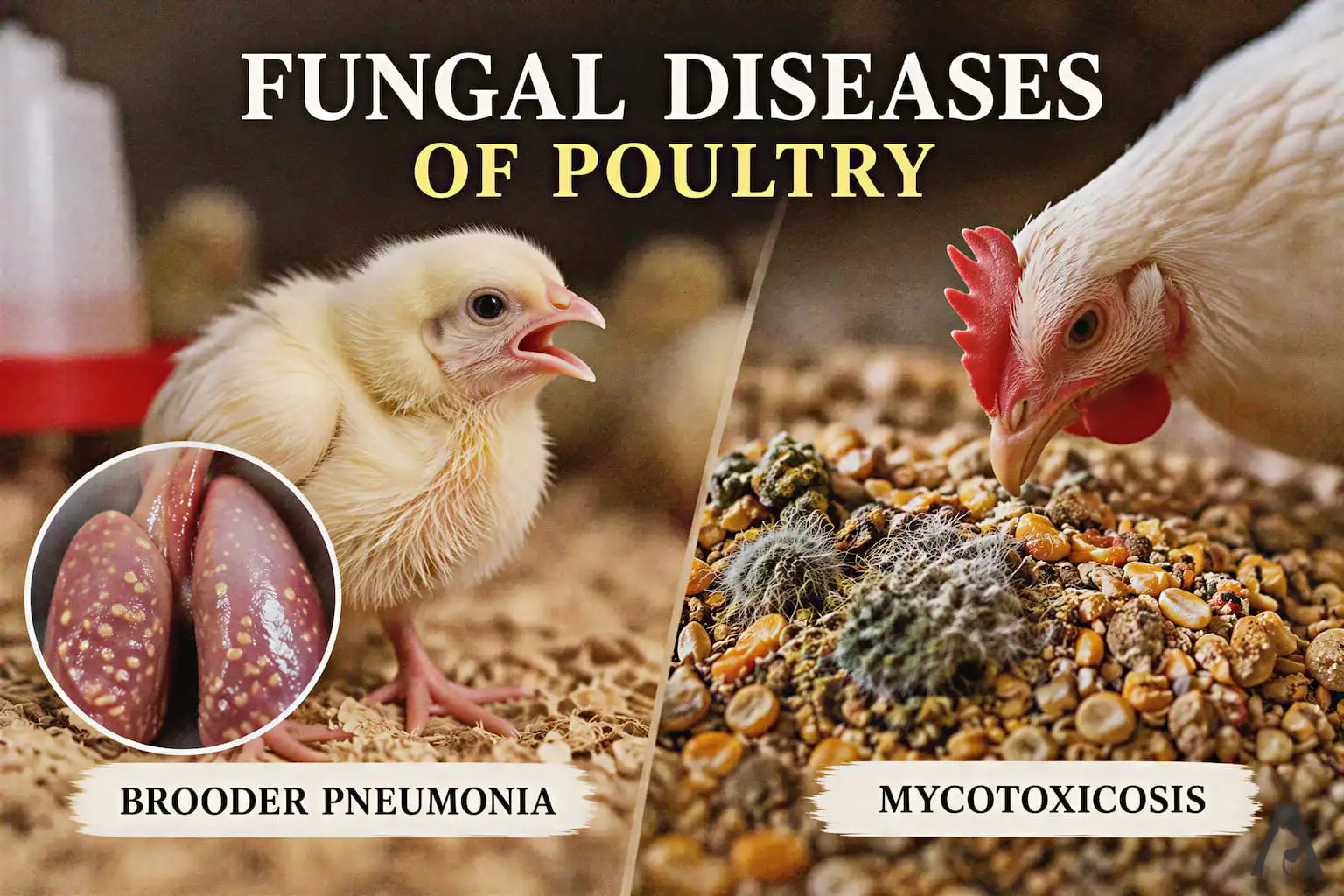
Young chicks 1–2 weeks of age are affected. A high mortality rate of 10–50 percent may occur, with signs of gasping, respiratory distress, and excessive thirst. Yellowish-white pinpoint lesions are present on the lungs.
Avoid using moldy, fungus-contaminated litter material. Use thoroughly cleaned drinkers and feeders.
Mycotoxicosis
Caused by mycotoxins, this condition results from fungal contamination of feed ingredients. Consequences include reduced feed intake, poor growth rate or egg production, impaired immunity, and vaccination failures. Sun-dry feed ingredients.
Avoid using moldy ingredients; use toxin binders such as zeolites, aluminum silicate, or charcoal in the feed. Add liver tonics. Withdraw fungus-contaminated feed.