CONTENT
Routes of Vaccine Administration in Poultry
Vaccination is an essential component of poultry health management and plays a key role in the prevention and control of infectious diseases. Vaccines can be administered to poultry through several routes, depending on the type of vaccine, age of the birds, disease being targeted, and management system.
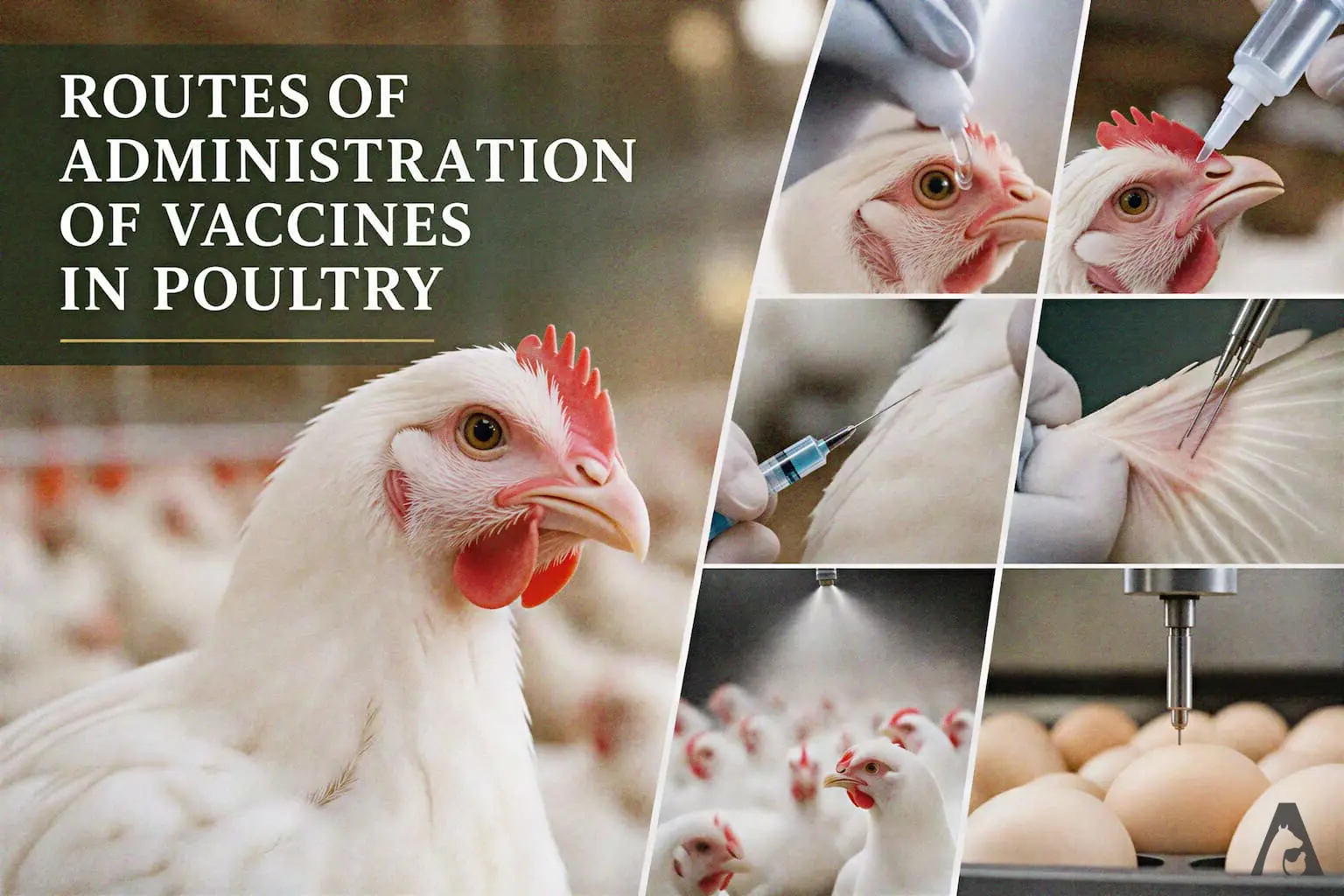
Common routes of vaccine administration in poultry include intramuscular, subcutaneous, ocular, nasal, wing web, aerosol, spray cabinet, and in ovo methods.
Intramuscular
The vaccine is injected into the muscle. This route is usually reserved for killed vaccines.
Subcutaneous
The vaccine is injected under the loose skin. Typical sites include the back of the neck and the leg fold between the thigh and abdomen.
Ocular
For live vaccines, a drop of vaccine is placed on the eye so that the solution flows through the lacrimal duct into the respiratory tract.
Nasal
A drop of live vaccine is placed in the nostril.
Wing Web
A needle, usually a double needle, is dipped into the vaccine. A small depression on the side of the needle holds the vaccine by surface tension. The vaccine is administered by puncturing the skin of the wing web. This method is used for fowlpox and some fowl cholera vaccines.
Aerosol
The vaccine is sprayed into the air over birds on the floor or directed toward the faces of chickens in cages. The chickens do not need to be handled individually. Aerosol vaccination is commonly used for vaccines against respiratory diseases such as Newcastle disease, infectious bronchitis, infectious laryngotracheitis, and Mycoplasma gallisepticum infection.
Spray Cabinet
The vaccine is sprayed onto the birds using a specialized machine at the hatchery. This is an effective method of administering vaccines against respiratory diseases, such as Newcastle disease and infectious bronchitis, without handling the birds individually.
In Ovo
This method of vaccination is performed at the hatchery. At 18 days of incubation, the eggs are transferred from the setter to the hatcher. During transfer, the eggs are placed in a machine that aseptically makes a hole in the shell and injects the vaccine into the 18-day-old embryonated egg.
This is the usual method of vaccinating broilers against Marek’s disease. It eliminates the need to handle each chick at hatch for Marek’s disease vaccination.