CONTENT
Poultry Vaccination: Types of Vaccines and Their Importance
Vaccination is an essential component of poultry health management, helping birds develop protective immunity against important infectious diseases. The selection of an appropriate vaccine depends on factors such as the disease being targeted, vaccine type, age and immune status of the birds, and prevailing management conditions.
A vaccine is a protective and preventive biological product that contains processed organisms or components of an infectious agent, capable of producing a mild form of disease and stimulating the production of antibodies to establish immunity against the disease. The process of planned exposure to a disease agent at the appropriate time with the correct agent to produce immunity is called vaccination.
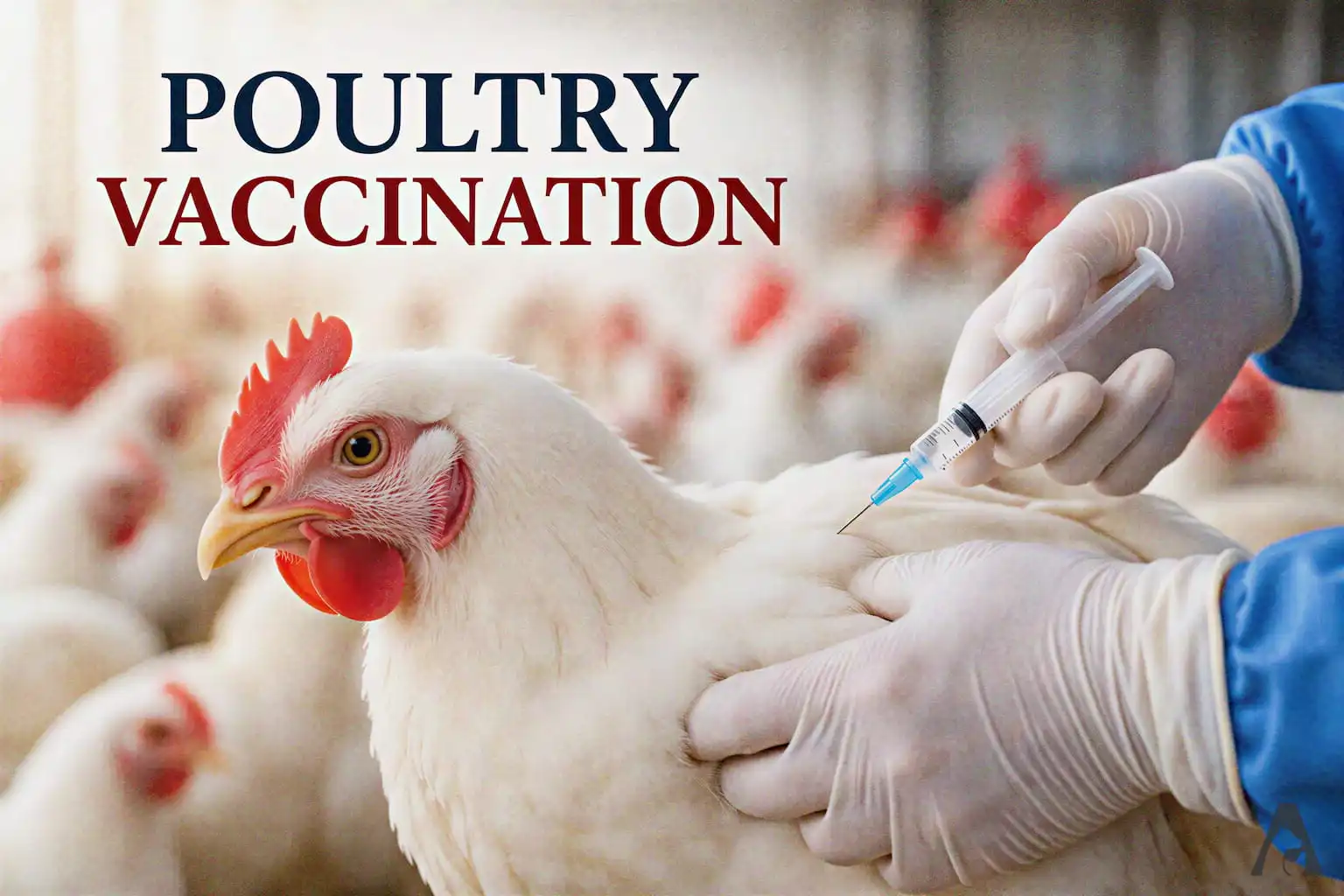
In most instances, vaccines are used to produce a mild infection, with few or no signs of disease, by using a specific disease agent. The virulence of the vaccine and the number of vaccine organisms or virus particles per individual dose determine the effectiveness of vaccination.
The immune competence of the chicken and host factors such as stress, genetic background, and concurrent diseases also play an important role in the outcome of a particular vaccination.
Types of Vaccines
Vaccines may be classified as:
- Live vaccines
- Attenuated live vaccines
- Inactivated (killed) vaccines
- Genetically engineered vaccines
Live Vaccines
The organisms in the vaccine are alive and completely capable of producing disease in birds that have not been infected or previously vaccinated. Because the vaccine contains a live agent, it is also capable of transmitting the disease to susceptible birds that come in contact with it. However, live vaccines help produce a strong immunologic response in birds that have already been exposed.
Attenuated Vaccines
The active organisms used to prepare a vaccine may be weakened (attenuated) by various methods so that, when administered to a bird, a mild form of the disease is produced.
Inactivated (Killed) Vaccines
The organisms used to produce these vaccines are grown in culture in the laboratory and then inactivated by chemical or physical means. Inactivated vaccines are not capable of spreading the agent to other birds. They do, however, have the capacity to produce immunity when administered through vaccination.
Genetically Engineered Vaccines
These represent a newer type of vaccine that places immune-stimulating components (antigens) from one agent onto another agent known as a vector.