CONTENT
Rodent and Fly Control in Poultry Farms: Prevention and Management
Effective rodent and insect control is an essential component of poultry farm biosecurity and sanitation. Rodents and flies can contaminate feed, water, and housing areas, contribute to disease transmission, and cause stress in poultry. Effective control helps maintain a hygienic farm environment, protect flock health, and minimize production losses.
Keep rodents out from the initial stage of farming itself, since once the farm is infested, it is difficult to get rid of them. Remove piles of unused equipment and empty feed bags, as they serve as breeding places for rats, mice, and squirrels.
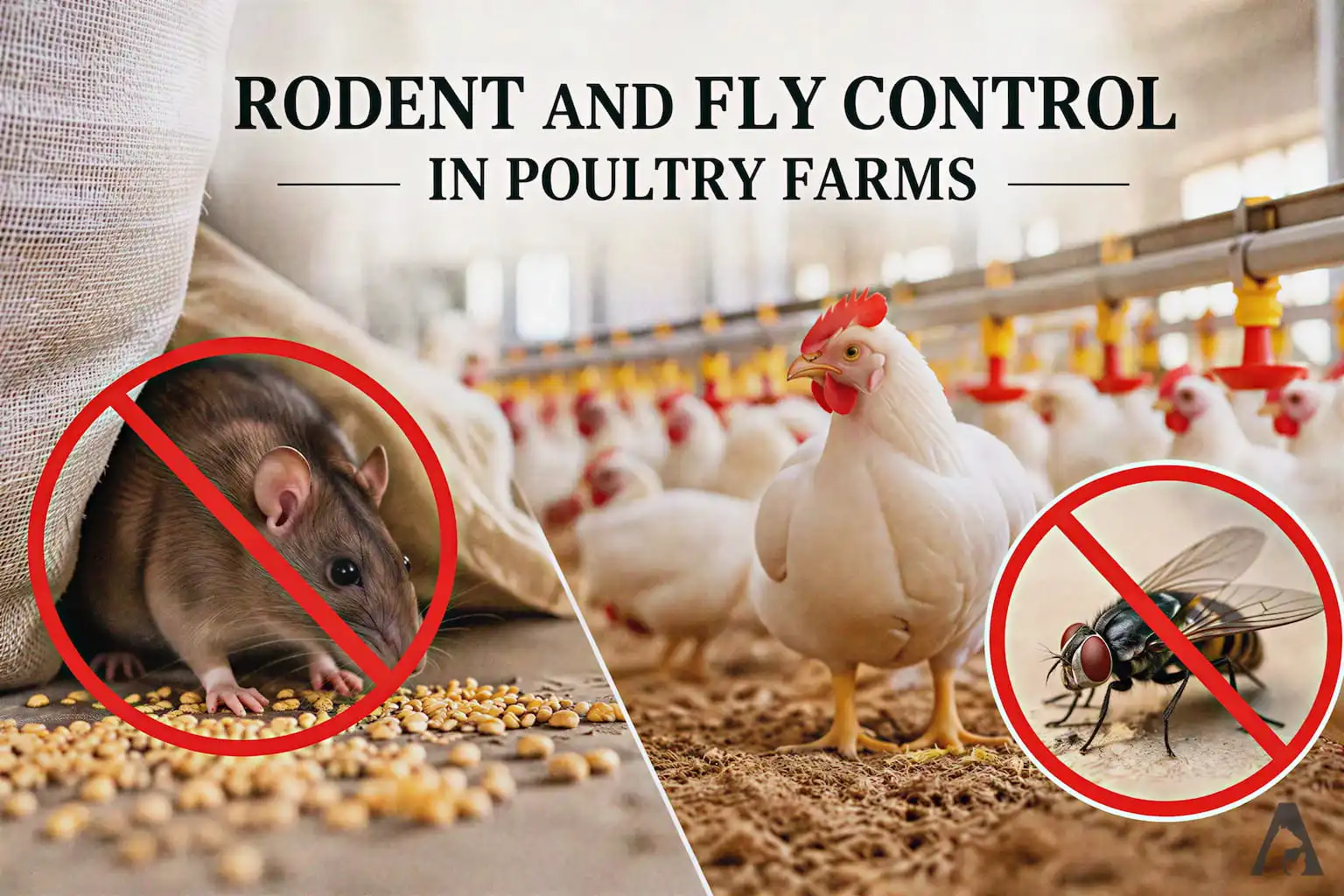
Remove spilled feed daily. Store feed in well-ventilated, rodent-proof rooms. Use traps in the initial stages and later use rodenticides. Rodenticides should be used at night according to the manufacturer’s specifications.
Insect Control
Countermeasures against insects are part of maintaining a sanitary environment, as insects play a significant role in transmitting disease-producing microorganisms, tapeworms, etc. Flies sit on the birds, irritate them, and prevent them from drinking water and feeding normally, causing stress that results in reduced egg production, especially where cage rearing is practiced.
Insect or Fly Control Measures
Insect or fly control measures include:
- Avoiding stagnation of water in and around the farm premises.
- Providing proper drainage facilities and attending immediately to leaking drinkers, water lines, etc.
- Using insecticide sprays or dusting at required intervals.
- Treating the birds and checking feed and water quality to avoid watery droppings. Keep the surroundings clean by covering the area with treated soil devoid of vegetation or by maintaining grass lawns.