CONTENT
Litter Removal and Disinfection Practices in Poultry Farms
Proper sanitation is an essential component of poultry farm biosecurity and disease prevention. Effective cleaning and disinfection of poultry houses, equipment, and other surfaces help minimize environmental contamination and reduce the risk of disease transmission.
The choice of sanitation method and disinfectant depends on the type of surface, equipment, and specific disease-control requirements.
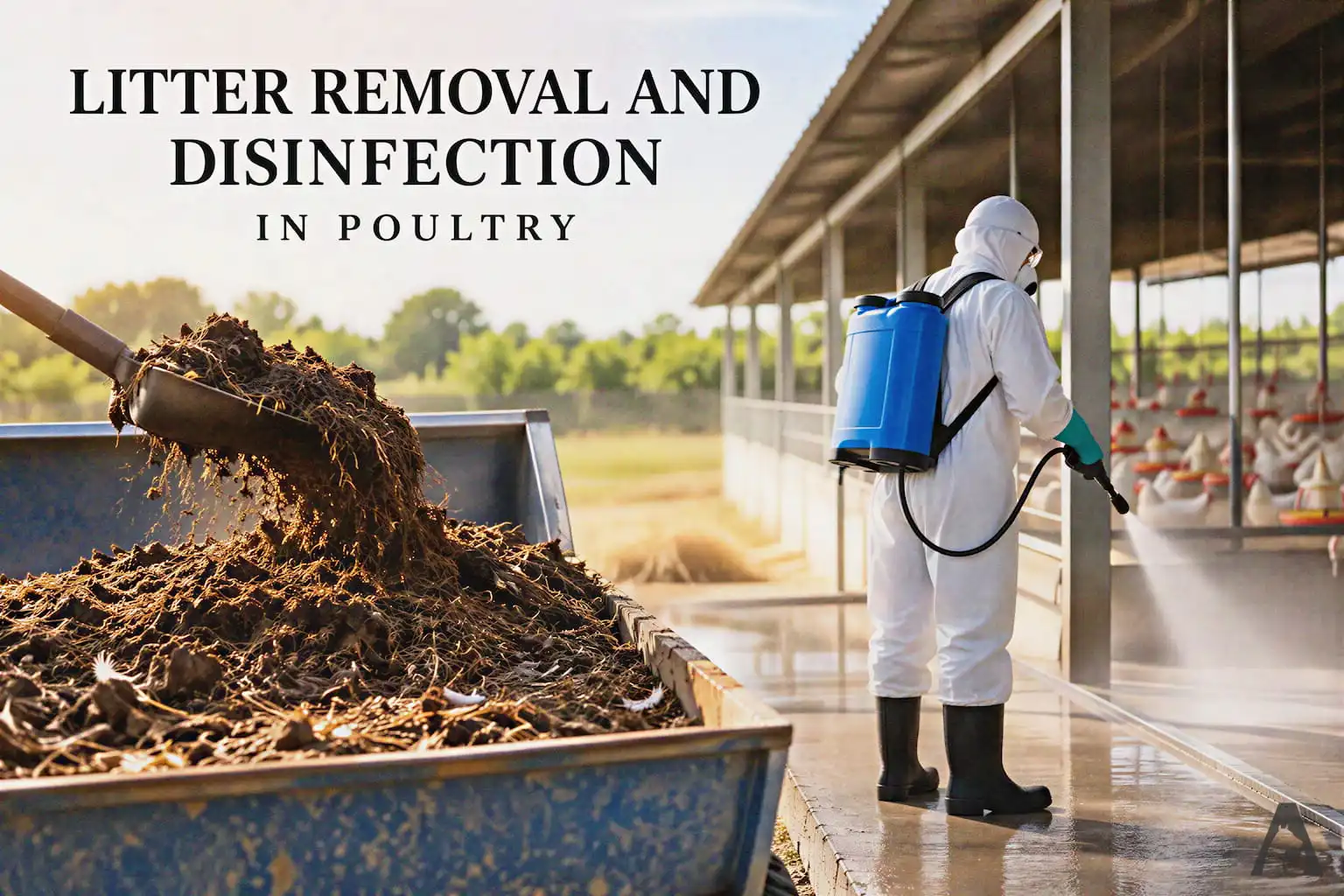
After the pen is emptied, deep litter and caged layer droppings should be removed to a field far from the poultry house and spread to dry in the sun. They should be disposed of as soon as possible for use as manure or for other purposes and should not be allowed to accumulate for a long period. Composting is preferable because the heat produced will destroy pathogens.
Disinfection
To disinfect is to free an object or surface from pathogenic microorganisms. A disinfectant is an agent that destroys pathogenic organisms and can be applied to inanimate objects or used in a footbath.
Phenol, cresol, chlorine compounds, and iodophors can be used for disinfecting surfaces as well as egg rooms, feeders, drinkers, buildings, and footwear. Liquid formalin at a 5 percent concentration, or formaldehyde gas by fumigation, can also serve as an effective disinfectant. Sun-drying may be practiced for washed equipment; for cement surfaces, dry heat in the form of a flame is recommended.
Copper sulfate as a 0.5 percent solution is effective against fungi. Quaternary ammonium compounds are good disinfectants when used according to directions. However, they are not effective in hard water. They can be used for disinfecting surfaces and washing egg rooms, feeders, drinkers, and other equipment.