Dead Bird Disposal in Poultry: Methods, Biosecurity, and Disease Prevention
Mortality is inevitable on every poultry farm, and the number of deaths varies with the prevailing disease conditions and level of sanitation on the farm. When birds die, their carcasses can remain a source of infection for pen-mates and other birds on the farm (or on other farms).
The main principle involved in the prevention and control of current and emerging diseases is the scientific disposal of dead birds. Mortality is inevitable on every poultry farm, and it varies with the prevailing disease and sanitary conditions on the farm. When birds die, their carcasses remain a source of infection for pen-mates and other birds on the farm (or on other farms).
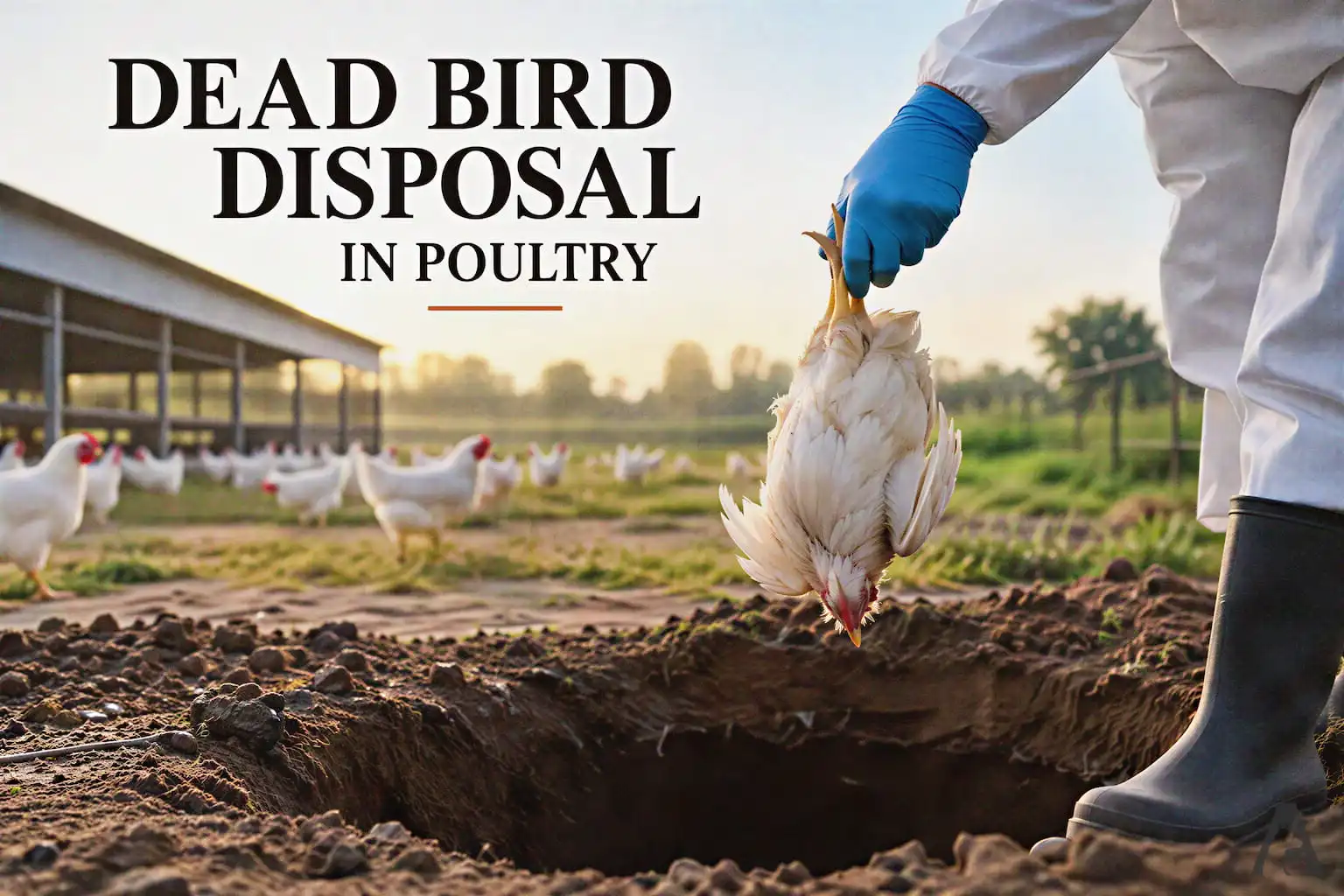
All carcasses should be removed from the pen as soon as possible. Diseased and ill birds also discharge infectious material into the environment and act as reservoirs for disease-causing organisms. It is essential to eliminate ailing birds from the flock rather than jeopardize the health of the remainder of the flock.
The habit of throwing dead birds onto the nearest manure pile or into an open field is dangerous and unscientific for the following reasons:
- The smell of the carcasses attracts free-roaming dogs and cats, which consume the infected carcasses and harbor enteric organisms infectious to poultry. Because of their free movement, these animals are capable of carrying contaminated material or a portion of a carcass to neighboring farms, with disastrous results;
- Vultures and other wild birds invade the carcasses and become potential carriers of disease-causing agents from one farm to another or even from one country to another if they migrate;
- The carcasses attract insects and flies, which act as transmitters of infectious agents;
- Disease agents carried by rainwater can contaminate other water sources;
- The surrounding area of the farm becomes contaminated with feathers and bones, causing soil pollution;
- During decomposition, the carcasses may emit a foul odor and cause air pollution.
The disposal of carcasses of birds dying from known or unknown causes should be carefully attended to. There are many methods for the efficient disposal of carcasses, such as burying, pit disposal, incineration, septic tank disposal, or composting.
In general, the following points should be observed while disposing of carcasses:
- Remove dead birds from the flock as soon as possible;
- Do not deposit carcasses in or near a flowing stream;
- Take the necessary precautions to prevent spillage of infectious material from the carcasses during transportation from the farm or post-mortem room to the disposal site;
- Take sound biosecurity measures at the disposal sites to prevent disease transmission.
Moreover, with the present concern for the environment, the poultry industry needs to pursue efforts to protect the environment. Therefore, all methods that allow for environmentally safe and scientifically sound disposal of carcasses should be considered.