Poultry Drinking Water Quality Standards and Sanitation Guidelines
Water quality is an important factor in maintaining poultry health, growth, and production performance. Poor-quality drinking water can promote microbial contamination, affect water intake, and contribute to waterborne diseases.
This article discusses the desirable water quality parameters for poultry, including pH, hardness, nitrates, nitrites, and bacterial counts, along with practical water sanitation methods such as chlorination and the use of other approved sanitizers.
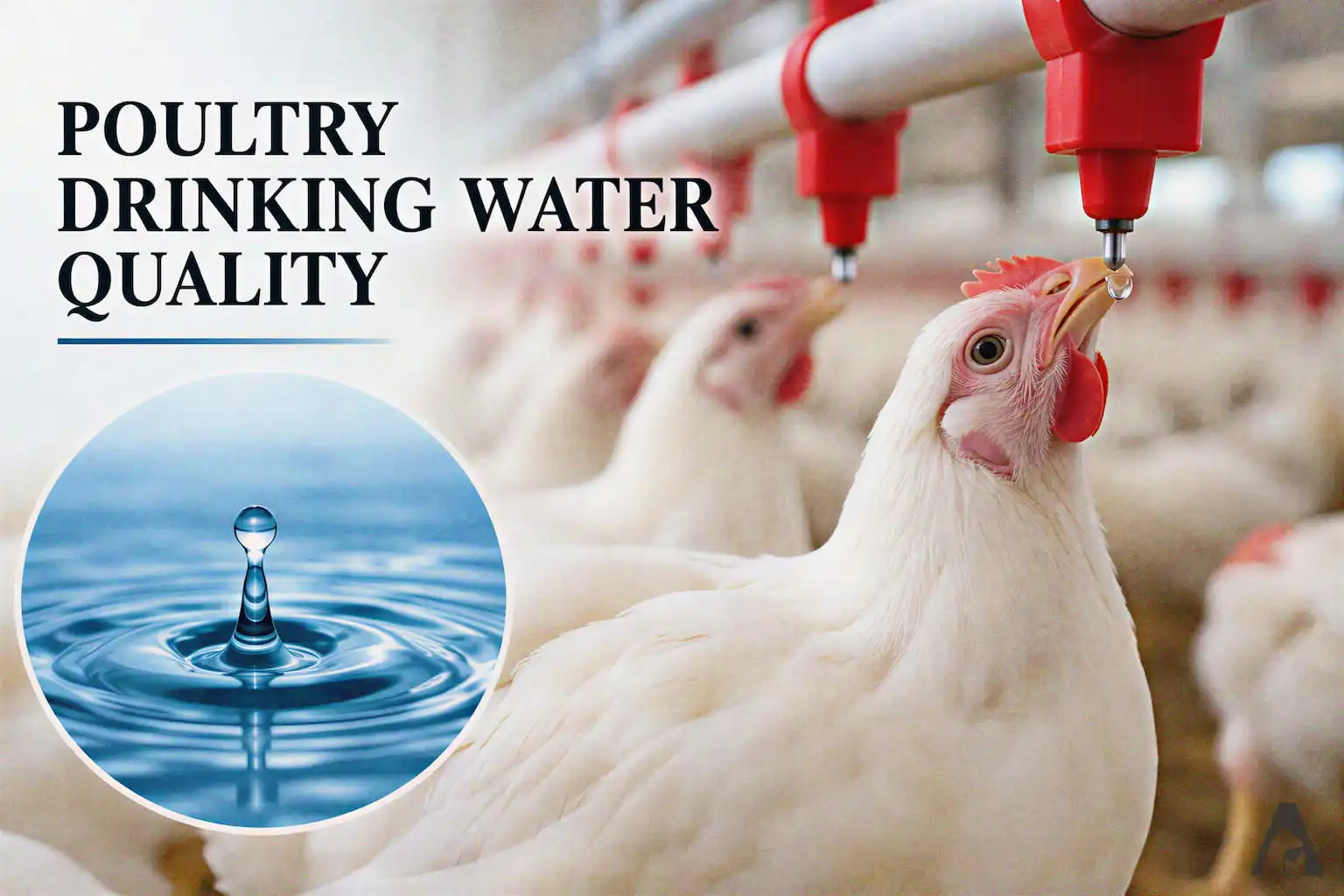
The desirable water quality guidelines for drinking water on poultry farms are as follows:
- Total hardness: 60-180 mg/L
- pH: 6.8-7.5
- Nitrate: 10 mg/L
- Nitrite: 0.4 mg/L
- Total bacterial count: 0/mL
- Coliform count: 0/mL
- Calcium chloride: 60 mg/L
- Sodium: 50 mg/L
- Sulfate: 125 mg/L
The removal of excess dissolved minerals by inexpensive and simple methods is not practicable, and the farmer should switch to another water source in case of excess minerals in the water. Chlorination is the best and least expensive method for eliminating microorganisms.
Five to eight grams of bleaching powder containing about 35 percent available chlorine should be added to 1,000 liters of drinking water to maintain a chlorine level of 1 to 2 ppm at delivery.
A minimum contact time of one hour should be allowed before offering the water to the birds. Where storage facilities are not available, liquid chlorine preparations such as chlorine dioxide and 5 percent sodium hypochlorite (Sanitech) may be used at a level of 1 mL per 10 liters of water.
Iodophors containing 1.6 percent available iodine are also used as water sanitizers at the same dosage level. Products containing quaternary ammonium compounds, such as Quat, Quatovet, Encivet, and Sokrena, may be used as water sanitizers according to the manufacturers’ specifications.
Providing sanitized water to the birds reduces the risk of waterborne infections and helps reduce medication costs. It also extends the service life of pipelines and storage tanks and improves overall bird growth and egg production efficiency.