CONTENT
Poultry Management Practices for Disease Prevention and Control
Effective poultry management plays a critical role in preventing disease, reducing stress, and maintaining flock health and productivity. Proper isolation, litter management, chick quality, nutrition, and water quality are essential components of a comprehensive disease prevention program.
Understanding and implementing these management practices can help minimize disease transmission and support optimal health and performance in poultry flocks.
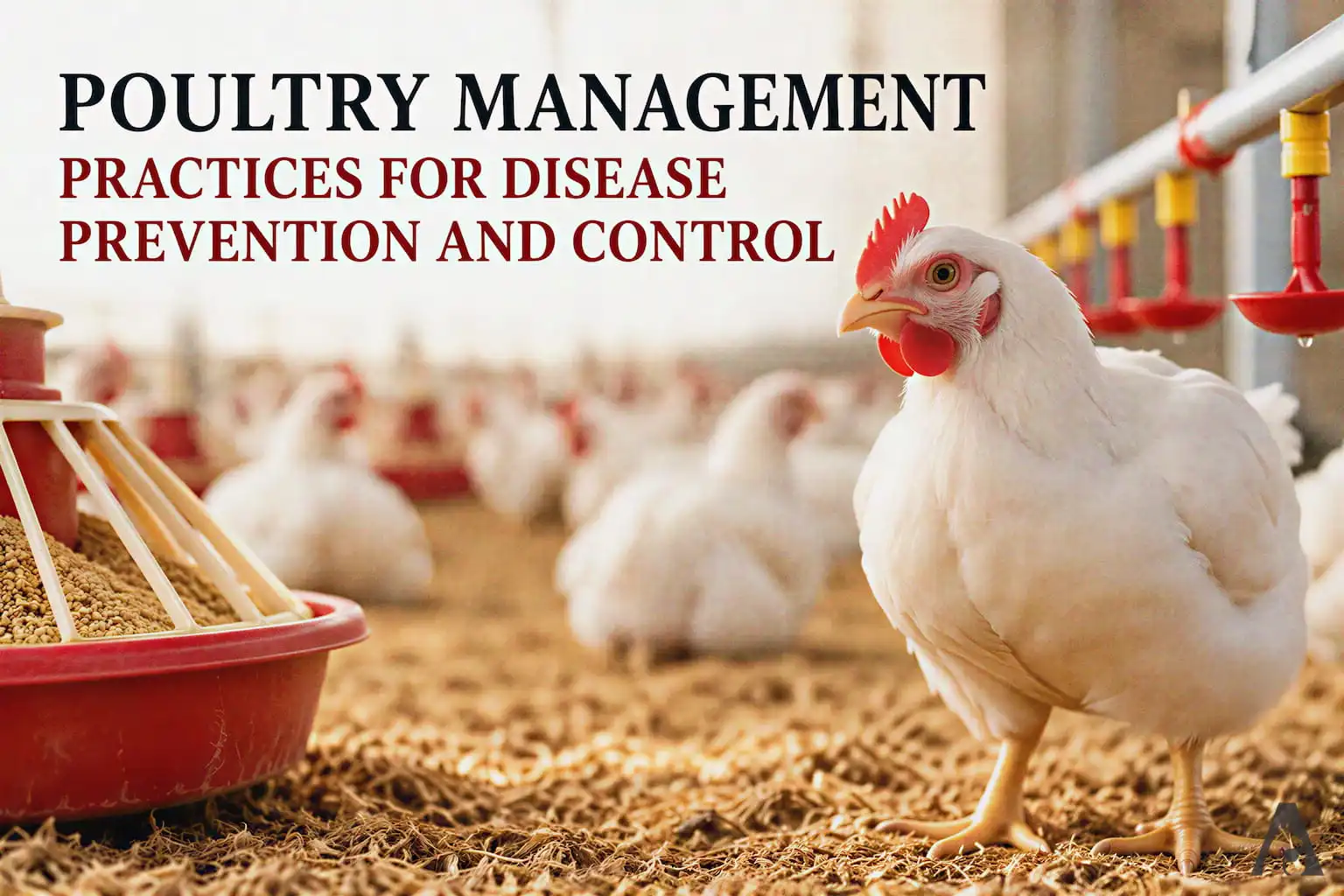
The following management factors help reduce the spread of disease and stress among birds.
Isolation
It is not advisable to rear birds of different age groups in the same house. Wherever possible, it is advisable to practice the all-in-all-out system.
Proper house layout, appropriate design to prevent rodent entry, adequate ventilation, and the design of feeders and drinkers to avoid spillage are basic essentials in disease prevention.
Litter Management
Wet litter is a potential source of disease transmission. Maintain proper litter conditions as described earlier.
Quality Chicks
Ensure that chicks are received from a hatchery where adequate preventive care is provided to breeder birds to protect against mycoplasmosis, salmonellosis, and infectious bursal disease. Check the vaccination history for Marek’s disease. Look for signs of dehydration. Ensure that the chicks received are healthy and within the normal weight range.
Proper Nutrition
A well-balanced feed prepared according to nutrient requirements at different ages will help ensure proper health and good immune status in birds. The addition of coccidiostats and vitamin and mineral supplements is essential.
Water Quality
Poultry farmers often fail to provide birds with good-quality water. Both the microbial and chemical quality of the water should be tested before establishing a poultry farm in a given area.
Microbial contamination of water may occur at the source, for instance, in ponds, rivers, open wells, and public water supplies, or during transportation and storage, as well as in overhead tanks or storage bins. Unhygienic practices on the farm can result in the spread of disease. The microbial load can increase substantially during flooding.
Fecal contamination of water increases the presence of coliform organisms. Mineral levels in water depend on soil conditions and show only minor fluctuations based on the season and water table. They can lead to water hardness and affect taste and palatability.