CONTENT
Poultry Wastewater Treatment and Waste Management
Effective management of liquid waste generated by poultry operations is essential for maintaining environmental quality and promoting sustainable production practices. Appropriate handling and processing methods help minimize pollution risks while allowing valuable components of the waste stream to be recovered or reused.
Hatchery wastewater can be sent to wastewater treatment facilities. Alternatively, it can be treated on-site using batch or continuous anaerobic digesters. First, waste needs to be cleared of non-biodegradable materials (glass, plastic, and metals) and then shredded to maximize digestion speed.
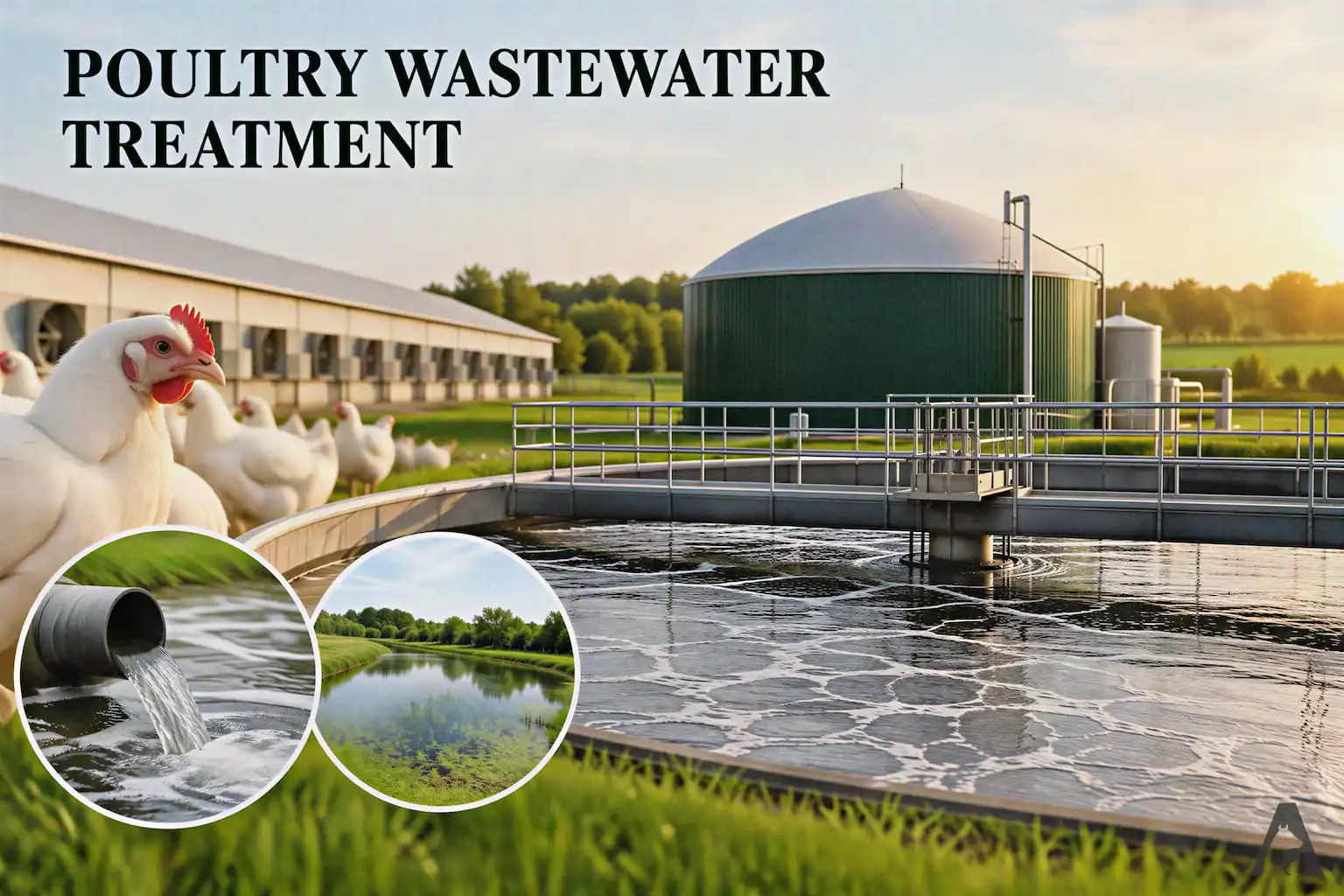
Various options exist depending on the concentration of biosolid content: covered lagoons (suited for warm climates), fixed biofilm tanks for quick turnover, complete mixing in silo tanks, and plug-flow digesters.
If hatcheries use lagoons to dispose of wastewater, integrated aquaculture could be an attractive option. After reducing the fat and solid content, a series of ponds can host algae, zooplankton, mollusks, and ornamental fish while cleaning the water for irrigation.
Social Responsibility
Any efforts to reduce waste dumping or untreated hatchery waste disposal directly reduce greenhouse gas emissions, groundwater contamination, and the release of pathogens and phytotoxic substances into the environment.
Converting waste into resources will enable the poultry industry to achieve sustainability and social responsibility targets.