CONTENT
Poultry Waste Management: Disposal, Recycling and Processing Methods
Poultry production generates various types of waste, including dead birds, droppings or manure, dressing waste, and hatchery waste. Proper management and disposal of these wastes are essential to maintain farm hygiene, reduce environmental pollution, and minimize the risk of disease transmission.
Poultry waste can be managed through appropriate disposal, processing, and recycling methods. Dead birds may be disposed of by methods such as burial, while poultry manure can be processed through drying or heaping and may also be recycled for agricultural or nutritional purposes. Effective poultry waste management helps improve biosecurity and enables the beneficial utilization of waste materials.
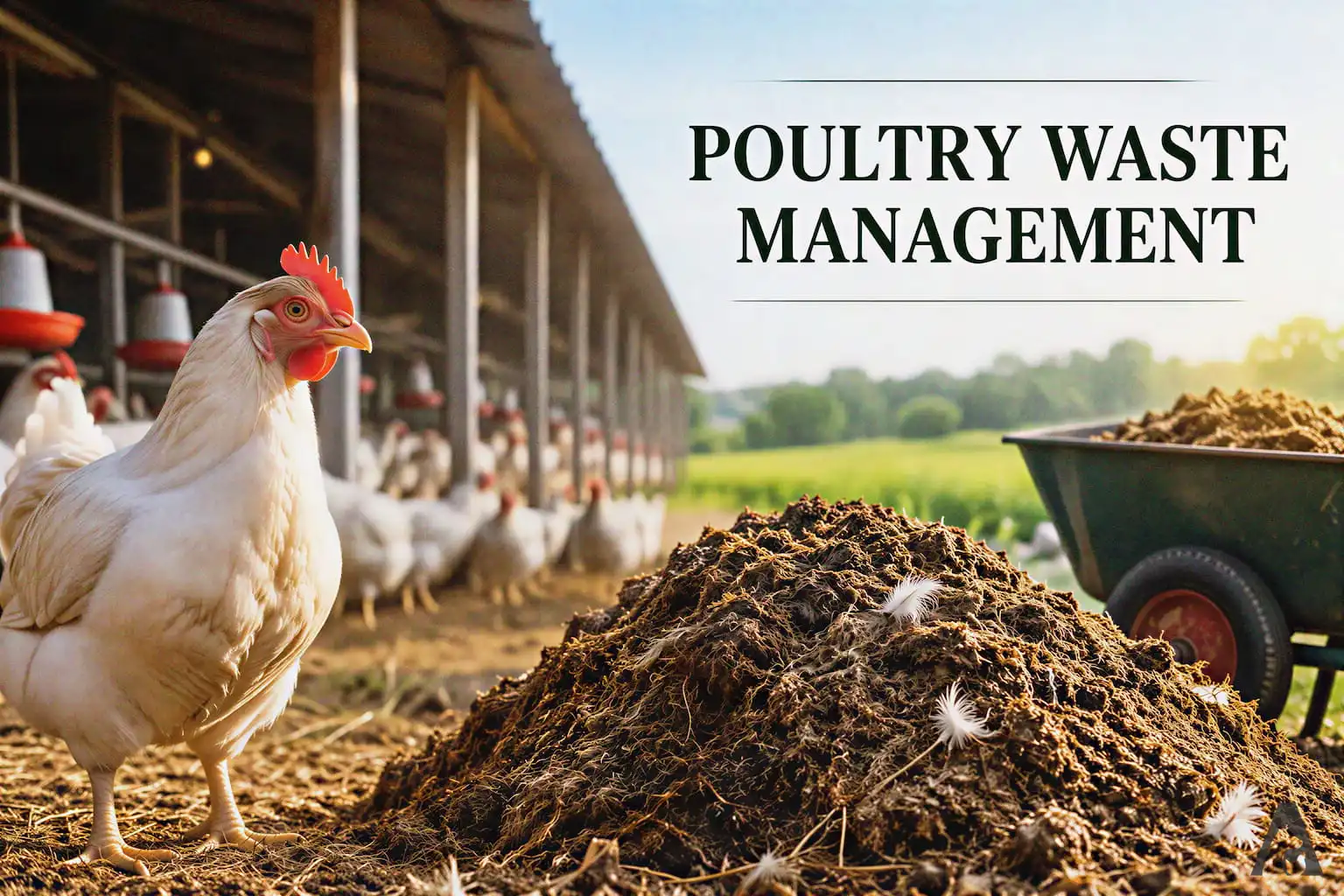
The types of poultry waste produced during the poultry production process are as follows:
- Dead birds
- Droppings or manure
- Dressing waste
- Hatchery waste
Dead Bird Disposal
Dead birds on poultry farms should not be carelessly thrown out in the open. This can lead to the spread of infections and also cause major pollution problems.
One of the safe means of disposing of dead birds is burial.
Burying
Burying is a suitable method of bird disposal for small farms that may not be able to afford the construction of an incinerator. Where environmental regulations allow, a deep hole may be dug and the carcasses buried deeply so that they cannot be removed and to prevent worms from carrying infections from the carcasses to the surface of the ground.
The best and easiest way is to dig a deep, narrow trench. Each day’s collection of dead birds can be deposited and covered until the trench is filled. The dead birds can also be buried deep in the ground in plastic bags, which will further reduce the chances of infections spreading.
Droppings or Manure
The growing concentration of egg production units results in the production of poultry waste on a large scale. Assuming that a layer annually produces 18 kg of dry matter, current annual poultry waste production could be estimated at around 4,500 thousand MT in India.
This also poses problems of handling and disposal for many poultry producers, with the public becoming more aware of and concerned about environmental pollution.
Two main types of waste are produced by poultry enterprises, depending on the rearing system adopted on the farm: poultry litter and cage layer waste. Poultry litter is the waste from deep litter systems and does not have much nutritive value, since it contains mostly used litter material.
Cage layer waste consists mainly of excreta collected under the cages, spilled feed, and feathers. Cage rearing of layers is the most widely followed system for layers.
Recycling Poultry Waste
The use of poultry waste as a source of manure for crop production has been the preferred system for recycling nutrients. In recent years, poultry nutritionists have explored the possibility of recycling poultry waste as feed for poultry itself. Poultry droppings, until now considered waste or used sparingly as manure, may prove to be an alternative to conventional feed ingredients.
Poultry excreta are commonly referred to as dried poultry droppings, cage layer excreta, dried poultry waste, or dried poultry manure. Dried poultry waste reportedly contains about 30 percent protein, of which about 60 percent is from non-protein nitrogenous sources. It has a higher mineral value.
Poultry waste has a high water content, and there is a need to develop suitable and economical processing technology to remove excessive moisture and destroy harmful pathogens in the organic waste. It is high in fiber and low in metabolizable energy.
The true digestibility coefficient of crude protein in poultry litter is about 64 percent. Some of the constituent amino acids were found to range from 24.7 percent (for valine) to 76.4 percent (for serine). The absorption of calcium and phosphorus was characteristic of the individual bird and ranged from 1.2-45.3 percent for calcium and from 7.5-46.2 percent for phosphorus.
Poultry droppings may contain various types of microbial organisms and molds. Therefore, before poultry manure can be recycled as poultry feed, it needs processing. The drying and duration of storage may also help in altering the microbial load in fresh droppings.
Drying
Probably the oldest method of processing waste for refeeding is the drying of poultry manure under natural air conditions and sunlight. This is the cheapest and most feasible method in tropical regions. Moreover, fresh poultry droppings have a lower moisture content than manure from other livestock, making sun drying an effective processing method.
Air-drying requires varying lengths of time depending on the climate and the level of humidity. Drying the manure with heat has also been attempted. The manure may be dried at temperatures ranging from 149-385oC.
Drying with heat results in a highly significant loss of energy and a significant loss of nitrogen. Thin-bed drying of poultry manure to 30 percent or lower moisture levels was found to prevent the breeding of flies, reduce obnoxious odors, and maintain the nutrient value of the manure particles. The faster the manure is dried, the higher the nitrogen value.
Heaping
Deep stacking of poultry waste produces considerable heat and has been shown to destroy coliforms.
The maximum temperature was reportedly attained in 4-8 days. When litter from the broiler house is placed in a heap, the heat that subsequently develops is sufficient to destroy the pathogenic organisms that are present.