CONTENT
Poultry Manure Disposal and Composting Methods
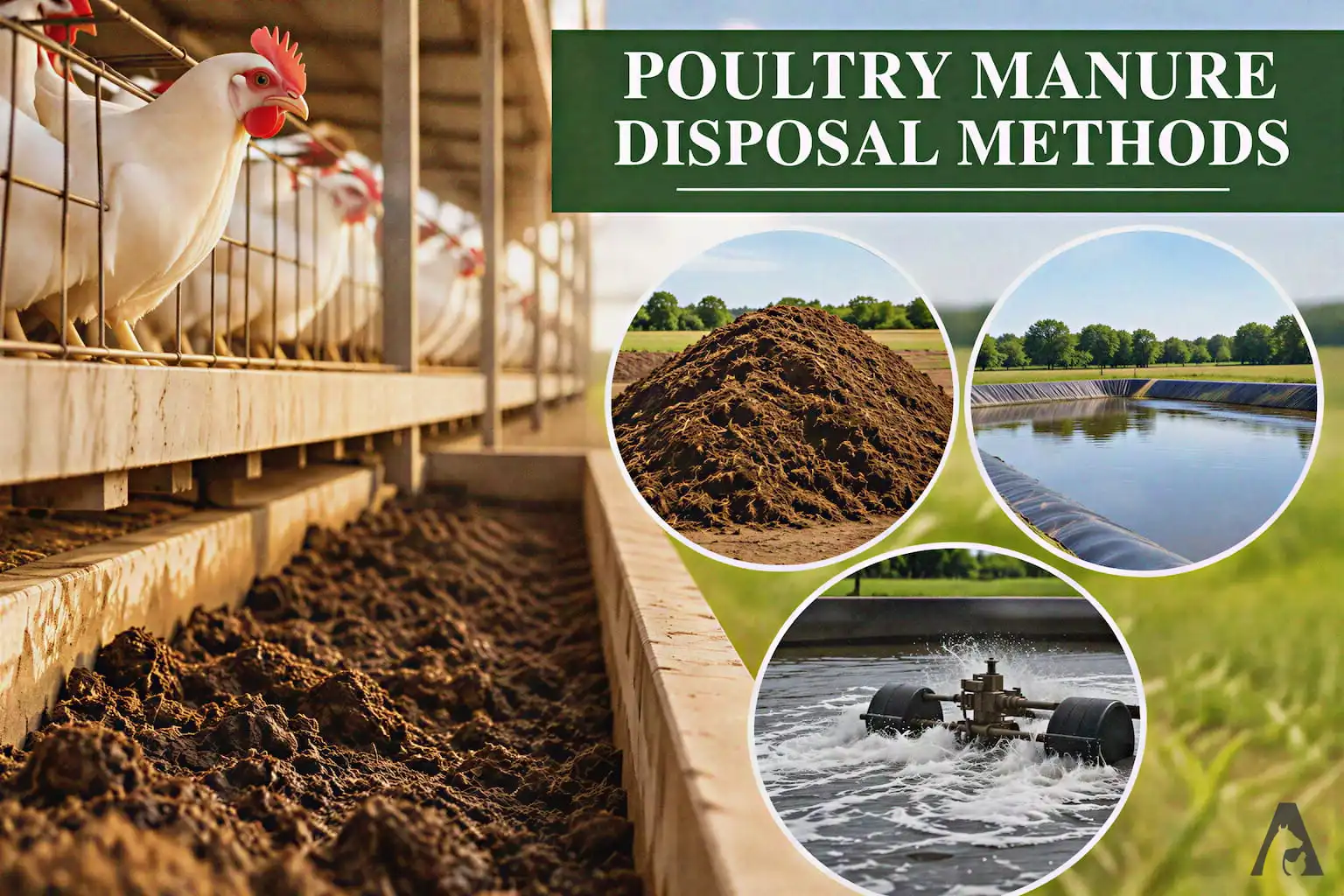
Poultry manure requires proper handling and disposal to maintain hygienic conditions and minimize environmental pollution. Various methods can be used for effective poultry manure management, including deep-pit composting, pond disposal, and aeration. These methods utilize microbial activity and appropriate waste-handling practices to reduce manure volume, control odors, and facilitate its eventual disposal or use on agricultural land.
Collecting poultry manure in pits under cages or slatted or wire floors is gaining favor as a practical and economical way to handle poultry waste. The manure may be allowed to accumulate for several years through the process of composting.
Aerobic bacterial action occurs. Many compost pits have been in operation for several years without manure removal. The top foot is composed of fresh manure, the bottom foot is in an anaerobic condition, and the central portion is undergoing composting.
The essential requirement in managing the deep pit is that the fresh, wet material be adequately aerated to remove moisture. To further the composting process and prevent odor, the pit must be watertight so that water cannot seep into it.
Care must be taken to prevent drinkers from leaking or overflowing into the pit, as such overflow prevents proper bacterial action in the accumulated wet manure. When the procedure operates correctly, there is little or no odor arising from the pits, and manure removal may be delayed for years.
Pond Disposal
Fresh poultry manure may be flushed into an open, shallow pond. Bacterial action reduces the waste material to a smaller volume. As bacterial growth occurs only during the warm months, the use of ponds is seasonal.
The resulting solution may be spread in its liquid state on farmland. When aerobic action takes place, the lagoon produces little odor; however, as the sludge builds up, anaerobic activity takes place, and odors may become pronounced.
Aeration
The oxidation method is used for poultry by placing a continuously flowing trough under the birds. Water is poured into the trough to keep the manure fluid, and pumps keep the sludge circulating. The effluent is aerated by paddles.
The addition of oxygen by the paddles increases the activity of aerobic bacteria, greatly reducing the incidence of odors. After 4–6 months, the material is removed in liquid form and usually spread on the land. The material is practically odorless.