Poultry Feather Waste: Keratin, Uses and Value Addition
Poultry feather waste is an important by-product of the poultry processing industry that can be converted into useful products rather than being discarded. Appropriate processing and utilization of feathers can contribute to sustainable waste management while providing raw materials for various agricultural and industrial applications.
Feathers constitute between eight and 10 percent of chicken live weight, and currently, Australian poultry processors produce somewhere in the region of 86,000 to 111,000 tonnes of feather waste annually.
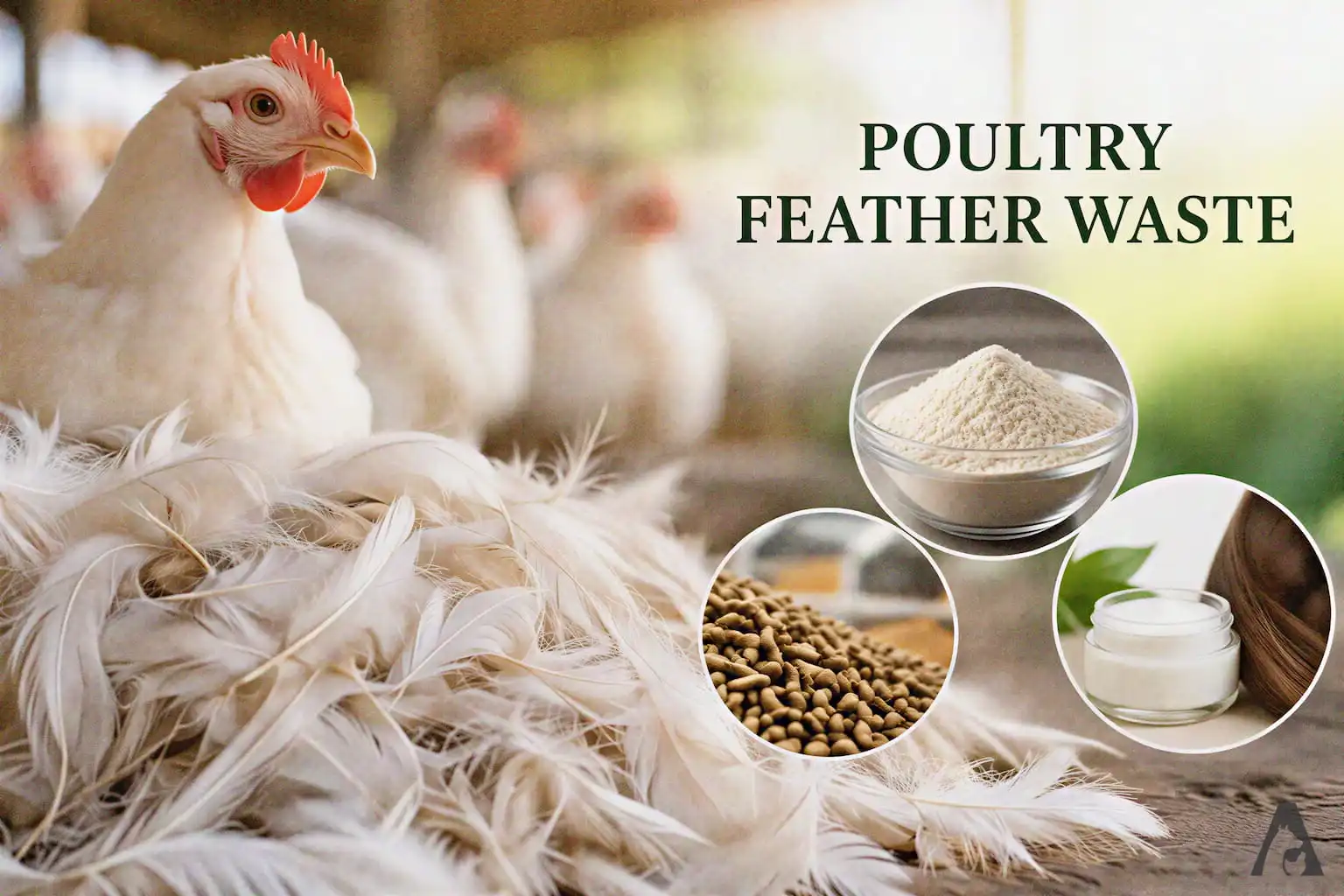
The majority of this is rendered for animal feed applications, with a return of less than one dollar per kilogram. With about 90 percent protein content, poultry feathers are potentially a rich and renewable source of protein. However, the protein in feathers is in the form of keratin, which is highly complex and inaccessible.
Hydrolyzed keratin can be used in many industrial applications, including animal feed, fertilizer, cosmetics for skin and hair treatments, leather tanning, biodegradable films, and as a carrier for insecticides and other active agents.
The cost of cosmetic-grade keratin hydrolysate currently ranges between A$50 and A$130 per kg. Thus, efficient conversion of feathers into hydrolyzed keratin has the potential to add significant value to feather waste, as well as mitigate environmental issues associated with its disposal.