CONTENT
Poultry Hatchery Waste Management and Treatment
Poultry hatcheries generate a diverse range of biological and processing wastes that require proper handling to maintain biosecurity and minimize environmental impact. Effective hatchery waste management involves appropriate collection, segregation, treatment, and utilization methods that facilitate safe disposal while supporting sustainable poultry production.
The chicken meat industry continues to grow globally, and so does the volume of hatchery waste: eggshell debris and fluff, infertile eggs, dead embryos, culled chicks, egg fluids, as well as wastewater from cleaning and disinfecting equipment and processing areas.
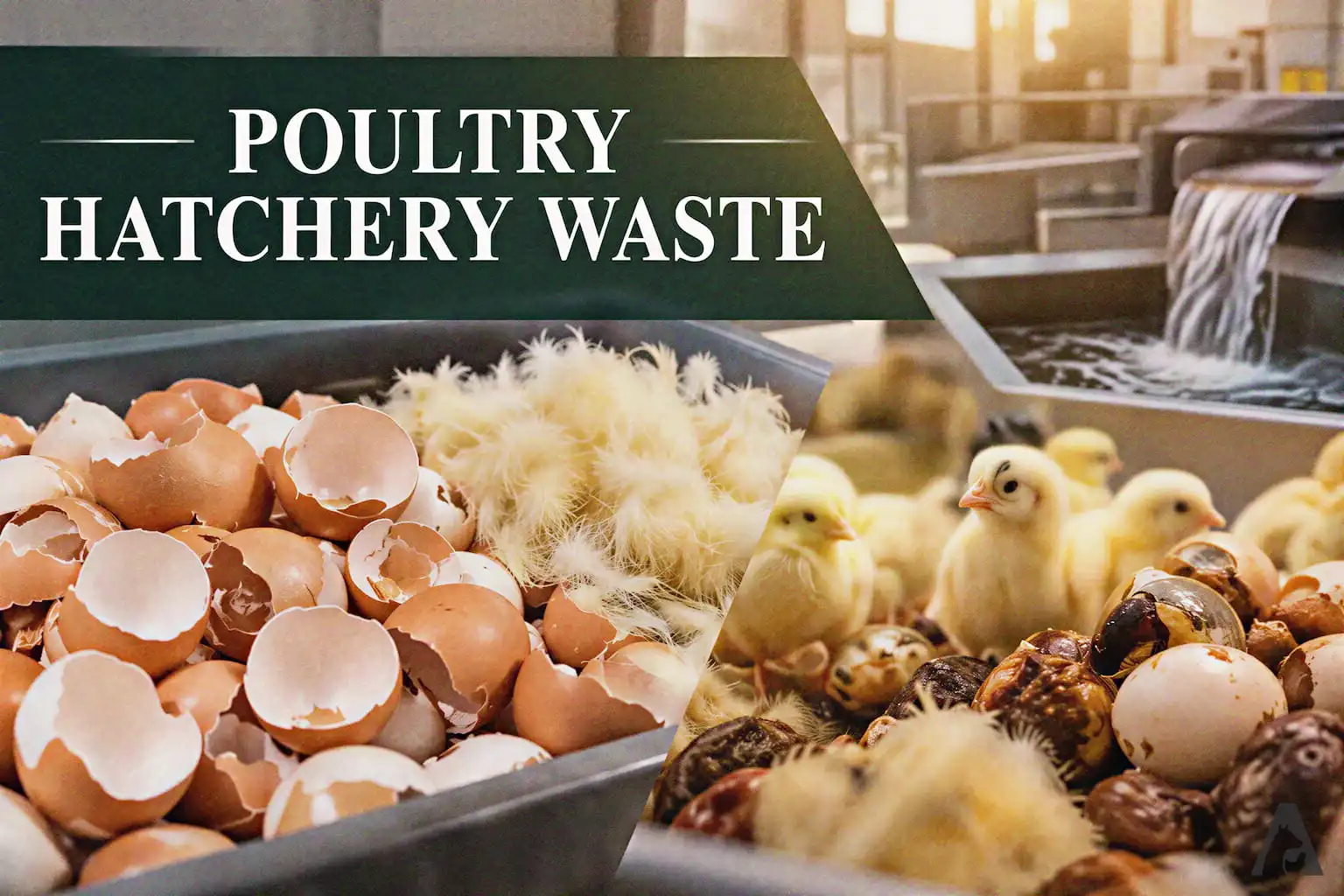
In recent years, rising disposal costs, environmental regulations, and awareness have created a need for hatcheries to find sustainable alternatives for waste management. There are various options for hatchery managers to convert their waste into value-added products such as compost, fertilizer, liming agents for soil amendment, biogas, medical products, and animal feed.
Separating Shells, Solids, and Liquids
Waste treatment can occur both on-site (at the hatchery) and off-site (at a treatment or processing plant). Ideally, some pretreatment of waste should occur on-site. Solid waste should be separated into eggshells, solids, and liquids and placed in different recycling pathways. This reduces the pathogen load and creates options to get the most from the waste.
Eggshells can be separated from heavier solids and unhatched eggs using one of three methods: vacuum suction, a vibrating sieve belt, or a cyclone forced-air separator.
Eggshells can be composted or further separated from their inner membranes for increased value. This can be accomplished either by grinding the eggshells into a powder and mixing them with water (the eggshells sink and the membranes float) or by placing the eggshells into a fluid-filled tank and separating them by cavitation.
There are various options for separating solid hatchery waste into solids and liquids, such as inclined screens with presses, centrifuges, multilayer filters using gravity, conveyor belts and rollers, etc., each varying in its ability to capture solids.