CONTENT
Organic Poultry Farming: Principles, Standards and Practices
Organic poultry farming emphasizes natural production methods, appropriate housing and management, responsible health care, and sustainable use of resources. It integrates poultry production with broader environmental and animal welfare considerations while reducing reliance on synthetic inputs and intensive production practices.
Organic farming is a system of farming that aims to promote animal health and environmental sustainability through holistic management for positive health based on biologically active soil.
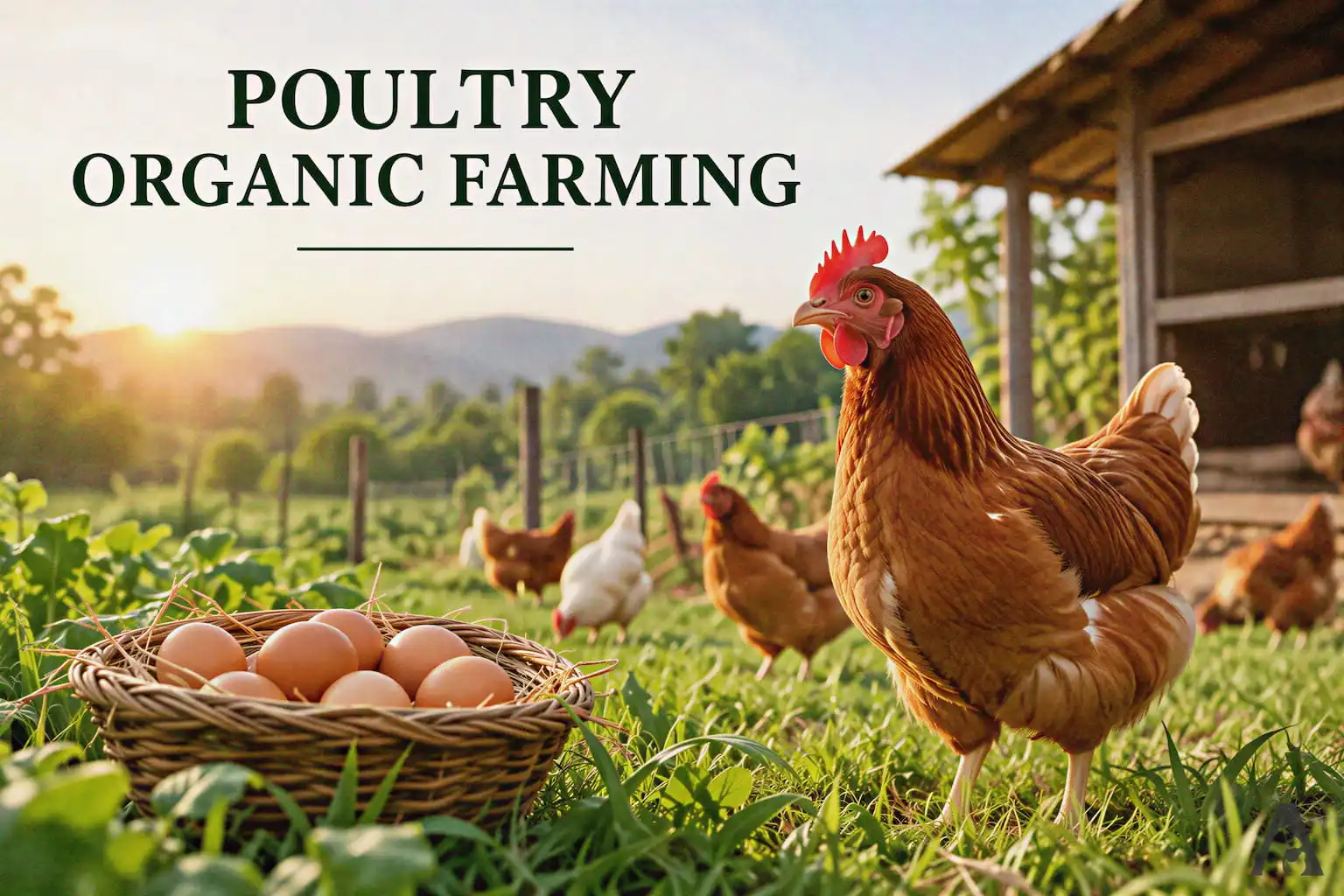
To be certified as an organic egg, the egg should come from a hen that has been fed organic feed, which is produced without synthetic pesticides, drugs, antibiotics, or genetically modified crops.
Hens used to produce organic eggs should not be fed rations containing meat by-products, such as meat and bone meal.
The “organic” label has also been applied to eggs produced by hens consuming diets that do not contain any drugs or hormones. These organic eggs must come from hens reared in deep-litter systems, with sufficient access to free-range areas.
Basic Principles of Organic Farming
- A precautionary approach to health issues
- Positive rather than reactive health management
- A focus on the fundamental causes of health problems rather than the symptoms
- Preference for the use of natural rather than artificial processes.
Organic Standards and Practices Include the Following
- Limits on unit sizes and stocking densities to avoid intensive housing conditions.
- Slower-growing breeds are encouraged.
- No routine prophylactic drug treatments—usually, only individual animals that are actually ill are treated, and then only as required.
- Homeopathic and/or Ayurvedic treatments are preferred to allopathic treatments.
- Animal health plans are obligatory for each farm to identify weaknesses and improvements required in the system for positive health.
- Record keeping.
- Breeding strategies are being developed to improve health, including fertility.
Aims of Organic Production
- To produce high-quality food in sufficient quantities
- To interact with natural systems and cycles in a constructive and life-enhancing way
- To consider the wider social and ecological impact of the organic production and processing system
- To encourage and enhance biological cycles within the farming system involving microorganisms, soil flora, plants, and animals
- To maintain and increase the long-term fertility of the soil
- To maintain the genetic diversity of the production system and its surroundings, including the protection of plant and wildlife habitats
- To use renewable resources, as far as possible, in locally organized production systems
- To create a harmonious balance between crop production and animal husbandry
- To minimize all forms of pollution