CONTENT
Organic Egg Production: Requirements, Housing and Feeding Practices
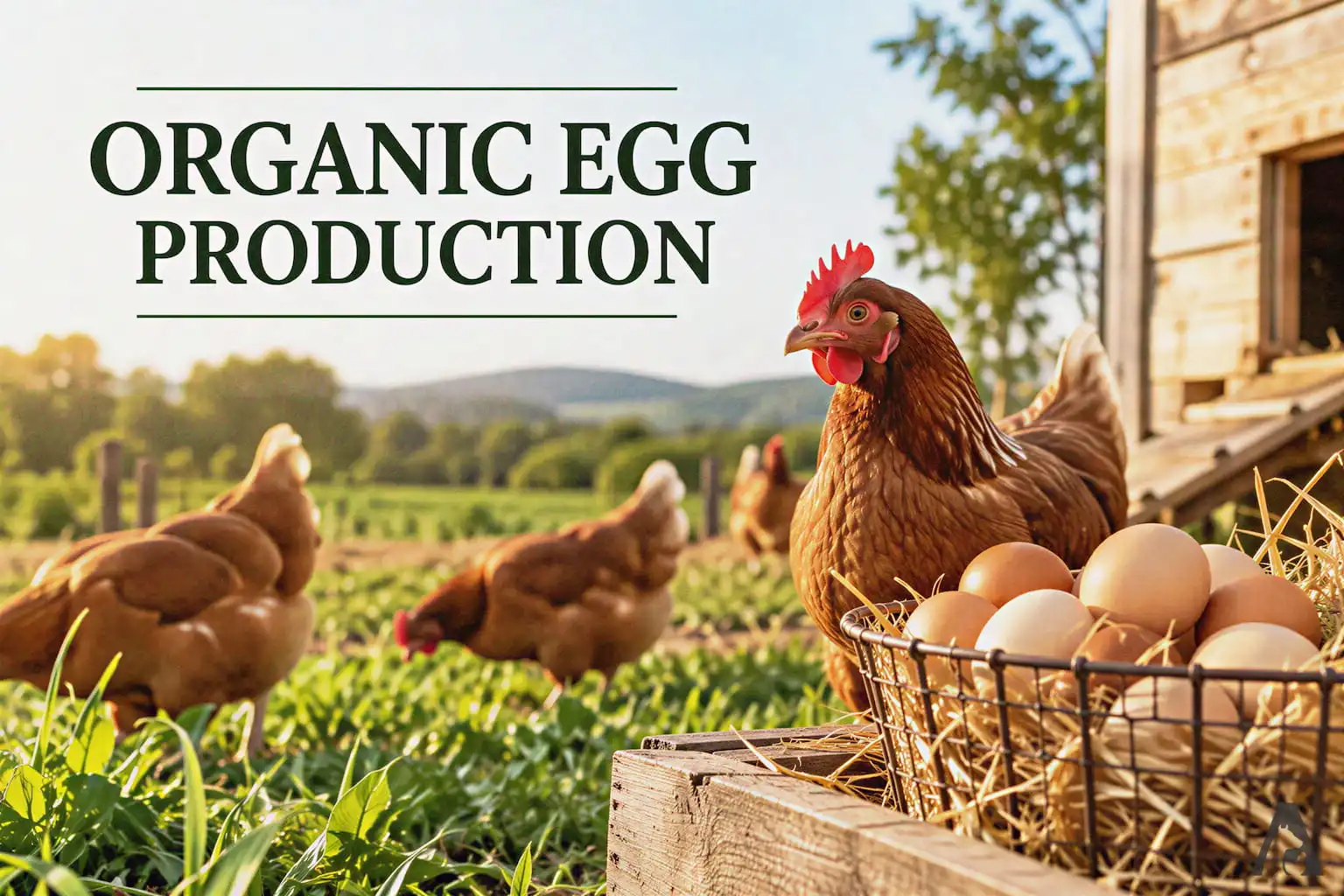
Organic egg production follows a regulated approach to poultry farming that integrates appropriate nutrition, housing, outdoor access, flock health, and sustainable management. Maintaining organic status requires producers to follow defined standards throughout the production cycle, from feed sourcing and bird management to egg handling and storage.
To produce a certified organic egg, the chicken that lays the egg must be certified organic itself or, if from a conventional source, must be from those layers fed organic feed for at least six months before the eggs are certifiable.
Some of the regulations that apply to organic egg production are as follows:
- All the ingredients used to feed the laying hen must be from certified organic sources. No herbicides, fungicides, insecticides, or chemical fertilizers are allowed.
- The farmer must replenish the soil naturally with the goal of sustainable production.
- Housing must allow for “reasonable liberty, normal socialization, maximum fresh air, daylight, and shelter from inclement weather conditions.” The birds must have access to free range or large open-air runs and have contact with the natural ground.
- No antibiotics, prohibited parasiticides, or coccidiostats are allowed in the egg-producing flock. In the event of treatment, birds must be withdrawn from organic production for a period of 90 days or twice the official waiting period, whichever is greater. Only after the producer has met all the production regulations and had the birds, land, and records inspected can the farm be recommended for organic status. Once approved, a certificate will be issued stating that the eggs are certified organic.
Mandatory Requirements – Layers
- 100% certified organic feed.
- 1.75 square feet per bird in the hen house.
- Uninterrupted supply of clean water.
- Natural light in the house.
- Adequate ventilation to prevent ammonia buildup.
- Access to the outdoors when seasonally appropriate.
- Outdoor area providing five square feet per bird.
- Egg storage area holding eggs at 60°F.
Recommended Practices
- Temperature: 40-80°F
- Humidity: 60-80%
- Waterers: At least one bell waterer per 75-100 birds, or one nipple per 10-15 birds on line waterers.
- Roost Area: A flat roost area that hens cannot get under, with waterers over it. Periodically dust with calcium phosphate or lime to keep ammonia levels down. Provide six inches per bird in the roost area.
- Litter: Should consist of sawdust, shavings, certifiable hay or straw, or ground cobs.
- Floor: The area should be dry, with certifiable scratch feed on the floor to encourage turning of the litter. If using the deep litter method, it must be microbially alive and turned periodically, with moisture added to aid breakdown. Lime the floor periodically to disinfect it.
- Transition: A rest period of two weeks between batches is encouraged to break the parasite cycle. Clean the house thoroughly, lime heavily, or spray with a mild bleach solution to disinfect.
- Ventilation: Should maintain adequate air movement to avoid an overwhelming ammonia smell. Ammonia levels in the house should be less than 20 ppm. Ridge vents are highly encouraged to remove ammonia and moisture.
- Lighting: Supplemental lighting is not mandatory but is encouraged. Fourteen to sixteen hours are recommended. Never decrease the lighting duration once the hens are laying.
- Vaccination against certain diseases is permitted and may also be carried out.
- Feed: All laying hens must be fed 100% certified organic feed from day one.
- Do not feed kitchen scraps.
- High-quality certifiable hay (either ground into feed or used as bedding) keeps the yolk color dark.
Feed Requirements for Organic Egg Production
Feed constitutes a major component of any animal production system and, in the case of egg production, represents the major cost. Therefore, it is vital that every aspect of the diet is correct in order to ensure optimum performance.
When formulating rations suitable for organic egg production, it is necessary, as with any ration, to take into consideration not only the nutritional requirements of the bird but also the legislative standards applicable to the diet.
Organic standards prohibit the inclusion of genetically modified material and products produced using genetically modified organisms. Products of plant origin currently permitted, along with their by-products, include cereals, oilseeds and legume seeds, tuber roots, and forages.
However, a further restriction on these products is that they must not have been produced or prepared using chemical solvents. Animal products permitted for inclusion under the regulations include milk and fish or other marine animals, along with their by-products.
All yolk pigments must be of natural origin.
- Cost of Diet: Due to the aforementioned issues, it is obvious that organically produced raw materials are going to cost more to buy than their conventional counterparts.
- Outdoor Access: Some form of pasture rotation (or provision of a very large area) is required to maintain at least 30% plant cover.