CONTENT
Nutrition of Scavenging Chickens: Feeding, Nutritional Limitations & Feed Resources
Scavenging chickens obtain a substantial proportion of their nutritional requirements from naturally available feed resources in their surrounding environment. The quantity and quality of these resources vary with geographical location, season, agricultural practices, and management conditions, which can directly influence the nutritional status and productivity of the flock.
Feeding through Scavenging
Birds under scavenging conditions pick up farm waste grains such as maize, sorghum, and millets to meet their energy requirements and depend, at least partially, on grains offered by flock owners during the early part of the day. In addition, birds scavenge for insects, worms, larvae, snails, termites, maggots, marine waste, etc. to satisfy their protein, mineral, and vitamin requirements.
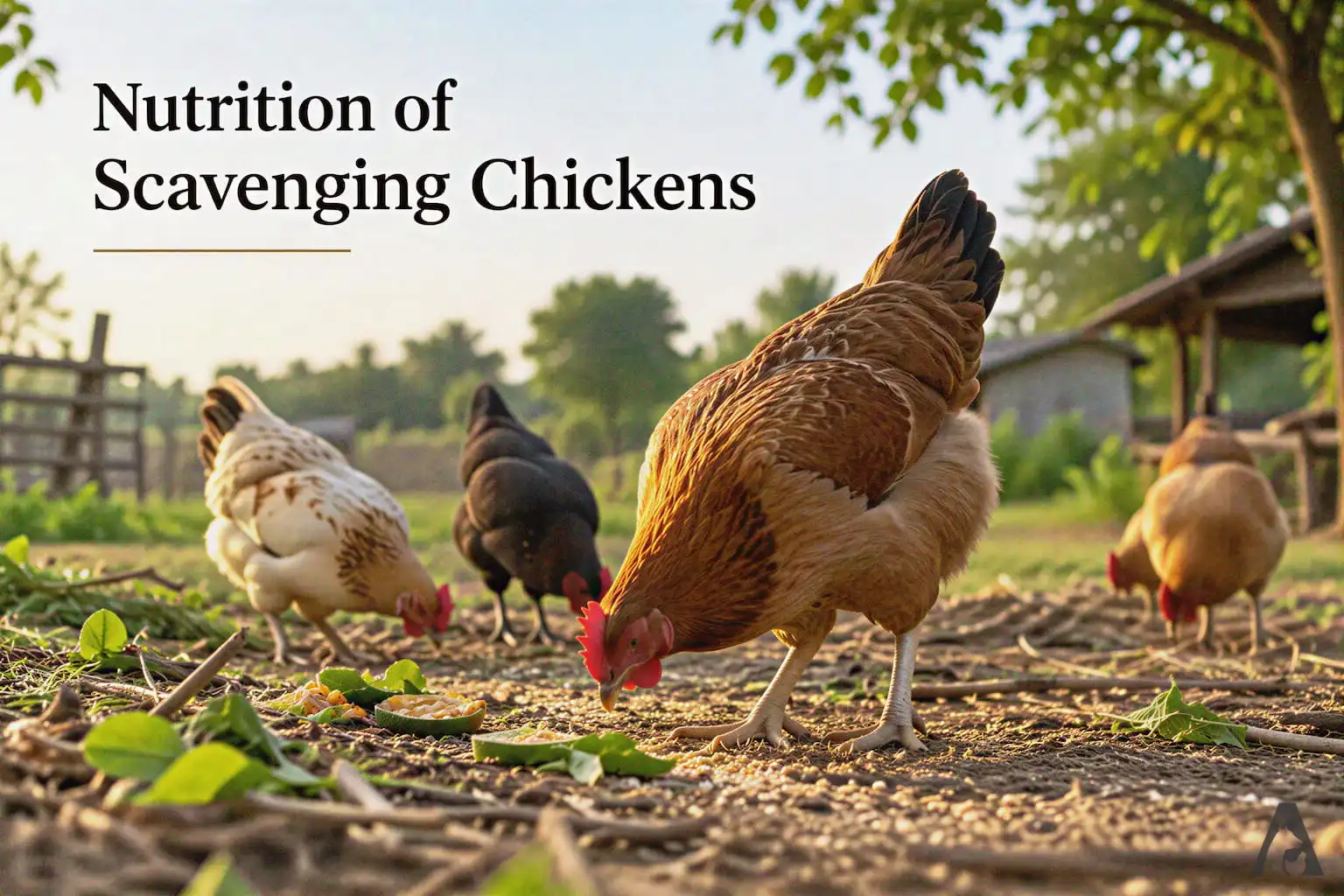
However, considerable diversity in climate, terrain, ethnic groups, socioeconomic status, etc., significantly influences feeding patterns in different geographical locations. Therefore, the sustainability of poultry production depends upon the interplay between the environment, local resources, agricultural practices, and poultry management skills.
It is important to know the quantity of scavenging feed available in a village and monitor the effects of seasons on its availability. A bird cannot consistently find all the nutrients needed for optimum production throughout the year. During the dry season, poultry can quickly develop vitamin and mineral deficiencies due to the scarcity of natural feed resources; hence, offering supplemental feed becomes essential.
There are no definite and reliable methods of estimating scavenging feed resources quantitatively or qualitatively to establish an input-output relationship in this feeding system. Promoting the use of unconventional feed resources such as termites, maggots, and worms has been suggested as one of the alternatives for increasing the scavenging feed resource base.
Nutritional Limitations of Scavenging Chickens
The productivity of a flock will depend greatly on the level of nutrition. The greatest constraint to production in rural chickens is inadequate nutrition, both in quantity and quality. The major components of the diet of scavenging birds come from the land where they scavenge. The feed items available to free-scavenging chickens include whole grains, boiled rice, maize grits, wheat bran, rice bran, green forages, insects, worms, kitchen waste, and other unidentified particles.
There is little information on the feed intake and feed quality of scavenging chickens. Findings have shown that the diet of scavenging chickens was below their requirements, with deficiencies particularly observed in protein and energy, as well as an imbalance in calcium and phosphorus content. It was observed that the scavenging feed resource base was just sufficient for the maintenance of these birds and production of about 40 eggs per year.
Feed Resources for Scavenging Chickens
The feed resources available are:
- Household waste
- Naturally occurring organic materials such as worms, insects, maggots, termites, etc.
- Crop surpluses and their by-products
- Fodder materials
- Noncommercial feed resources such as grasses, herbs, algae, etc.
Advantages of Rural/Scavenging Chickens
- The management of village chickens can easily be combined with other activities because of the proximity of the chickens to homesteads.
- Chicken products are among the few agricultural products directly accessible to women in rural areas, and increased food production from chickens will improve household food security.
- Village chicken production is not strongly linked to land resources, which is one of the main production constraints among disadvantaged members of the community.