CONTENT
Laboratory Rat (Rattus norvegicus): Biology, Breeding, Nutrition and Care
The laboratory rat (Rattus norvegicus) is one of the most widely used laboratory animals in biomedical, nutritional, toxicological, and physiological research. Its manageable size, docile nature, well-characterized biology, and ease of breeding make it suitable for a wide range of experimental studies. Proper knowledge of its anatomy, reproduction, nutrition, handling, housing, and environmental requirements is essential for effective laboratory animal management and welfare.
General Parameters
- Body Temperature: 37.5°C (99.5°F)
- Age at Sexual Maturity: 40–50 days
- Age at First Mating: 70 days
- Estrous Cycle: 4–5 days
- Duration of Estrus: 10–20 hours
- Gestation: 21–22 days
- Litter Size: 9–11
- Weaning Age: 18–21 days
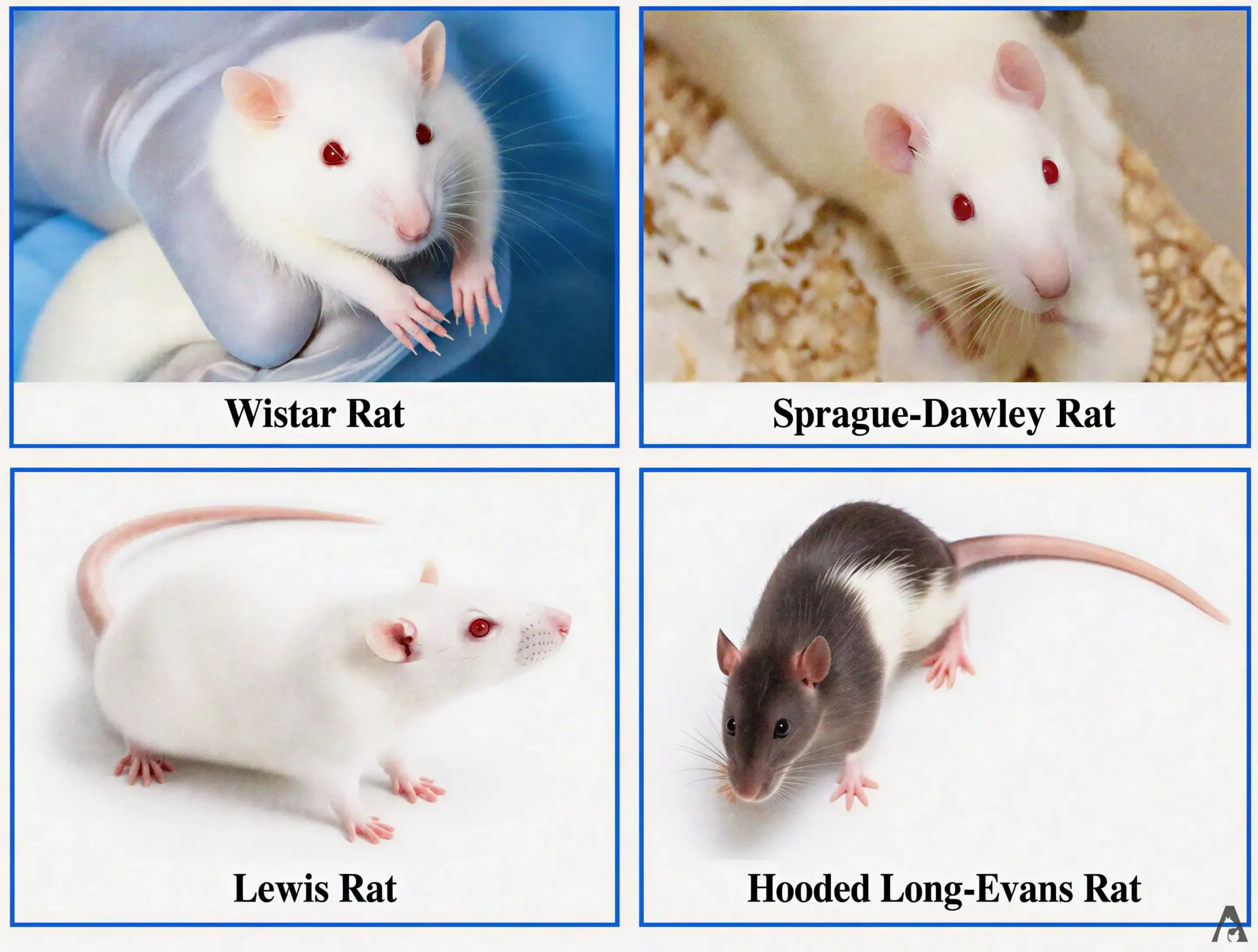
The rat is an intelligent animal that is easily tamed by handling. There are inbred strains such as PVG/C, WAG, Lewis, and DA. The non-inbred strains include Wistar, Sprague-Dawley, and hooded Long-Evans.
They are used extensively for nutritional and toxicological studies.
Anatomy
The rat is a rodent with typical dentition for this order. Like the mouse, only the female has nipples, which are a guide to sexing very young animals. The rat does not have a gallbladder; bile is produced in the liver and passes directly to the duodenum via the bile duct.
Reproduction
Estrus lasts for 10–20 hours of the 4–5-day estrous cycle. A straw-colored copulation plug may be seen in the vagina or, because of its size, on the droppings tray of a wire-bottomed cage. Gestation is 21–22 days, and the young are born blind and naked.
Rats may be kept in monogamous pairs throughout their breeding lives, thereby taking advantage of postpartum estrus, or in harems with one male to 6–8 females, removing the females to separate cages when they are obviously pregnant and returning them to the harem after the young are weaned.
Nutrition
Food and water should always be available. Breeding animals require a diet containing 18–20% protein and stock animals 15–16%, given in pellet form approximately 25 × 10 mm (1 × 3/8 inches) in size. Many commercially available rat diets are suitable for breeding and maintenance.
Handling
The rat should be picked up by placing one hand over its back and grasping it firmly around the neck so that it cannot turn its head to bite. When animals become tame, they can be picked up by holding them around the shoulders.
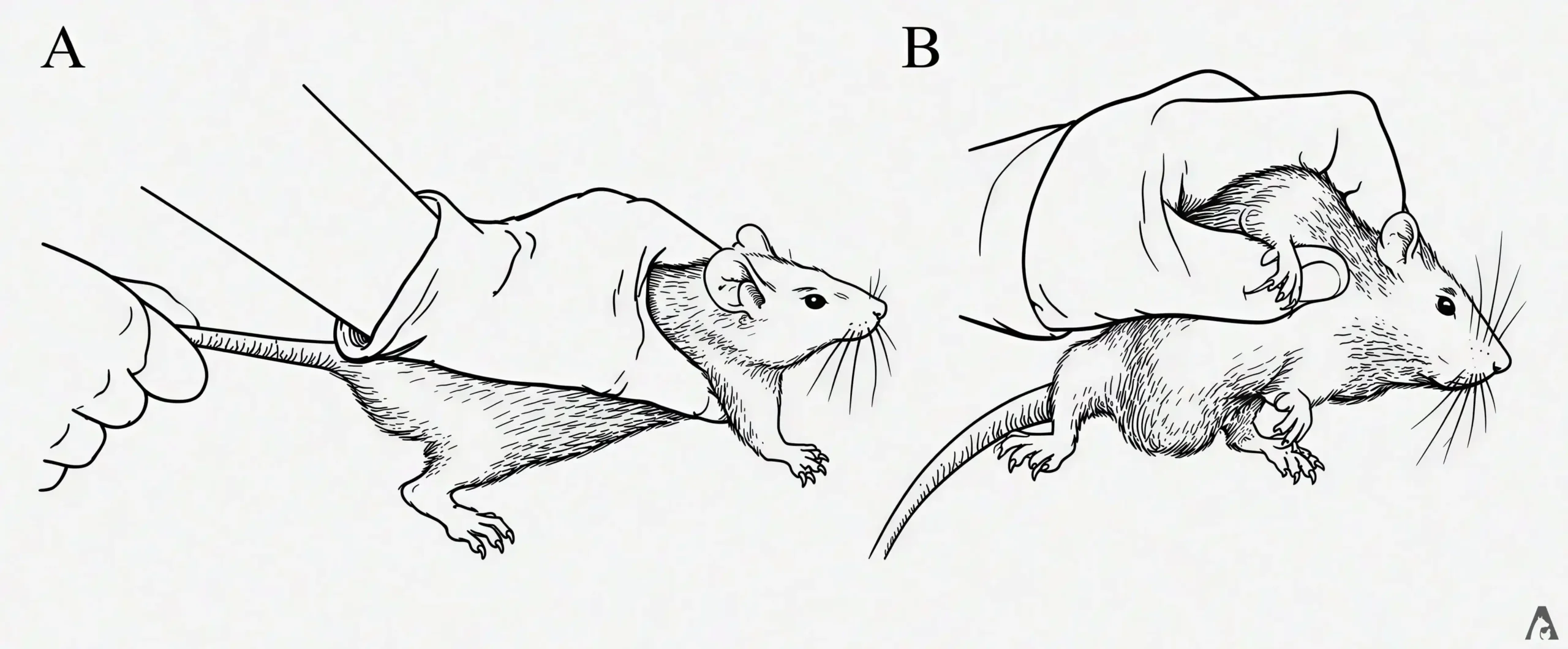
A pregnant animal should be given additional support by cupping the other hand around the lower part of the animal’s body and legs.
Environment
The room temperature should be about 21°C and the relative humidity about 55%. Low humidity is thought to cause “ringtail,” a condition in which the rat’s tail becomes ringed or constricted and, in extreme cases, can slough off. In a very dry atmosphere, the humidity may be increased by leaving floors wet after washing or by placing open pans of water in the room.
Caging and Bedding
Breeding pairs can be housed in boxes with a minimum height of 25 cm and an area of 55 × 27 cm, with a wire-mesh top to hold food and a water bottle. Harems and stock (e.g., 6 adults) should be housed in larger boxes. Harems and animals over 100 g need 250 cm² per animal, and stock up to 100 g need 150 cm² per animal.
Solid floors or wire grids with a tray for feces below are both suitable, the latter allowing greater airflow through the cage, thereby decreasing the immediate humidity. White softwood shavings or sawdust can be used as bedding material, and shredded paper or wood wool can be used for nesting.