CONTENT
Integrated Farming System: Mixed Farming, Advantages and Requirements
Integrated farming brings different agricultural enterprises together to improve resource utilization and overall farm productivity. By linking crop production with poultry and other livestock activities, farm inputs and by-products can be used more efficiently while providing multiple sources of output and income.
Farming poultry along with crop cultivation is called mixed farming, whereas more than one animal husbandry activity, such as rearing cows, buffaloes, sheep, goats, poultry, and fish, along with crop cultivation, is called diversified farming.
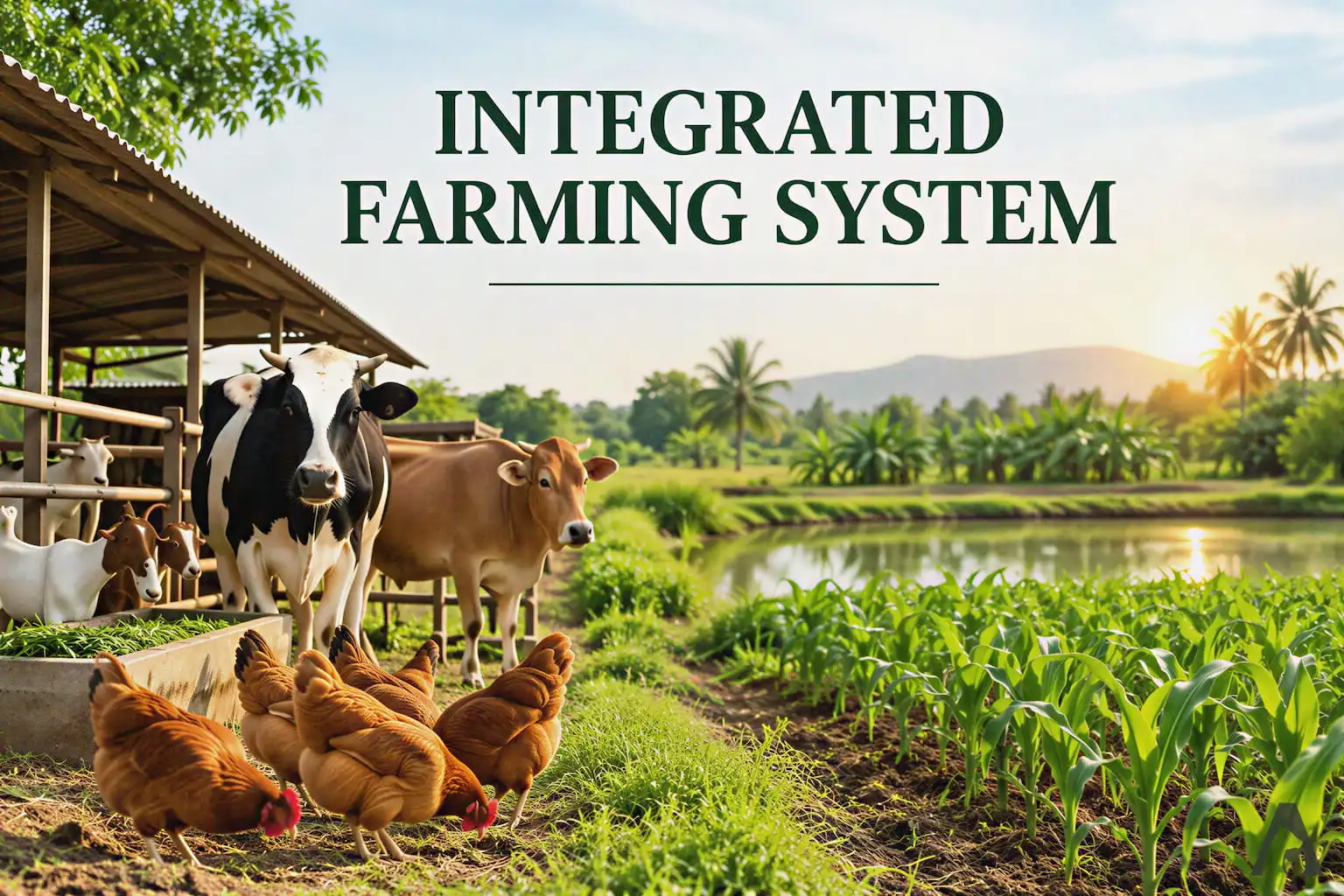
Poultry enterprises are complementary to crop production, providing a balanced and productive farming system. In mixed farming, at least 10% of the gross income must be contributed by livestock/poultry activities.
The scope of mixed farming includes a combination of crops and complementary livestock enterprises. Mixed farming would certainly include a vast majority of farms, establishing a complementary relationship between crop and livestock enterprises.
Advantages
- It offers the highest return on farm business, as the by-products of the farm are properly utilized.
- It provides work throughout the year.
- It allows efficient utilization of land, labor, equipment, and other resources. Crop by-products such as straw, bran, fodder, etc., are used for feeding livestock, and in return, they provide milk and eggs.
- Manure available from livestock and poultry helps maintain soil fertility.
- It helps in supplying the food needs of family members.
- Intensive cultivation is possible. If one source of income is lost, the farmer can maintain the family through other sources of income.
- Mixed farming increases the social status of the farmer.
Livestock is closely connected with agriculture because animal power is an important source of power in agriculture. Farmyard manure is an important source for maintaining soil fertility, and animals make good use of subsidiary products and by-products on farms. In turn, they provide milk. Under such circumstances, mixed farming is well suited.
Disadvantages
- Indigenous methods of cultivation can easily be combined.
- Expertise in different types of farming is required.
- Proper planning in terms of marketing poultry and livestock products is necessary for maximum profit.
Requirements of Mixed Farming
- Complicated management practices
- Sound cropping scheme
- Good cattle in suitable numbers
- Transportation and marketing facilities