Feeding and Diet Sterilization of Laboratory Animals
Feeding laboratory animals requires careful consideration of nutritional requirements, diet formulation, physical form, storage, and sterilization. A well-balanced and standardized diet helps maintain animal health and minimizes nutritional variability that could influence experimental results.
The choice of diet and sterilization method may also vary according to the species and microbiological status of the laboratory animals.
The obvious choice for feeding laboratory animals might seem to be a diet closely resembling that found in nature.
When the nutritional requirements of laboratory animals are finalized, a ration can be formulated from available raw materials to provide a standardized product that will minimize variability in productivity and experimental results.
The diet must be presented as a uniform mixture so that it is impossible for the animal to select some ingredients and ignore others.
Crumbs or pellets are more acceptable to the animals. Crumbs are easy to prepare in the laboratory by incorporating a binding agent such as methylcellulose.
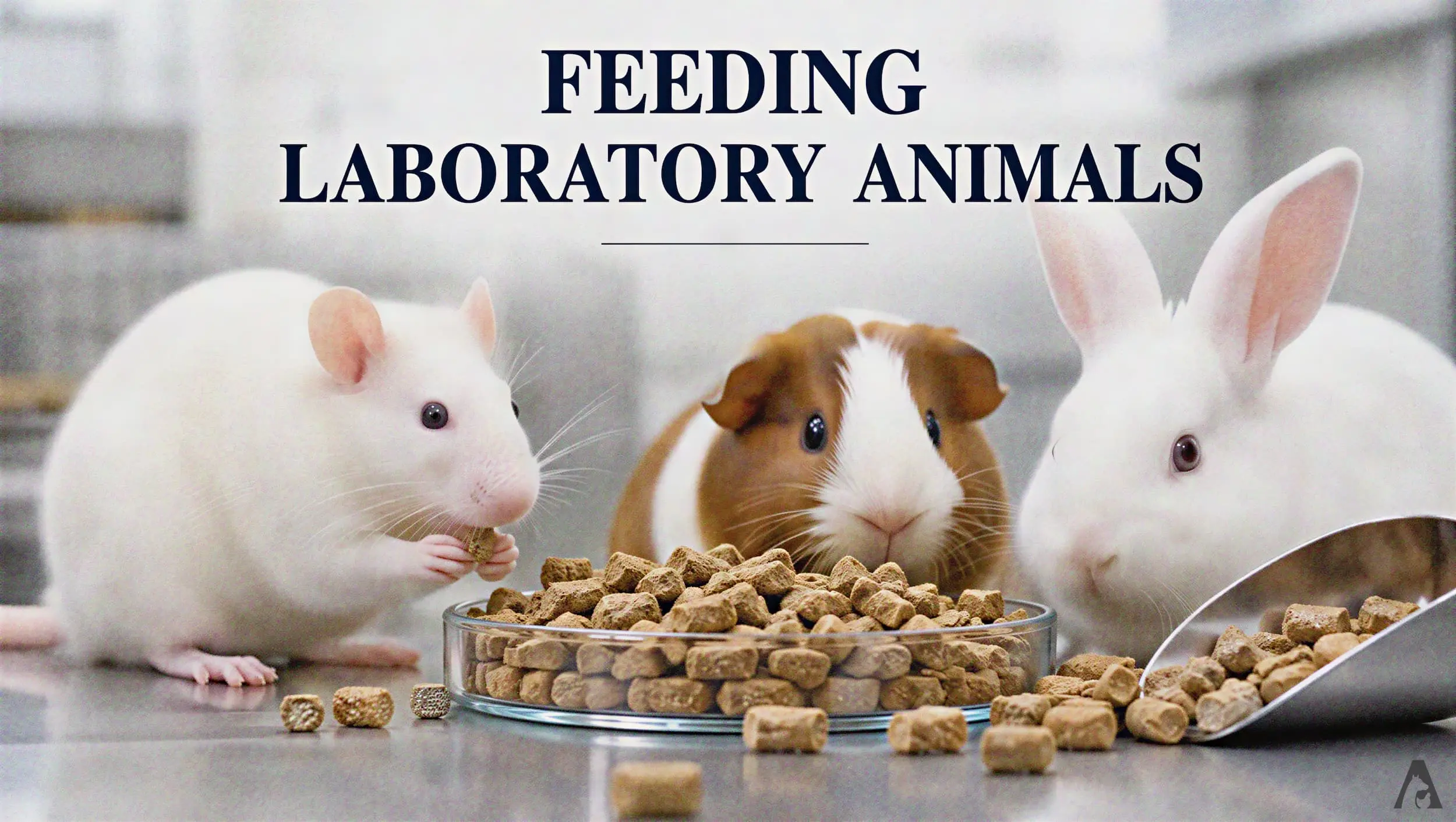
In many ways, pellets or cubes offer the most satisfactory form of diet. They are generally more acceptable to the animals, less easily wasted, simple to handle, and have a good storage life.
The optimal size and hardness of the pellet are important and differ between species. Rats, which gnaw their food, prefer larger pellets than those usually supplied to guinea pigs and rabbits.
Soft pellets encourage waste, as they easily crumble in storage bags or hoppers. Very hard pellets are unacceptable, particularly for young animals, which may find them too difficult to chew.
Diets intended for gnotobiotic animals must be sterilized. Those for specific pathogen-free animals must be free from pests and pathogens, so it is preferable, though not essential, for them also to be sterilized.
Commonly employed methods for diet sterilization are heat, ionizing radiation, and fumigation. In all instances, care must be taken to minimize substantial impairment of nutritional value.
Pasteurization (80°C) and autoclaving (121°C for 15 minutes) render the diet sterile without substantial loss of nutrients.
Ionizing radiation is a very effective method for sterilizing laboratory animal diets. The source of radiation is usually ⁶⁰Co, although, for reasons of safety and cost, the process is not available in many laboratories.
Chemical sterilization by fumigation with ethylene oxide has been applied to diets with varying success.