
CONTENT
Elevated Cage Layer House: Design, Advantages and Disadvantages
An elevated cage layer house is a poultry housing system in which the cage structure is raised above ground level using concrete pillars and platforms. This design provides good ventilation and facilitates manure removal while helping reduce fly and ammonia problems. The system is particularly suitable for poultry production in tropical climates.
The height of the house is raised by 6–7 feet using concrete pillars. The distance between two pillars is 10 feet. Two-foot-wide concrete platforms are constructed over the pillars. When three ‘M’ type cages are arranged, four platforms are needed. In the case of two ‘M’ type and two ‘L’ type cages, three platforms are needed. When constructing the platforms, projecting angles or iron rods should be provided to fix the cages.
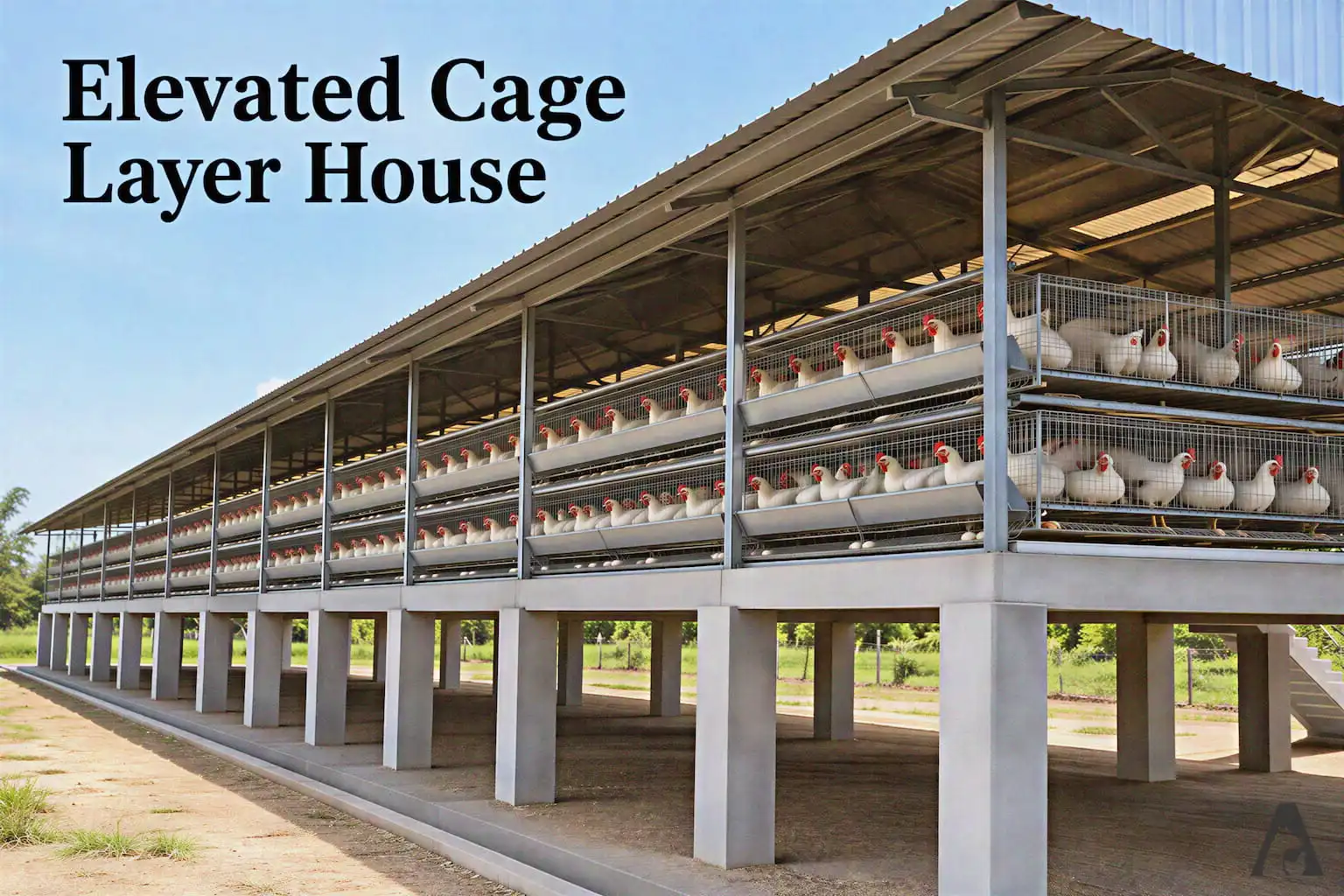
The inter-platform distance is 6–7 feet, depending upon the type of cages used. The total height of the house is 20–25 feet, and the width is 30–33 feet. This type of house provides sufficient ventilation in tropical countries.
Advantages
- More hygienic
- Less fly problems
- Less ammonia problems
- Good ventilation
- Easy removal of manure
Disadvantages
- Requires more investment than conventional cages.