CONTENT
Common Terms and Definitions for Laboratory Animals: Germ-Free, SPF, Gnotobiotic & Pheromone Effects
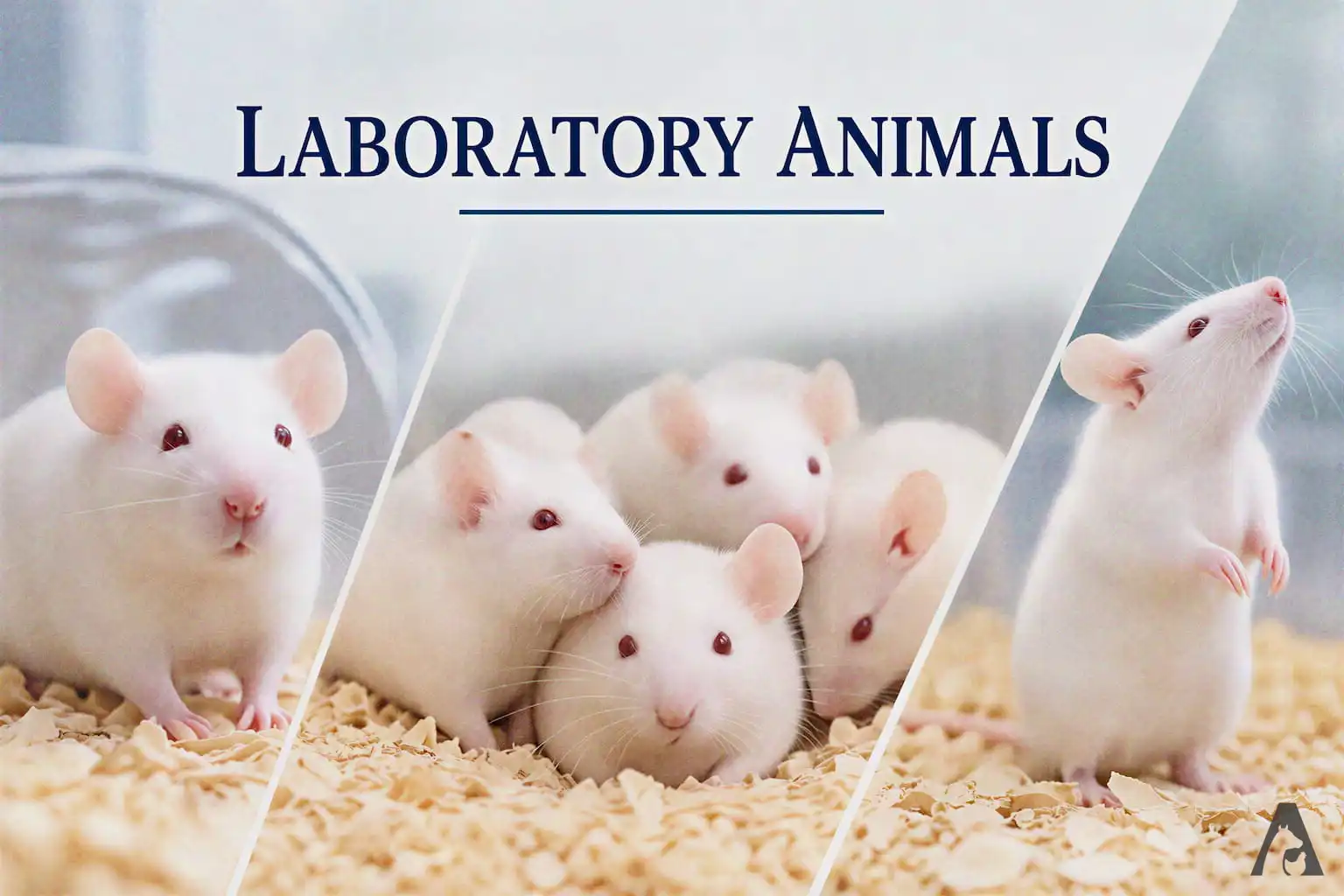
Laboratory animals are widely used in biomedical, veterinary, and research studies, where their health status, microbial environment, and reproductive behavior can significantly influence experimental outcomes. Several specific terms are used to describe laboratory animals and important biological phenomena observed in them.
This article covers common definitions, including germ-free, gnotobiotic, and specific pathogen-free (SPF) animals, along with pheromone-mediated reproductive phenomena such as the Lee-Boot, Whitten, and Bruce effects.
Germ-Free Animals
Animals maintained free from all demonstrable microorganisms using closed-system techniques.
Gnotobiotic Animals
Animals carrying a defined population of microorganisms.
SPF Animals
A state in which animals kept under full-barrier or isolator systems are known to be free from a defined list of pathogens. Such stocks are normally initially obtained by cesarean rederivation or the use of embryo transfer methods.
Specified Pathogen-Free (SPF) animals may be defined as animals that are free of specified microorganisms and parasites, but not necessarily free of all microorganisms and parasites. Animals must be drawn from stock that was originally established by hysterectomy and maintained within a barrier designed to discourage the entry of undesirable organisms. They are cared for by skilled technical staff and maintained on diets, bedding, and nesting materials known to be free of pathogenic microorganisms.
In the SPF unit, the animal technician still has direct contact with the animals, compared with a germ-free unit where the animals are entirely enclosed within an isolator. The successful operation of an SPF unit depends on a high standard of management to prevent the ingress of pathogens.
Results obtained using SPF animals are likely to be more meaningful due to the lack of interference from overt or subclinical disease. There is evidence to indicate that fewer animals need to be used in an experiment because of the more reliable results obtained.
Lee-Boot Effect
In the Lee-Boot effect, female mice housed together in groups of four or more tend to become pseudopregnant; that is, although they are virgins, they develop long-lived, progesterone-secreting corpora lutea as if they were pregnant.
Whitten Effect
The Whitten effect occurs when mice are housed in larger groups. Their estrous cycles become longer and longer and eventually stop. Both of these effects are controlled by pheromones in urine; they can be stimulated in mice housed individually if the experimenter puts urine from other female mice into their cages.
Bruce Effect
The Bruce effect is a particularly interesting phenomenon: when a recently impregnated female mouse encounters a normal male mouse other than the one with which she mated, the pregnancy is very likely to fail.
This effect, too, is caused by a substance secreted in the urine of intact males, but not in the urine of males that have been castrated. Thus, a male mouse is able to eliminate the genetic material of another male and subsequently impregnate the female himself.