CONTENT
Zoo Management: Policy, Objectives, Animal Care & Conservation
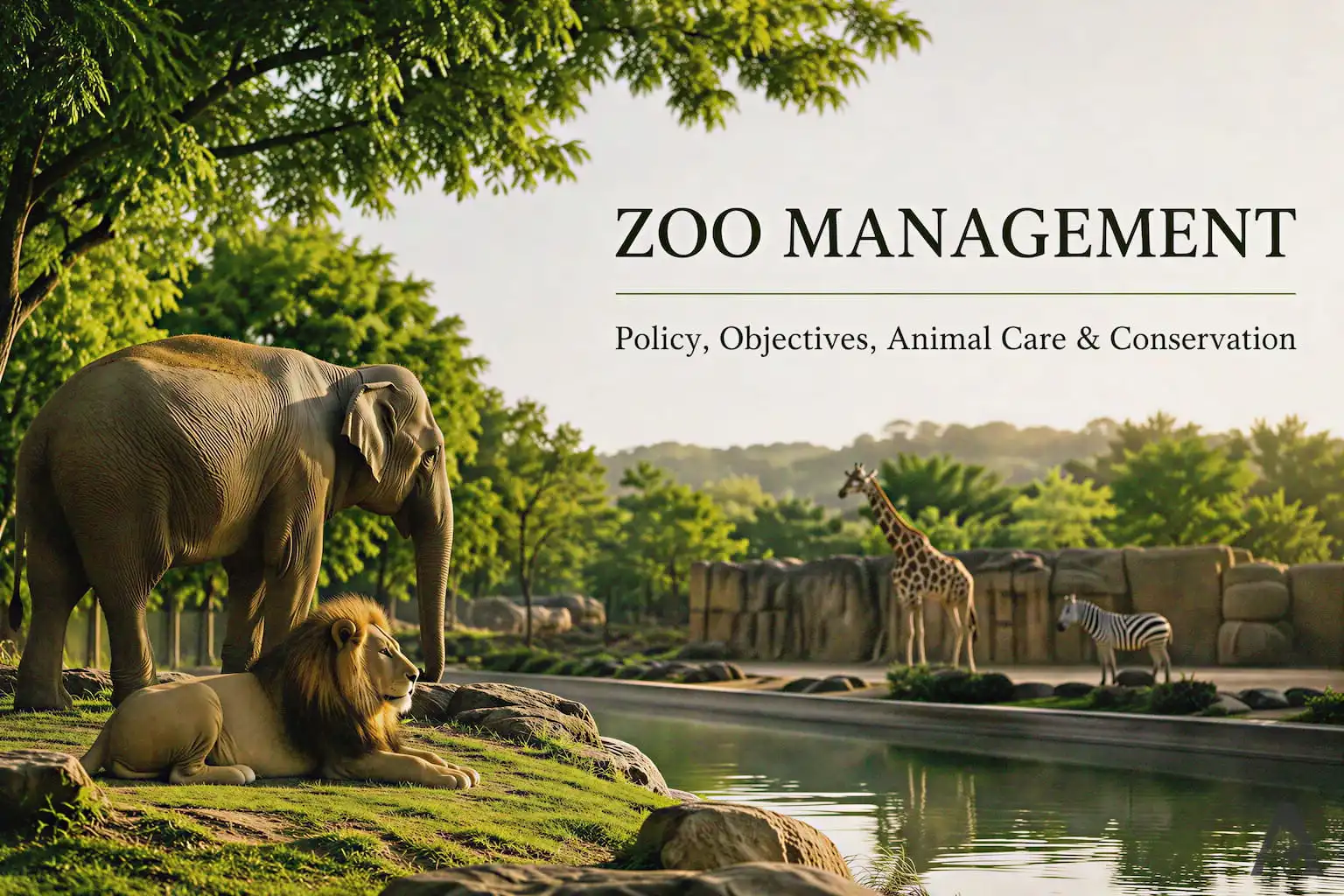
Zoo management involves the scientific and ethical management of captive wild animals, with an emphasis on animal welfare, conservation, research, education, and sustainable resource use. Effective zoo management includes appropriate animal housing, nutrition, veterinary care, breeding programs, health monitoring, visitor education, and conservation planning.
This article covers the key policies, objectives, and strategies for managing zoos and contributing to wildlife conservation.
Preamble
The growing awareness of nature and wildlife conservation has made zoos a popular institution. Estimates indicate that 10% of the world’s population visits zoos every year.
While there is a history of scientific interest in the conservation and welfare of captive wild animals, many zoos have evolved from menageries and private collections, and most zoos until the last two decades were established mainly for entertainment and recreation. As wildlife resources were abundant in the past, scientific knowledge about the behavioral and biological requirements of animals did not receive adequate attention, with the result that scientific management of wild animals in captivity has evolved slowly.
Today, when wildlife habitats are under severe pressure and a large number of species of wild fauna have become endangered, zoos have not only to sustain their own populations but also augment the declining populations of endangered species in the wild. This new role has been acknowledged by the global conservation community and Article 9 of the Convention on Biological Diversity.
As zoos are visited by a large number of visitors, they are a potent tool for educating people about the close linkage between the protection of natural areas and the maintenance of the life-supporting processes of nature. Well-planned and appropriately designed zoos can sensitize visitors to the dangers of a hostile or indifferent attitude toward nature.
Many well-designed zoos were established in some of the states, but for the most part, zoos have not been able to meet the challenges imposed by the changing scenario and still continue with the legacy of the past, i.e., displaying animals in ways that are neither educative nor rewarding to visitors.
The Zoo Policy aims at giving proper direction and thrust to the management of zoos by mustering the cooperation and participation of all concerned.
Objectives
The main objective of zoos shall be to complement and strengthen the national efforts in the conservation of the rich biodiversity of the country, particularly its fauna.
The objective can be achieved through the following protocol:
- Supporting the conservation of endangered species by giving species that have no chance of survival in the wild a last chance of survival through coordinated breeding under ex situ conditions and raising stocks for rehabilitating them in the wild when appropriate and desirable.
- Inspiring empathy for wild animals among zoo visitors and promoting an understanding and awareness of the need for conservation of natural resources and maintenance of ecological balance.
- Providing opportunities for scientific studies useful for conservation in general and creating databases for sharing among the agencies involved in in situ and ex situ conservation.
- Besides the aforesaid objectives, zoos shall continue to function as rescue centers for orphaned wild animals, subject to the availability of appropriate housing and upkeep infrastructure. Where appropriate housing and upkeep facilities are not available, the Government would ascertain the feasibility of establishing rescue facilities in off-exhibit areas of the zoo, subject to the availability of land.
Strategy for Achieving the Objectives
General Policy about Zoos
Since zoos require a significant amount of resources in the form of land, water, energy, and money, no new zoo shall be established unless a sustained supply of resources, including financial and technical support, is guaranteed.
Zoos shall prepare a long-term master plan for development to ensure optimum utilization of land, water, energy, and financial resources.
Every zoo shall maintain a healthy, hygienic, and natural environment so that visitors have an adequate opportunity to experience a natural environment.
Zoos shall give priority to endangered species in their collection and breeding plans. The order of preference for selection of species shall be (in descending order) locality, region, country, and other areas.
Zoos shall regulate the number of animals of various species in their collections in such a way that each animal serves the objectives of the zoo. To achieve this objective, a detailed management plan for every species in the zoo shall be prepared.
Every zoo shall endeavor to avoid keeping single animals or non-viable sex ratios of any species. They shall cooperate in pooling such animals into genetically, demographically, and socially viable groups at zoos identified for this purpose.
Zoos shall avoid keeping surplus animals of prolifically breeding species, and if required, appropriate population control measures shall be adopted.
Acquisition of Animals
Except for obtaining founder animals for approved breeding programs and the infusion of new blood into inbred groups, no zoo shall collect animals from the wild.
Zoos shall not enter into any transaction involving violation of the law or provisions of international conventions on wildlife conservation.
Zoos shall not enter into any transaction involving their surplus animals with any commercial establishment. Animal products should not be utilized for commercial purposes. The trophies of animals could, however, be used for educational or scientific purposes.
Animal Housing
Every animal in a zoo shall be provided with housing, upkeep, and health care that can ensure a quality of life and longevity sufficient to enable the zoo population to sustain itself through procreation.
The enclosure for all species displayed or kept in a zoo shall be of such size that all animals have adequate space for free movement and exercise and no animal is unduly dominated or harassed by any other animal.
Each animal enclosure in a zoo shall have appropriate shelters, perches, withdrawal areas, wallows, pools, drinking water points, and such other facilities as can provide the animals with an opportunity to display a wide range of their natural behaviors as well as protect them from extremes of climate.
Upkeep of Animal Collections
Zoos shall provide a diet to each species that is similar to its feed in nature. Where, for unavoidable reasons, any ingredients have to be substituted, due care will be taken to ensure that the substitute fulfills the nutritional requirements of the species.
For the well-being of the animals, a round-the-clock supply of potable drinking water shall be made available to all animals kept in the zoo.
With the objective of avoiding human imprinting and domestication of animals, zoos shall prevent physical handling of animals by staff to the extent possible.
Zoos shall not allow any animal to be provoked or tortured for the purpose of eliciting any performance or tricks for the benefit of visitors or for any other reason.
Health Care
Zoos shall ensure the availability of the highest standards of veterinary care for all animals in their collections.
Adequate measures shall be taken by every zoo to implement wildlife health and quarantine rules and regulations. Appropriate vaccination programs shall also be undertaken to safeguard against infectious diseases. Timely action to isolate infected animals from the zoo population shall be taken to prevent further spread of disease.
Research and Training
Zoos shall encourage research on the biology, behavior, nutrition, and veterinary aspects of animals in their collections. They shall also endeavor to develop expertise in zoo architecture and landscape design. Cooperation with recognized institutions already working in relevant fields shall be sought in this regard.
Zoos shall also endeavor to disseminate information on scientific aspects of management through the publication of periodicals, journals, newsletters, and special bulletins. Assistance from nongovernmental organizations (NGOs) and government institutions shall also be sought in such efforts.
Breeding Programme for Species
Before undertaking breeding programs for any species, zoos shall clearly identify the objectives for which the breeding program is being undertaken. The target numbers for the program shall be decided with the identified objectives in view.
All zoos shall cooperate in the successful implementation of identified breeding programs by loaning, pooling, or exchanging animals for the program and helping to create socially, genetically, and demographically viable groups, even at the cost of reducing the number of animals or number of species displayed in individual zoos.
Breeding programs shall be undertaken by zoos after collecting adequate data on biology, behavior, and other demographic factors affecting the program, including the minimum number of founder animals and the extent of housing facilities available.
Zoos shall give priority in their breeding programs to endangered species representing the zoogeographic zones in which they are located.
For carrying out breeding programs in a scientific and planned manner, the zoo shall mark every individual animal involved in the program in an appropriate manner and maintain appropriate records.
Zoos shall take utmost precaution to prevent inbreeding. They shall avoid artificial selection of traits and make no explicit or implicit attempts to interbreed different genera, species, and subspecies.
Special efforts shall be made to avoid human imprinting of the stocks raised for reintroduction purposes by providing off-exhibit breeding facilities.
Education and Outreach Activity
Each zoo should have a well-drawn-up plan for educating visitors as well as others in the community. Zoos shall maintain close liaison with other ex situ facilities in this regard.
The central theme of the zoo education program being the linkage between the survival of various species and the protection of their natural habitats, enclosures that allow animals to display natural behavior are crucial to zoo education. Zoos shall, therefore, display animals in such enclosures only where the animals do not suffer physiological or psychological restraint.
Attractive and effective signage methods and interactive displays to explain the activities of various species to visitors, published educational materials, and audiovisual devices are proven methods for driving home the conservation message. A formal education program should also be pursued to strengthen the educational message.
Besides signage, zoos shall also use guided tours, talks by knowledgeable persons, and audiovisual shows to effectively communicate the conservation message to visitors.
The help of universities, colleges, and nongovernmental organizations shall be sought to educate students about the benefits of supporting nature conservation programs.
Extension Activities
To provide the urban population with a window to nature and to serve as green lungs for the polluted environment, zoos shall extend their expertise and assistance to State Governments and local authorities to create nature parks covering extensive areas near large cities.
Amenities to Visitors
Zoos shall provide basic civic amenities to visitors, such as toilets, drinking water points, shelters, and first-aid facilities. Ramps shall also be provided for the benefit of visitors using wheelchairs to facilitate access to animal enclosures and other civic amenities.
Zoos shall not provide any infrastructure for recreation or entertainment of visitors that is inconsistent with the stated objectives of zoos.