CONTENT
Animal Collection Plan for Zoos: Principles, Categories & Guidelines
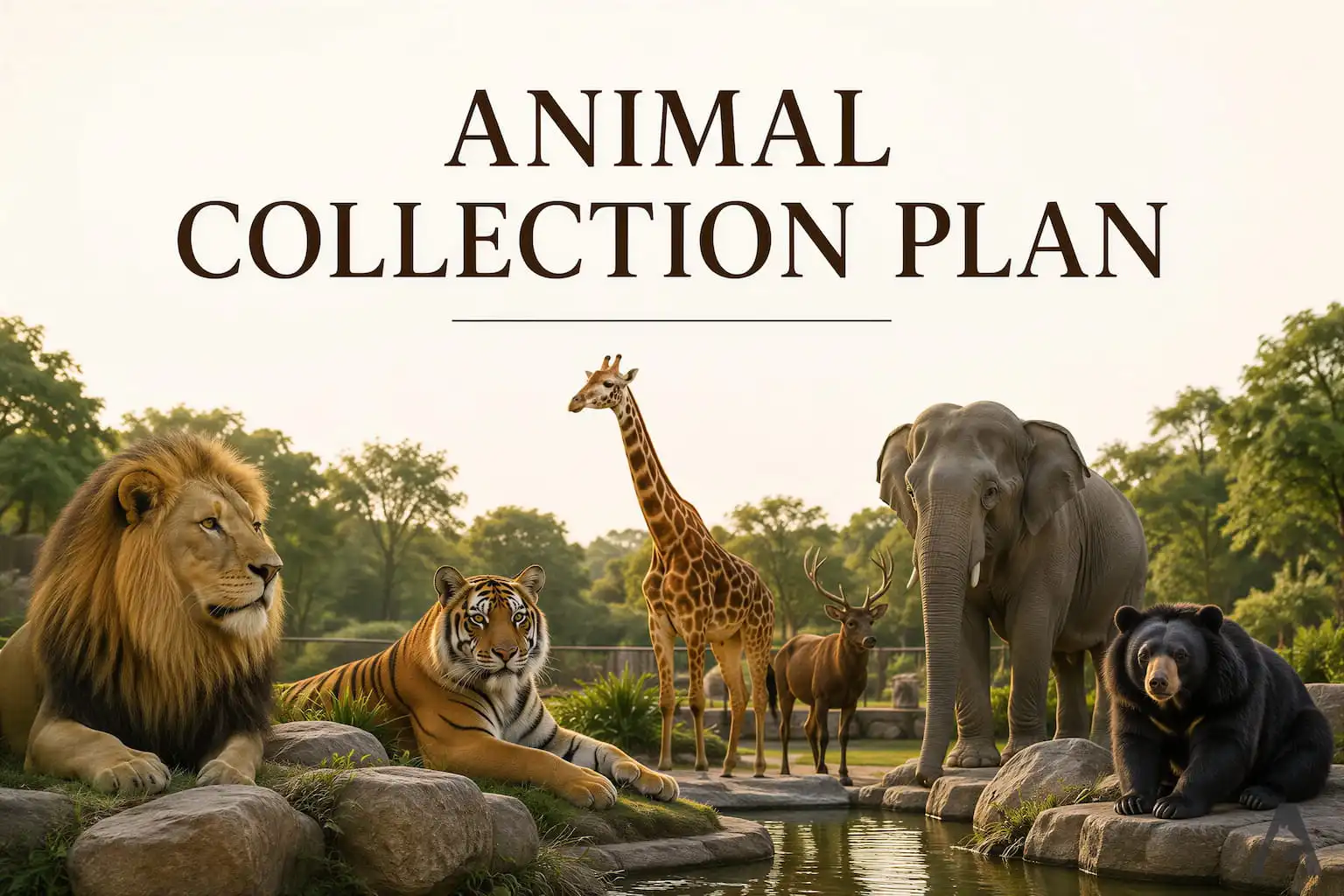
An animal collection plan provides a framework for determining the species and number of animals that should be maintained in a zoo based on available space, climate, animal welfare, conservation priorities, and the zoo’s overall purpose.
This article covers the key principles of animal collection planning, including guidelines for large, medium, small, and specialized zoos, as well as rescue centers and recommended animal numbers for selected species.
Every zoo should undertake a strategic review of the species and number of animals to be housed in the zoo when preparing an appropriate animal collection plan, with reference to:
- Space available for each species/animal and the space actually required to house all animals of all species in the collection, in accordance with prescribed standards.
- Past and present performance of the zoo in animal husbandry and health care, including the suitability of the local climate for maintaining the species.
- Records of births and deaths for each species and the survival of young animals.
- Cost of animal husbandry and health care for each species.
- The zoo’s adopted theme and the relevance of each species to the thematic display.
- Species identified for planned conservation breeding by the zoo.
- Species for which surplus animals are available at other zoos.
The following should be the guiding principles for finalizing collection plans for different categories of zoos:
1. Large Zoo (National Collection)
Wild animal species native to the area/locality/ecosystem in which the zoo is located (around 30% of the total species displayed); representative wild animal species of the region (North, South, West, Central, East, or Northeast) in which the zoo is located, depending on their suitability to the climatic conditions (around 30%); representative wild animal species of the nation that are suited to the climate of the zoo (around 30%); and no more than 10% exotic wild animal species.
2. Medium Zoo (Regional Collection)
Wild animal species native to the area/locality/ecosystem in which the zoo is located (around 40% of the total species displayed); representative wild animal species of the region in which the zoo is located (around 40%); and no more than 10% selected species native to the nation and 10% exotic species.
3. Small Zoo (Local Collection)
Wild animal species native to the area/locality/ecosystem in which the zoo is located (around 60%); representative wild animal species suited to the climate of the region (20%), nation (10%), and exotic species (10%).
4. Mini Zoo (Local Common Wild Animal Collection)
A few identified common wild animal species native to the area/locality/ecosystem in which the zoo is located; 1–2 common exotic wild animal species may also be included.
5. Rescue Centre
Identified problem wild animal species and orphaned or infirm captive animals not fit for display from the area/locality/ecosystem in which the rescue center is located:
- All rescued sick or injured wild animals should be rehabilitated in the wild or transferred to a regular lifetime-care facility, zoo, or rescue center within 30 days of treatment/healing, depending on the condition and suitability of the individuals.
- All seized wild animals should also be rehabilitated in the wild or transferred to a regular lifetime-care facility, zoo, or rescue center, depending on the condition and suitability of the individuals, within 30 days of seizure after obtaining permission from the court handling the case.
All rescued or abandoned young wild animals should only be reared in nurseries attached to the veterinary facilities or hospitals of recognized zoos or rescue centers.
6. Specialized Zoo
An exclusive specialized zoo (reptile/snake/rodent/bird/nocturnal/aquatic park, aquarium, etc.) may decide to house animals at one level above its usual category, i.e., small at the regional level, medium at the national level, or large at the international level, in its collection plan.
| Zoo Category | Tiger | Leopard | Bear | Ungulates/Herbivores of Each Species |
|---|---|---|---|---|
| Large | 10 | 10 | 10 | 20 |
| Medium | 6 | 6 | 6 | 12 |
| Small | 4 | 4 | 4 | 10 |