CONTENT
Winter Management in Poultry: Effects and Management Practices
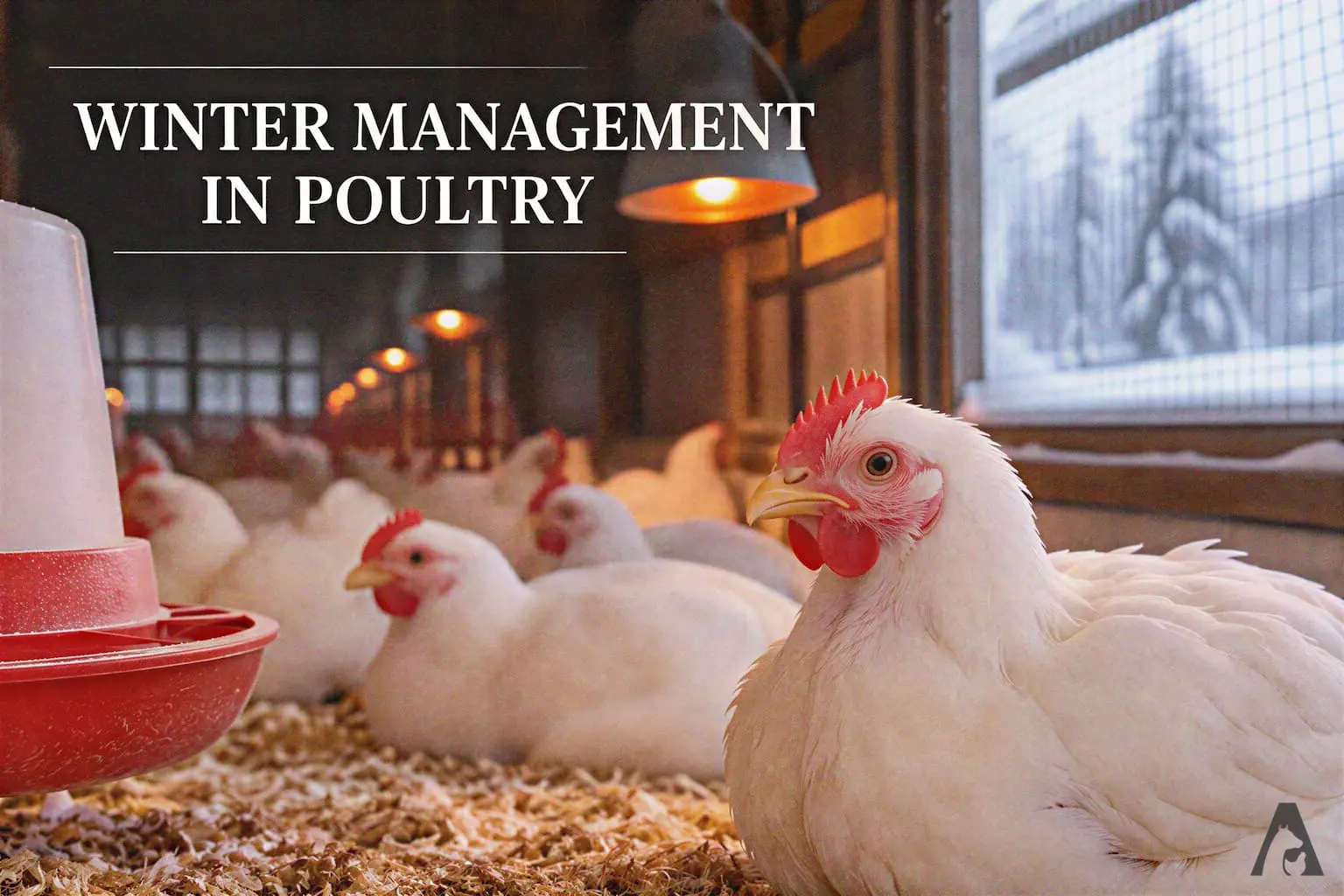
Cold weather presents specific challenges to poultry production by altering the birds’ physiological demands and the housing environment. Effective winter management focuses on maintaining a suitable microclimate while balancing ventilation, litter quality, nutrition, and energy requirements. Appropriate seasonal adjustments can help minimize cold stress and support the health, welfare, growth, and productive performance of the flock.
*ADVERTISEMENT*
Contact hello@mkvisuals.org to advertise here
The optimum temperature in a poultry house is 65-75°F. When the temperature drops below 45°F, steps must be taken to warm the house.
Adverse Effects
- Chick mortality due to low temperatures.
- Most of the energy used by the birds is utilized to maintain body heat, thus retarding their growth.
- Combs become cyanotic.
- Birds do not reach peak production during the expected period.
- Sexual maturity is delayed in pullets, and these birds turn out to be poor layers.
- Birds consume more feed to maintain body temperature.
- More moisture is retained in winter due to reduced evaporation, creating dampness in the house.
- If the overhang is not long enough, rainwater can splash in and cause wet litter problems.
- Houses must be built on elevated ground to prevent water stagnation, which in turn can cause severe disease problems.
- A lower environmental temperature increases oxygen consumption, blood pressure, and thyroid size.
- Cooler temperatures are immunosuppressive and thus predispose birds to infectious agents endemic to that environment.
- Respiratory infections such as CRD, infectious bronchitis, avian influenza, and coryza can compromise lung capacity and therefore reduce oxygen supply through the lungs.
Alleviating Measures
- Provide clean litter material and increase the thickness of the litter.
- Provide good ventilation, but prevent cold drafts from entering the house.
- Seal all cracks and crevices in the house.
- Remove all leaking waterers and repair leaky roofs.
- The overhang must be 4-6 feet in length to withstand wind and prevent rainwater from splashing inside.
- The roof height should be lowered.
- Asbestos roofing may be used as it helps retain warmth within the house.
- Side curtains can be used during severe winds and drafts, thus protecting the house from cold drafts.
- Ceiling fans may be used to move warm air from the ceiling toward the birds.
- Place plastic sheets over exhaust fans that will not be used during cold weather.
- Solar heaters can be used, and the stored energy can be utilized to warm the house.
- The brooding period for chicks in cold weather may need to be extended to 4-6 weeks.
- Oil or fat can be added to the feed, and energy levels in the feed can be increased to meet the higher energy requirements of the birds.
- Additional vitamins and minerals should be supplemented.
- Both vitamin C and vitamin E can be given to enhance the immune response.
- The feeders should always be full.
- Provide warm water to the birds.
- Prevent water from spilling onto the litter.
- Increase the stocking density by 5%.
A gable-type roof or a full monitor roof would be ideal:
- In temperate countries, environmentally controlled poultry houses are commonly used. These houses are heated by electricity or gas.
- A blower supplies warm air, and fans circulate it throughout the house; the system is thermostatically controlled.
- Gas pressure is checked, and inlets and outlets are opened uniformly to keep the birds comfortable.
- Ventilation is adjusted to remove excess ammonia and prevent increased fuel usage.
*ADVERTISEMENT*
Contact hello@mkvisuals.org to advertise here