CONTENT
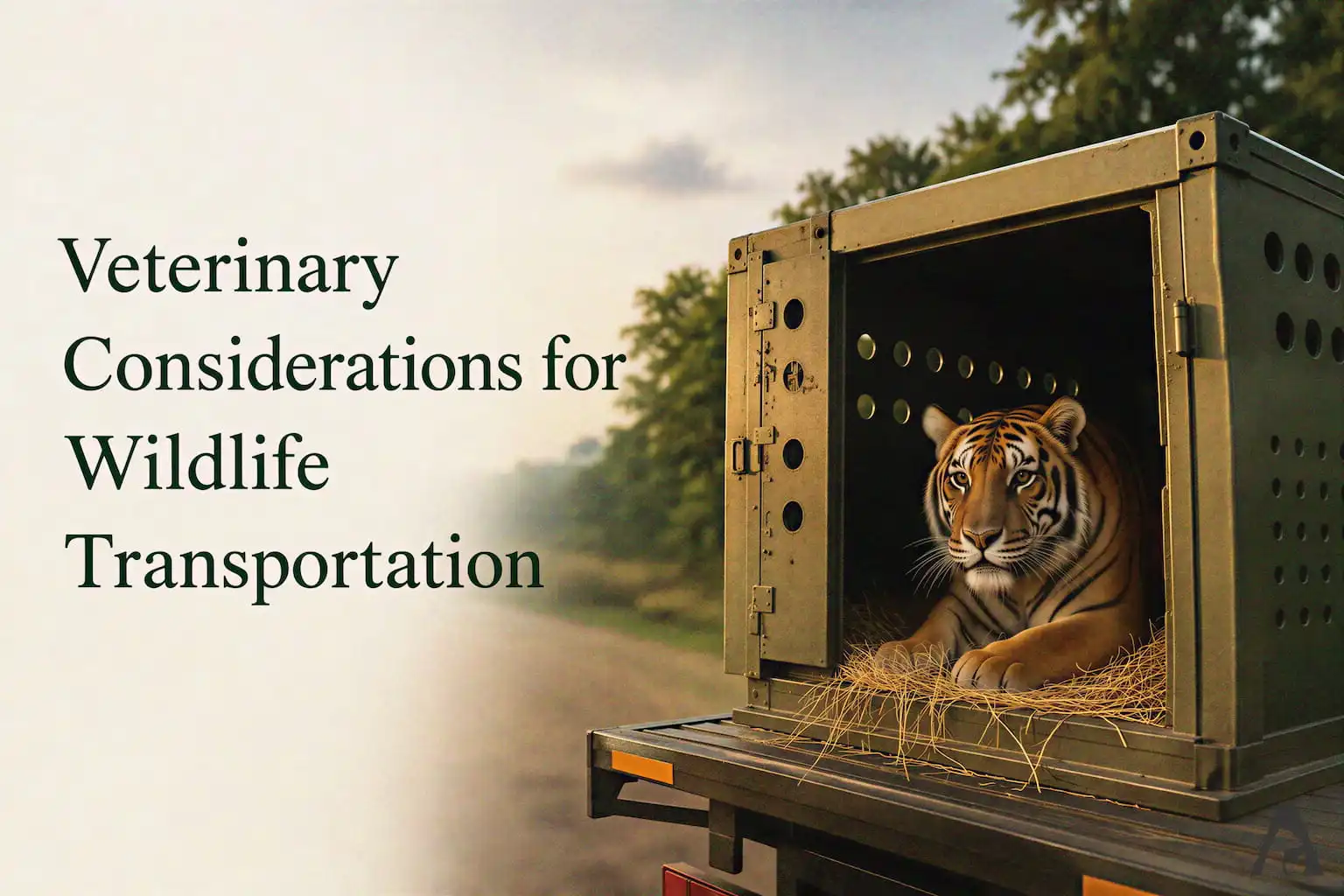
Veterinary Considerations for Wildlife Transportation and Translocation
Wildlife transportation and translocation require careful veterinary planning to protect animal health, welfare, and safety throughout the process. From pre-transport health screening, capture, and chemical immobilization to transport management, quarantine, and acclimatization at the recipient zoo, each stage requires appropriate preparation and veterinary oversight.
The following considerations outline key measures for the safe and effective transportation and translocation of wild animals.
Donor Zoo
The donor zoo is responsible for ensuring that animals are medically fit, behaviorally prepared, and safely handled before transportation. Veterinary planning should include health screening, capture and immobilization procedures, crate preparation, and coordination with the recipient zoo to minimize stress and reduce the risk of injury or disease transmission.
1. Health Screening of Animals
- The identified animal(s) should be subjected to health screening to ensure their fitness for transportation and to avoid transmission of diseases to animals in the recipient zoo. The IUCN guidelines on quarantine and health screening prior to translocation of wild animals should form the basis of such interventions. Where required, animals may be vaccinated and dewormed well in advance of transportation, at least 3 weeks before the action.
- Body weight and morphometric features should be estimated by a biologist, who should also design the crate.
- Animals of different species should never be transported in the same container.
- A health certificate should be issued by the veterinarian of the donor zoo to the recipient zoo in a standard format with all health-related details.
2. Nature of Capture
- The mode of capture must be based on the species to be captured. It is essential that the veterinarians decide on the mode of capture well in advance. The requisite instruments and drugs may be procured and stored accordingly.
- If chemical immobilization is required, fasting and water restriction should be carried out according to the species, planned procedure, and veterinary protocol. The animal should be monitored closely for hyperthermia and, if necessary, appropriate cooling measures, such as covering the body with wet cloths, may be used. The eyes should be protected from injury and excessive exposure to light during immobilization, as appropriate for the species and anesthetic protocol. Any sedatives, immobilizing agents, reversal agents, or antidotes should be selected and administered under the direction of a qualified veterinarian.
- If chemical immobilization and restraint procedures are to be used, adequate stocks of immobilizing drugs, reversal agents, and antidotes should be procured and stored appropriately. The drug dosage may be decided based on the size of the animal and other considerations such as age, sex, weight, weather, physiological and temperamental needs, and excitement level. Tranquilizers may be used before transportation as they reduce anxiety in the animal, thereby reducing the chances of stress. A wide range of tranquilizers is available. The choice of drug depends on the species and the excitation level. It is advisable to use short- and long-acting tranquilizers for herbivores prior to crating, depending on the travel time and the species, as this will minimize the stress experienced by the animal during crating, transport, and release at the new location.
- If physical methods of capture are to be used, it should be ensured that the animals are subjected to minimal stress and that there are skilled and experienced personnel on the team.
- The animal, especially if it is a herbivore, can be habituated to its crate well in advance by placing the crate in the enclosure and feeding the animal in it every day. This will slowly make the animal comfortable with the crate, thereby reducing stress at the time of transportation because of the animal’s familiarity with it.
- The staff involved in the capture and transportation procedure should be made aware of the various procedures that need to be carried out. It would be very helpful if a mock exercise were practiced so that the staff are prepared for eventualities.
- The best available drugs should be selected for chemical immobilization and sedation according to the species, procedure, and veterinary protocol. Commonly used agents include xylazine, ketamine, and acepromazine.
- The dose regimen for chemical immobilization of animals may be according to the indicative values, subject to the advice of the veterinary officer.
Considerations Related to Transport
- The veterinarian and keeper of the recipient zoo should accompany the animals during transportation. In special cases, the veterinarians of both the donor and recipient zoos may accompany the animals during transportation.
- During transportation, disturbance of the animal should be minimized.
- Human contact with the animals should be minimized to avoid cross-infection.
- The animals should be monitored throughout the transportation, and, if needed, appropriate treatment or management should be administered.
- Emergency veterinary drugs and equipment should be carried during transportation to meet any eventuality. Quick and prompt veterinary consultation and treatment should be provided to animals that become injured or diseased in transit.
- An official with the requisite financial powers to cover any exigencies en route should accompany the animal. The official may be assisted by an animal supervisor and keepers/handlers as required.
- Sufficient quantities of food and water should be available in the vehicle during transportation.
- There should always be two drivers for the vehicle so that there is no need for an excessive number of stops during the journey. One driver can rest while the other drives. However, there should be no rush to cover the distance.
- Staff undertaking the transportation of animals should not consume alcohol, as this will impair their judgment, which is critical in case of emergencies.
- In the case of vehicles going through areas affected by insurgency, the relevant transportation authorities and border checkpoints should be consulted to identify the best time of day to pass through these areas, and police escort should be requested from the appropriate authorities to prevent any risk to the vehicles, people, and animals.
Considerations at Recipient Zoo
- Before obtaining the approval of the Central Zoo Authority, the veterinarian of the recipient zoo may visit the donor zoo, and a mutual agreement must be reached regarding the animals to be exchanged.
- The behavior, feeding pattern, and health of the chosen animals should be closely monitored. Animals should be housed in stress-free environments.
Human Resource Considerations at Recipient Zoo
- The recipient zoo should arrange well in advance for at least one full-time keeper for the animal to be received. If the recipient zoo has no prior experience in managing the animal, the designated keepers should be sent well in advance to the donor zoo to familiarize themselves with the husbandry, care, feeding, treatment, and daily routines related to the care of the animal involved.
- The recipient zoo should arrange training for the keeper engaged to look after the newly arrived animal at the donor zoo three months in advance. Quarantine and a health check-up should be carried out according to veterinary protocols and the relevant guidelines.
- One Forest Range Officer (in the case of Forest Department zoos), one supervisor, two or three animal attendants, and the animal keeper of the receiving zoo should accompany the animal when it is being transported. However, in the case of species that can be easily handled and transported, the director of the recipient zoo may decide the number of people to be sent to receive the animals without compromising their safety and care.
Transport Vehicle Considerations
- Reputable and experienced companies, firms, or NGOs that are experienced in transporting animals should be selected and engaged. No compromise should be made in this regard.
- An agreement should be signed between the carrier company and the consignor so that an alternate vehicle will be arranged as early as possible by the carrier company in case of any breakdown or other emergencies that may arise en route.
- A detailed discussion should be held between the donor, recipient, transport company, and the identified escort team, and responsibilities and tasks should be allocated.
- Ensure that the vehicle is fit for the journey. The vehicle should be serviced, and a thorough check-up should be carried out prior to transport. Additionally, information on the fuel level, tire pressure, tool kit, and essential spare parts carried should be obtained. An animal transport vehicle on a long journey should have two drivers.
- The mobile numbers and contact details of the drivers, owners, cleaners, etc. should be given to the coordinators of both the donor and recipient zoos.
- The transport vehicle should be insured. All vehicle-related documents should be valid (registration documents, insurance papers, driver’s license, etc.) and should be checked.
- The vehicle should be properly disinfected prior to transport.
- Identification of the animals to be transported should be completed prior to loading.
- The shortest suitable route should be selected.
- Before transportation, factors such as the weather forecast and possible disturbances (blockades, processions, festivals, public functions, etc.) during the proposed transportation period should be taken into account, and planning should be carried out accordingly.
- Information on zoos and other facilities available en route should be provided to the personnel of the vehicle so that assistance (food, health care, etc.) can be obtained as and when needed.
- The contact information of directors and veterinarians of zoos en route should be available to the transporting team. The travel plan should be communicated to the directors and veterinarians so that they can provide assistance if required.
- The pilot vehicle should have a representative of the competent authority and a veterinarian. It should have drugs, equipment for physical immobilization, and communication facilities.
- The personnel should be wearing uniforms and follow the proper dress code. The vehicle should have the necessary papers and certificates.
- The team in the pilot vehicle should inform toll gates and checkpoints in advance so that unnecessary delays are avoided.
- The transport vehicle and pilot vehicle should carry emergency lights, flashlights with sufficient batteries, drinking water, IV fluids, medical kits, etc.
- For assistance with safe and secure transportation, the relevant transportation department personnel and agencies such as the police in the districts or states involved may be contacted.
- The guidelines of IATA, CITES, etc. should be followed wherever applicable.